

Dr. Batul Patel (Dermatologist)
Medical Director – The Bombay Skin Clinic
Dr. Batul Patel is an award winning certified dermatologist, honoured as the “Dermatologist of the Year 2023” at the national level by The Economic Times. View profile
Overview | At‑a‑Glance Summary | What Is a “Double Chin” and Why It Happens | Main Causes | Lifestyle‑Supportive Management | When to Consult a Dermatologist | Treatment Option | Fat‑Dissolving Injections | Cryolipolysis| Liposculpting | Chin Augmentation | What to Expect During and After Treatment| Cost & Treatment Planning | FAQ’s
At The Bombay Skin Clinic, Mumbai, we offer dermatologist‑led assessment and customised plans for managing submental fullness (often described as a “double chin”). This guide outlines how the condition develops, non‑surgical and surgical options, and what to consider when choosing a treatment plan.
At‑a‑Glance Summary
What it is: Accumulation of submental fat and/or loosening of skin beneath the chin (submental fullness).
Helps with: Enhancing jawline contour, reducing the appearance of chin‑and‑neck fullness, improving skin tone in the submental area.
Session time: Varies by procedure (from ~20 minutes for injections to 1–2 hours for surgical options).
Downtime: Ranges from minimal (non‑invasive treatments) to several days/weeks (surgical).
Supervised by: Dr Batul Patel (Dermatologist & Trichologist) and her team at The Bombay Skin Clinic.
What Is a “Double Chin” and Why It Happens
Submental fullness refers to a layer of fat beneath the chin (and sometimes mild skin laxity) that gives the appearance of a second chin. Although often seen in people with weight gain, it can also occur in individuals of normal weight due to hereditary factors, ageing skin, or structural facial features such as a recessed chin.
Main Causes of Submental Fullness
Common contributing factors include:
- Excess adipose tissue in the submental region (particularly when overall body fat increases).
- Poor posture (forward head posture), which may weaken neck/chin muscle tone and contribute to the visual effect of fullness beneath the chin.
- Facial skeletal structure (e.g., a recessed chin or weak jawline) that can accentuate the appearance of fullness even with minimal fat accumulation.
- Genetics / heredity — some individuals are predisposed to fat deposition in the submental area or to earlier skin laxity.
- Age‑related skin laxity and muscle changes, including reduced collagen and elastin and thinning of the platysma muscle.
When skin tone loss or laxity beneath the chin is a factor, our clinic also offers advanced face-brightening treatments. These treatments combine skin-tightening and pigment-correcting technologies to complement fat-reduction procedures and enhance overall jawline contour.
Natural or Lifestyle‑Supportive Management
While targeted treatments may be required, certain lifestyle and home‑care elements can support jawline contouring:
- A health-optimised diet, a weight-management strategy, and regular exercise may reduce total body fat, which may lead to some reduction in submental fat.
- Exercises aimed at the chin and neck muscles (e.g., jaw jut, tongue press, neck stretches) may support muscle tone, though evidence is limited and “spot‑reduction” of fat remains unsupported by strong clinical data.
- Posture improvement (keeping the head upright rather than forward) may enhance the visual definition of the jawline.
Important note: These methods may help support outcomes but are unlikely to significantly reduce excess submental fat or address moderate‑to‑severe skin laxity on their own.
In addition to at-home care, patients often benefit from doctor-designed medi-facial skin treatments. These in-clinic facials promote circulation, support collagen production, and enhance overall skin quality — key elements in improving the aesthetic appearance of the chin and jawline.
When to Consult a Dermatologist
A dermatology‑led consultation is advisable when:
- Non‑surgical lifestyle measures (diet, exercise, posture) have not achieved the desired improvement.
- You notice persistent submental fullness rather than transient fluffiness.
- You are considering cosmetic interventions and wish to understand suitability, risks, and realistic expectations.
At The Bombay Skin Clinic, we assess skin type, chin-neck anatomy, fat volume, muscle tone, skin laxity, and general health to recommend the most appropriate treatment pathway.
Treatment Options at The Bombay Skin Clinic
Below is an overview of commonly used methods for managing submental fullness, described in the order from less invasive to more invasive. Treatment plans are individualised and may involve a combination of approaches.
At The Bombay Skin Clinic, we offer CoolSculpting® fat-freezing treatment for submental fat reduction. This non-invasive procedure targets stubborn fat pockets and helps contour the chin and jawline without the need for surgery.
Fat‑Dissolving Injections (e.g., deoxycholic acid)
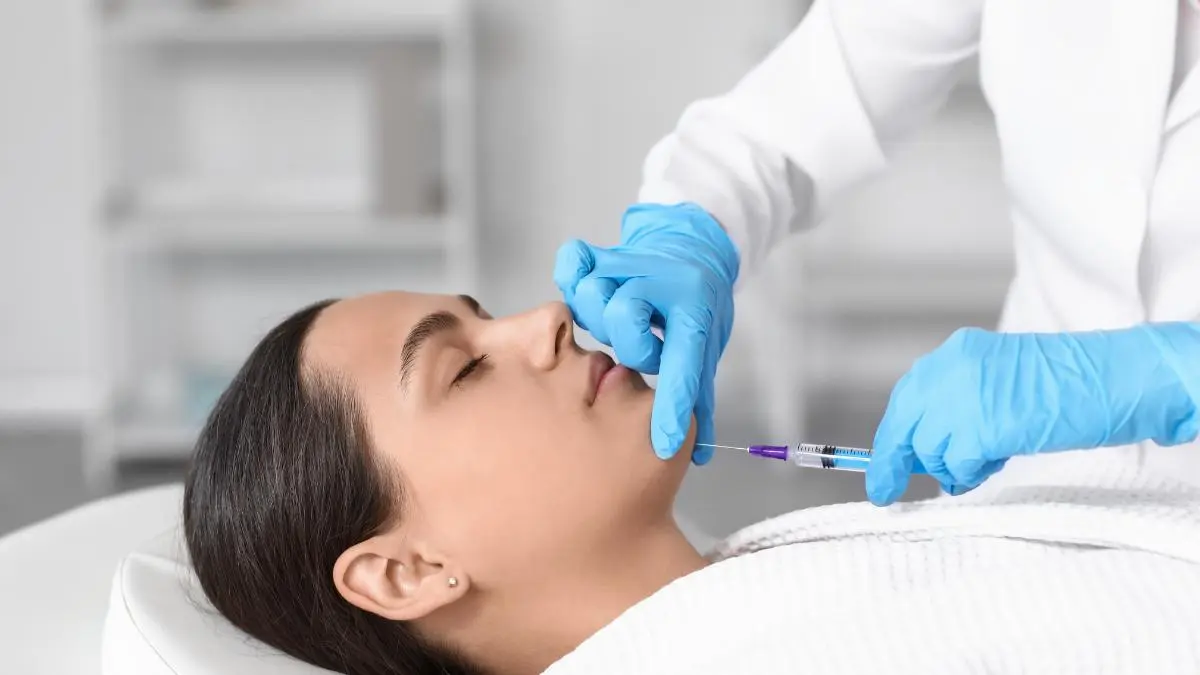
This minimally invasive treatment involves injecting a fat-dissolving compound—typically deoxycholic acid—into the submental fat layer beneath the chin. The active ingredient disrupts fat cell membranes, allowing the body to gradually eliminate them through natural metabolic processes.
At The Bombay Skin Clinic, the procedure is performed under dermatologist supervision using a series of carefully placed micro-injections. It is generally suitable for individuals with mild to moderate fat deposits and good skin tone, without significant laxity.
Temporary swelling, bruising, numbness, or firmness at the injection site may occur, typically resolving within a few days. In rare cases, side effects such as nerve irritation or contour irregularities may arise. This treatment is offered only to suitable candidates after a detailed medical assessment and is not recommended in the presence of significant skin laxity or certain medical conditions. A thorough consultation is essential to assess suitability, skin condition, and treatment expectations. Multiple sessions may be required, with outcomes reassessed periodically.
Cryolipolysis (“fat‑freezing”) of the Submental Area
Cryolipolysis is a non-invasive treatment that uses controlled cooling to reduce subcutaneous fat beneath the chin. The cold temperature selectively targets fat cells, which are gradually eliminated through the body’s natural metabolic processes. Devices used for submental treatment are FDA-cleared for this indication.
At The Bombay Skin Clinic, this procedure is performed under dermatologist supervision following a detailed consultation. It is typically recommended for individuals with mild to moderate submental fat and good skin elasticity. Temporary effects such as cold sensation, tingling, redness, or firmness may occur. Most patients can return to their normal activities shortly after treatment.
This method is not intended to address significant skin laxity, and visible results tend to develop gradually over a few weeks. Outcomes are reassessed periodically as part of an individualised treatment plan.
Liposculpting
Submental liposuction, or liposculpting, is a minimally invasive surgical procedure used to reduce excess fat beneath the chin through small incisions and suction, performed under local anaesthesia or light sedation. Surgical options are recommended only after detailed counselling and are not suitable for all patients. For select individuals, it may also provide mild improvement in skin laxity.
The procedure typically lasts 1 to 2 hours and may involve temporary swelling, bruising, and compression bandaging. Recovery generally takes 1 to 2 weeks, depending on individual healing and skin condition. It is most often recommended when non-invasive options have proven insufficient — particularly in cases of more prominent submental fat and moderate skin laxity.
At The Bombay Skin Clinic, this treatment is offered only after a comprehensive dermatological consultation and is performed under strict medical supervision. Personalised post-operative care and a strong emphasis on safety are integral to our approach.
Chin Augmentation / Jawline Contouring
Chin augmentation and jawline contouring are non-surgical aesthetic procedures designed to improve the projection of the chin and sharpen the definition of the jawline. These treatments typically use injectable dermal fillers to sculpt and balance the lower face, although in select cases, chin implants may be considered for more structural enhancement.
This approach does not directly remove fat; instead, it enhances bone structure, making the lower face appear more contoured and proportionate. It is particularly suitable for individuals with a recessed chin, weak jawline, or mild submental fullness—especially when the goal is to achieve a more defined and youthful profile.
For optimal and balanced results, chin and jawline contouring are often combined with fat-reduction techniques (such as Kybella, cryolipolysis, or submental liposuction) to reduce under-chin fullness while improving lower-face contours.
While the procedure is relatively quick and minimally invasive, it is not without risks. Common side effects include temporary swelling, bruising, and mild tenderness. Asymmetry can occur and should be addressed during follow-ups. If dermal fillers are used, results are not permanent and require maintenance every 12–18 months, depending on the product and individual response.
A personalized consultation is essential to determine the best approach, whether filler-based contouring, implant augmentation, or a combination with fat reduction, to achieve balanced and natural-looking results.
All procedures at The Bombay Skin Clinic are led by Dr. Batul Patel, ensuring medical precision, patient safety, and a personalised recovery plan.
What to Expect During and After Treatment
- At The Bombay Skin Clinic, each plan is tailored following a full evaluation by Dr Batul Patel and the team.
- For non‑invasive treatments, mild swelling or stiffness in the treated area is common; bruising may occur with injections.
- For surgical options, expect more noticeable swelling, possible discomfort, and a recovery period of days to a week or more, depending on the procedure.
- Results generally begin to appear after several weeks and continue to evolve over 2‑3 months or more. Outcomes vary between individuals based on fat volume, skin quality, age and adherence to post‑care.
- Maintenance: While fat cell removal reduces the likelihood of fat returning in the treated area, maintaining a stable weight and healthy lifestyle supports longer-lasting outcomes.
If you prefer to begin remotely, we offer tele consultations with Dr.Batul Patel. This allows a personalized review of your jawline and aesthetic goals before planning any procedure.
Cost & Treatment Planning in Mumbai
At The Bombay Skin Clinic, treatment cost depends on the procedure selected, the number of sessions required and individual patient factors (e.g., volume of fat, skin laxity, combination therapies). We provide transparent pricing after consultation and individualised planning. Starting figures may be discussed during your assessment.
Frequently Asked Questions (FAQs)
References
- National Center for Biotechnology Information: Url: https://www.ncbi.nlm.nih.gov/pmc/articles/PMC5172481/
- Journal of the American Academy of Dermatology: Url: https://www.jaad.org/article/S0190-9622(11)01341-7/fulltext
- Harvard Health Publishing: Url: https://www.health.harvard.edu/skin-and-hair/is-coolsculpting-effective
- American Academy of Dermatology Association (AAD): Non-invasive fat removal: What can you expect? Url: https://www.aad.org/public/cosmetic/fat-removal/non-invasive-what-to-expect
Dr. Batul Patel (Dermatologist)
Medical Director – The Bombay Skin Clinic
Dr. Batul Patel is an award winning certified dermatologist, honoured as the “Dermatologist of the Year 2023” at the national level by The Economic Times. View profile