

Dr. Batul Patel (Dermatologist)
Medical Director – The Bombay Skin Clinic
Dr. Batul Patel is an award winning certified dermatologist, honoured as the “Dermatologist of the Year 2023” at the national level by The Economic Times. View profile
What Is Muscle Toning | Benefits | Who Is Suitable | Safety | Price
What is non-surgical muscle toning treatment?
Non-surgical muscle toning treatment is a clinic-based procedure that uses advanced energy devices to stimulate your muscles in a controlled way. The goal is to help improve muscle tone, strength and definition in specific areas such as the abdomen, buttocks, arms and thighs.
Unlike surgery, there are no cuts or stitches and no need for anaesthesia. Most devices used today rely on high-intensity focused electromagnetic (HIFEM) or similar electromagnetic technology, sometimes combined with radiofrequency (RF) heating. These technologies aim to create strong, repeated muscle contractions that are difficult to achieve during a regular workout, while also gently warming the tissue to support comfort and fat reduction in selected patients.[1–3]
How muscle toning treatments differ from gym workouts and dieting?
Gym workouts and healthy eating remain the foundation of long-term fitness and health. Non-invasive muscle toning is not a replacement for these habits. Instead, it is designed as a supportive option for people who are already trying to stay active and manage their weight but still struggle with certain areas that look less toned.
During a session, the device can create thousands of strong muscle contractions in a short time. These are sometimes called supramaximal contractions in the scientific literature.[1–3] For many people, it may feel like an intense workout under supervision, with the added advantage that the strength and pattern of contractions are controlled by the device and the operator. This can be especially helpful if you have difficulty activating certain muscles on your own or if you prefer a shorter, clinic-based session as a complement to your normal routine.
Muscle toning vs weight loss vs body contouring
It is common to confuse muscle toning with weight loss and body contouring. Weight loss is mainly about reducing your overall body weight by lowering fat mass and sometimes muscle mass, usually through diet and lifestyle changes. Body contouring is a broader term that includes both non-surgical and surgical procedures designed to reshape specific areas of the body.
Muscle toning treatment sits inside the non-surgical body contouring space. Its main aim is to improve muscle tone and local shape, not to reduce overall body weight. Some devices, especially those that combine electromagnetic stimulation with radiofrequency, may also help reduce a small amount of localised fat in the treated area.[1–3] However, these changes are usually modest, and results vary from person to person. For patients at The Bombay Skin Clinic, we position muscle toning as a supportive contouring tool that works best when combined with healthy lifestyle habits.
Key benefits of muscle toning treatment
Visible definition and shaping in targeted areas
Many people work hard in the gym but still find that certain areas do not look as toned as they would like. Non-surgical muscle toning can focus energy on specific muscle groups such as the abdomen, buttocks, arms or thighs. Over a course of sessions, this can support improved muscle definition and a more sculpted appearance in the treated zones.
Clinical studies on HIFEM and combined HIFEM plus RF devices have reported increases in local muscle thickness and modest reductions in subcutaneous fat in selected adults.[1–3] In practice, this may translate into a firmer feel and better outline of the treated area. These procedures do not replace healthy habits, but they can help you see more from the work you are already putting in.
Core strength, posture and everyday performance support
Stronger muscles are not only about appearance. A better conditioned core can support posture, daily comfort and simple activities such as lifting, bending and walking. Patients who focus on abdominal muscle toning often report that they feel more engaged through the midsection during regular activities once they complete a course of sessions.
Non-surgical muscle toning is not a medical treatment for back pain or other orthopaedic conditions. However, by repeatedly stimulating certain muscle groups, it may complement physiotherapy, strength training and other supportive plans recommended by your doctors or trainers. At The Bombay Skin Clinic, we frequently encourage patients to view muscle toning as one part of an overall wellness and fitness journey.
Time-saving sessions with no surgery and no downtime
One of the practical advantages of non-invasive muscle toning is convenience. A typical session usually lasts under an hour, and you can usually return to work or regular activity soon after, subject to your comfort level and your doctor’s advice.
Because there is no cutting or stitching, there is no wound care or dressing. You may feel muscle fatigue or soreness, similar to a strong workout, but most people can continue with their day. This can make the treatment more accessible for busy working professionals and parents who cannot take time off for surgery and recovery.[4,5]
Works as an add-on to a healthy lifestyle, not a replacement
Perhaps the most important benefit is that muscle toning can act as a bridge between your efforts and your expectations. For many people, diet and exercise bring them most of the way, but small pockets of less-toned areas continue to bother them. Non-surgical muscle toning can support these last-mile goals.
During consultation at The Bombay Skin Clinic, our doctors spend time understanding your current habits, medical history and expectations. We usually encourage patients to stay active, follow balanced nutrition and manage stress while undergoing muscle toning. The technology is best seen as an add-on to your efforts, not a shortcut or replacement.
Who is muscle toning treatment in Mumbai suitable for?
Ideal candidates – who can consider non-invasive muscle toning
Non-surgical muscle toning may be suitable for you if:
- You are generally healthy and have a stable weight.
- You are close to your ideal or realistic weight range but want better definition in specific areas.
- You are already following some form of exercise or are willing to work on your lifestyle.
- You do not have any major uncontrolled medical conditions that make energy-based treatments unsafe.
- You are looking for improvement, not perfection, and are open to realistic outcomes over time.
At The Bombay Skin Clinic, we see a range of patients including working professionals, new parents, individuals preparing for events and those who have already completed other body contouring treatments and want to add muscle toning to their plan.
Who should avoid or delay muscle toning treatment?
Non-invasive muscle toning devices are not right for everyone. In general, the following groups are likely to be advised against treatment or may be asked to wait:
- People with implanted electronic devices such as pacemakers, defibrillators or certain neurostimulators, due to the risk of interference.[6]
- Pregnant women or those planning pregnancy in the near term.
- Individuals with active deep vein thrombosis, uncontrolled heart disease or severe uncontrolled high blood pressure.
- Patients with active infections, open wounds or severe skin conditions over the treatment area.
- Patients with certain uncontrolled neurological, muscular or metabolic conditions where repeated strong contractions may not be advisable.
These points are general. Final eligibility is always decided after a detailed consultation with our dermatologists and, when needed, with input from your physician or cardiologist. Safety is always placed ahead of cosmetic goals.
When our dermatologists may recommend alternative options instead?
In some situations, our team may advise you to consider other options instead of muscle toning alone. This may include:
- Patients with a higher body mass index who would benefit more from a structured weight management plan, medical support or fat reduction procedures first.
- Patients with significant skin laxity, where skin tightening or surgical options might give more meaningful change.
- Patients whose main concern is localised fat bulges with very low muscle-related concerns, where Save fat reduction technologies may be a better first step.[4,5]
In these cases, muscle toning can still be added later as part of a combination plan. Our role is to guide you honestly towards the approach that is safer and more appropriate for your starting point, even if that means starting with lifestyle changes or another treatment.
Which areas can be treated with muscle toning?
Abdomen and waistline
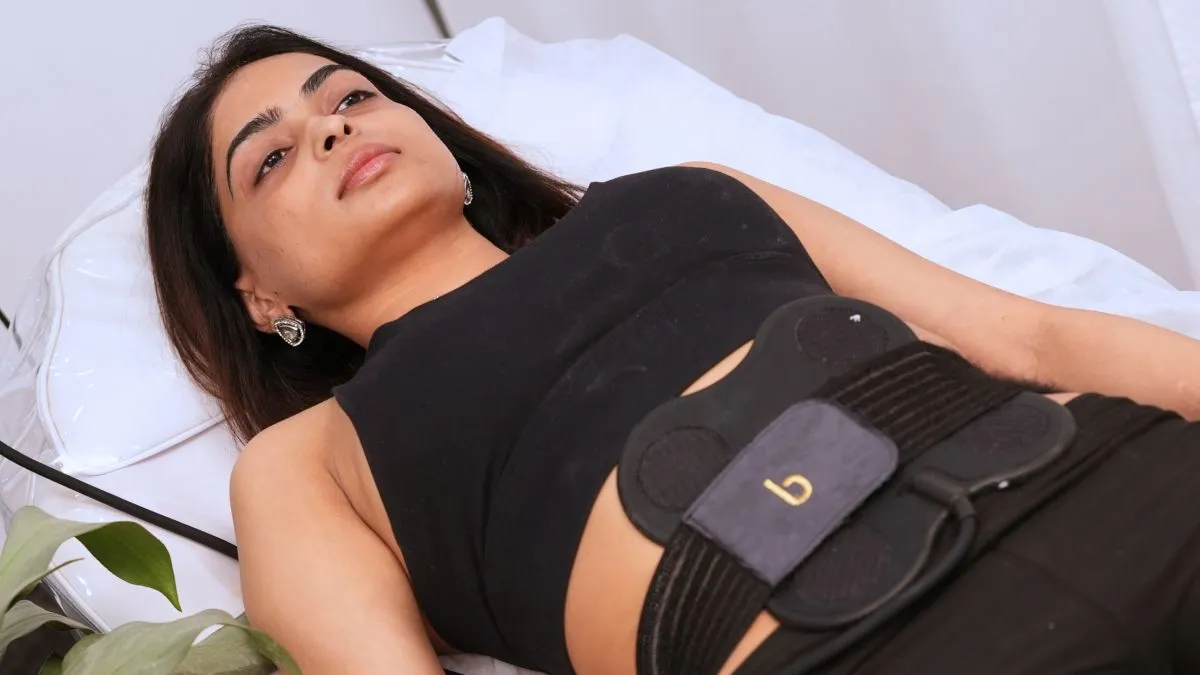
The abdomen is one of the most popular areas for non-surgical muscle toning. The device pads are placed over the front of the abdomen to stimulate the core muscles. Over a series of sessions, this may support a firmer feel and better definition, especially in patients who already have some level of fitness but are struggling with stubborn areas in the midsection.[1–3]
The waistline may also appear more defined when the underlying muscle tone improves and small pockets of fat are reduced in eligible patients. However, this is not a weight loss method or a replacement for abdominal surgery when there is significant loose skin or separated muscles.
Buttocks and hips
Non-invasive muscle toning can also be used on the gluteal muscles. The goal is usually to support lifting and firming by improving muscle tone rather than dramatically changing size. Some patients prefer this approach to implants or surgical procedures, especially if they want a more subtle, strength-focused change with no surgical downtime.
The hips and upper thighs may benefit indirectly from improved muscular support in this region. As always, individual results vary and depend on anatomy, lifestyle and the overall plan created with your treating doctor.
Thighs and calves
The front and back of the thighs, and in selected cases the calves, can be treated to enhance muscle tone and shape. For some people, this may help the legs look more defined and feel stronger, especially when combined with regular lower-body workouts or physiotherapy-led exercises.
Non-surgical muscle toning is used carefully in these areas because of the mix of muscle groups, nerves and blood vessels. At The Bombay Skin Clinic, we individualise pad placement and intensity, and we may avoid certain areas altogether if we feel it is not in your best interest.
Arms, back and other selected areas
In suitable candidates, muscle toning devices can be applied to the upper arms to target biceps and triceps, supporting a firmer appearance and better strength. In some protocols, selected back muscles and smaller muscle groups can also be considered, but this is always done on a case-by-case basis.
During your consultation in our Mumbai branches at Kemps Corner, Bandra, Andheri West or Chembur, our doctors will examine your areas of concern and guide you on which regions are safe and likely to benefit from treatment.
How our muscle toning technology works?
High-intensity electromagnetic muscle stimulation (HIFEM / EMS) in simple terms
Most modern muscle toning devices use electromagnetic fields to stimulate muscles. The device generates a changing magnetic field, which induces electrical currents inside the muscle tissue. This triggers repeated contractions that are stronger and more frequent than what many people can achieve voluntarily.[1–3]
In research settings, these strong contractions have been associated with increases in muscle thickness and improvements in local muscle conditioning when used in structured treatment protocols.[1–3] In simple language, the device helps your muscles perform an intense workout while you lie on the treatment couch, under supervision.
Radiofrequency (RF) heating and its role in fat reduction and comfort
Some devices combine electromagnetic stimulation with radiofrequency heating in the same handpiece. The RF component gently warms the tissue, which may support comfort, blood flow and in some patients, reduction of localised subcutaneous fat.[1,2]
Research has suggested that when HIFEM and RF are used together, the combined effect on fat reduction and muscle thickening in areas such as the abdomen may be greater than when either is used alone.[1–3] However, these studies are done in carefully selected adults under strict protocols. Outcomes in daily practice depend on correct patient selection, device settings, adherence to session plans and overall lifestyle.
Advanced US-FDA-cleared technologies (including Emsculpt NEO) and protocols
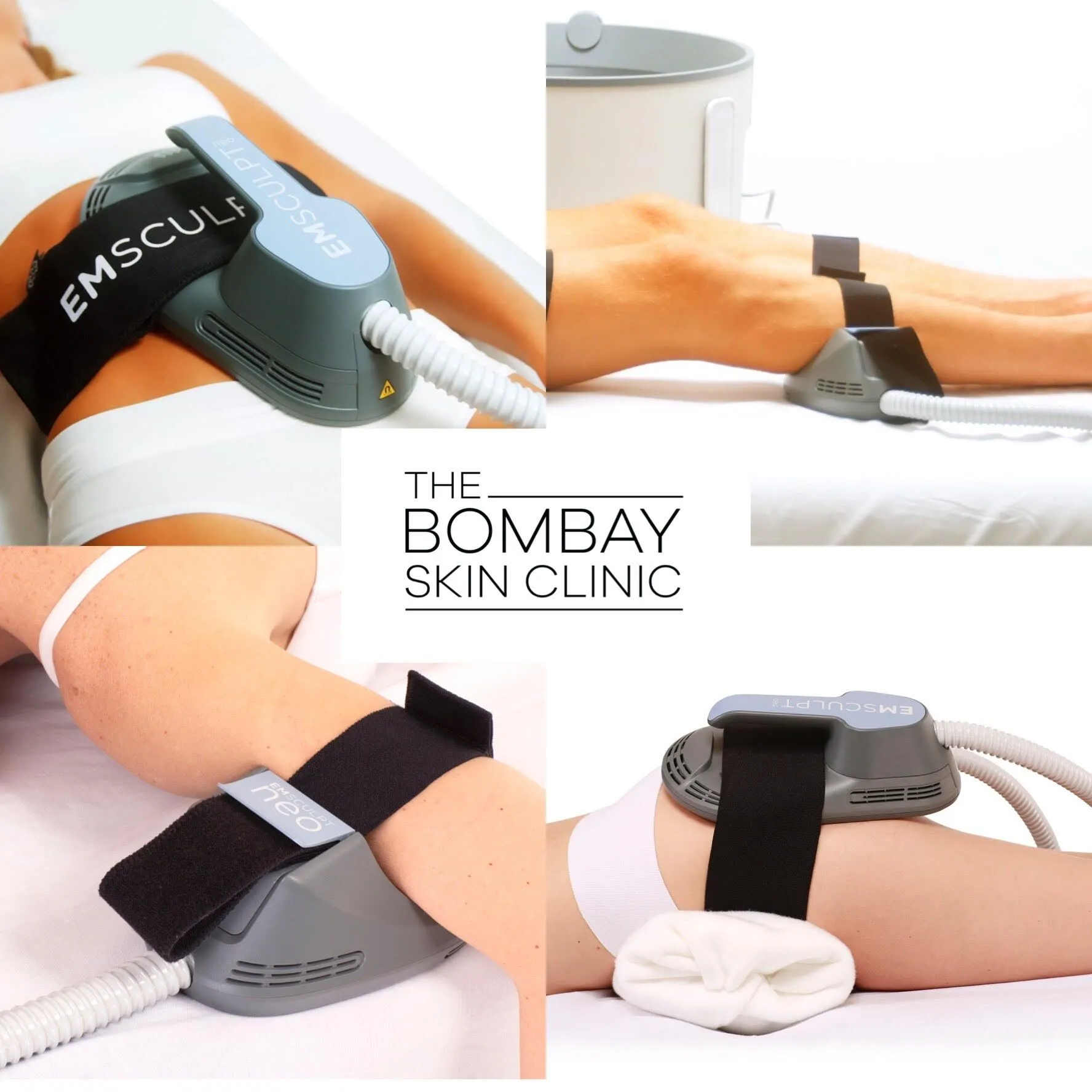
We invest in globally recognised, US-FDA-cleared devices for body contouring and muscle toning, including advanced electromagnetic systems such as Emsculpt NEO, along with other supportive technologies. Our protocols draw from published clinical studies as well as our own experience with Indian skin and body types.[1–4]
Downtime, side effects and safety profile
Expected post-session soreness and how long it usually lasts
After a muscle toning session, it is common to feel muscle fatigue or soreness in the treated area, similar to the feeling after an intense workout. This may last for one to two days for many people and then settles as the body adapts.
Gentle stretching, good hydration and light activity can support recovery in most cases. If soreness feels unusual, severe or persists, our team will reassess and adjust the plan.
Common, mild side effects seen with muscle toning devices
Most side effects reported in studies and daily practice are mild and temporary.[1–4] They may include:
- Redness, warmth or mild swelling in the treated area.
- Temporary muscle weakness or fatigue immediately after the session.
- Occasional muscle cramps during or shortly after treatment.
- Mild skin sensitivity under the applicators.
These usually resolve on their own. Our clinical team will explain what is expected for you based on your treatment plan and will review you at regular intervals.
Important contraindications
Energy-based muscle toning treatments are generally avoided in people with implanted electronic devices such as pacemakers, defibrillators or certain neurostimulators due to the risk of interference.[6] They are also avoided in pregnancy and usually postponed if you have metal implants directly in the treatment area, active hernias, uncontrolled cardiac disease, or certain severe neurological or muscular disorders.[6]
These contraindications are in line with broader guidance on electrical and electromagnetic muscle stimulation in the medical literature.[6] At The Bombay Skin Clinic, we follow a safety-first approach and may also decide against treatment in other situations where we feel the risk is not acceptable.
Why medical supervision and trained technicians matter for safety?
While consumer devices for electrical stimulation are widely advertised, clinical-grade muscle toning systems should be used in a medical setting under supervision. Proper patient selection, correct pad placement and appropriate intensity settings reduce the risk of adverse events and improve your likelihood of a positive experience.
Our devices are operated by trained staff under dermatologist supervision. We maintain strict hygiene protocols, including cleaning and disinfection of applicators between patients, and follow medical-grade safety checks at our Kemps Corner, Bandra, Andheri West and Chembur branches.
Realistic results and timelines for muscle toning treatment
When most patients start noticing changes in tone and strength?
Some patients report that their muscles feel tighter or more engaged even after the first few sessions. Visible changes in tone and contour usually build gradually over several weeks as your body responds to repeated stimulation.[1–4]
The exact timeline for you will depend on your starting condition, your age, lifestyle, and how consistently you attend sessions and maintain healthy habits. We review progress at regular intervals and may adapt the plan if needed.
How long results may last and why maintenance sessions are often needed?
As with any form of muscle training, results from non-surgical muscle toning are not static. If you stop all activity, muscle tone can reduce over time. Many patients maintain their outcomes by staying active, keeping their weight stable and, in some cases, scheduling maintenance sessions at longer gaps after the initial course.
We generally discuss maintenance only after we see how your body has responded to the first phase. The plan is then tailored to your goals, schedule and budget.
Factors that influence results – lifestyle, baseline fitness, medical conditions
Several factors can influence your results:
- Your baseline muscle mass and fitness level.
- Overall body fat percentage and distribution.
- Hormonal and metabolic health.
- Sleep quality, stress and nutrition.
- Consistency with both clinic sessions and home exercise.
Certain medical conditions, such as uncontrolled hypothyroidism or chronic inflammatory disorders, may also affect how your body responds. Our doctors take these into account when setting expectations and timelines.
Before/after expectations – what muscle toning can and cannot do
Non-surgical muscle toning can help you move from “almost there” to more noticeable definition in selected areas when you are already close to your realistic goal. It can improve firmness, contour and the way clothing fits for many patients.
However, it cannot correct significant loose skin, remove large volumes of fat, or replace surgical procedures such as liposuction or tummy tuck where these are medically appropriate.[4,5] It also cannot compensate for a very sedentary lifestyle or extreme dietary imbalance. We believe in setting honest expectations so that you can make an informed decision.
Muscle toning vs other body sculpting options in Mumbai
Muscle toning vs CoolSculpting and other fat-freezing treatments
CoolSculpting and similar cryolipolysis treatments focus mainly on reducing localised fat by controlled cooling, not on strengthening muscles.[4,5] Muscle toning devices, on the other hand, primarily target muscles, with some models also offering supportive fat reduction in suitable patients.[1–3]
If your main concern is a stubborn bulge of fat and your muscle tone is reasonably good, fat-freezing or other fat reduction options may be more appropriate. If your concern is poor tone with mild to moderate fat, a combination of fat reduction and muscle toning may give a more balanced outcome.
Muscle toning vs surgical body contouring
Surgical body contouring procedures such as liposuction or abdominoplasty can produce more dramatic changes in body shape, especially in patients with large fat deposits or significant loose skin. However, surgery involves anaesthesia, incisions, recovery time and higher risk, and is not suitable or necessary for everyone.[4,5]
Non-surgical muscle toning is better suited for patients who do not want or do not qualify for surgery, and who are comfortable with gradual, more modest changes over time. It is also useful for those who want to enhance or maintain results after they have recovered from surgical procedures, with the approval of their surgeon.
Muscle toning vs home EMS devices and regular workouts
Home EMS belts and small devices generally use lower intensities and are not equivalent to clinic-grade systems. They may offer some surface-level stimulation but are not a replacement for structured, medical-grade treatments. It is also important to use them safely and as per instructions.
Regular workouts remain important for your overall health, cardiovascular fitness, bone strength and mental wellbeing. Clinic-based muscle toning can be thought of as a targeted, time-efficient boost on top of your training rather than an alternative. In most of our treatment plans, we actively encourage patients to keep exercising.
When we recommend combination plans?
Many real-world concerns involve a mix of fat, lax skin and weak muscle tone. In such cases, focusing on just one part is rarely enough. At The Bombay Skin Clinic, it is common for our dermatologists to design combination plans that may include fat reduction, muscle toning, skin tightening and medical skincare to address stretch marks or pigmentation.
These plans are phased and adjusted based on your response, schedule and resources. Muscle toning often features as a key pillar in the middle or later phases once weight and skin quality are better controlled.
Indicative pricing for muscle toning at The Bombay Skin Clinic
At The Bombay Skin Clinic, non-surgical muscle toning treatments are typically offered as part of structured packages rather than one-off sessions, because results build over time. As an indicative range, muscle toning treatment starts from Rs.30,000 per session per area, with overall package costs depending on how many sessions and areas are included.
For an accurate estimate tailored to your goals and medical profile, we recommend visiting our Kemps Corner (South Mumbai), Bandra, Andheri West or Chembur branches for a detailed assessment.
Muscle toning treatment FAQs
How many muscle toning sessions do I usually need to see results?
Most patients require multiple sessions over several weeks to see noticeable changes in tone and contour. The exact number depends on your baseline muscle condition, goals and how your body responds. Some people feel a difference in strength and engagement within the first few sessions, while visible changes in shape build more gradually.[1–4]
After the initial course, maintenance sessions may be suggested at longer intervals to help sustain results, especially if your routine is very sedentary or your weight fluctuates.
Will muscle toning treatment help me lose weight or just tone up?
Muscle toning treatments are designed mainly to improve local muscle tone and contour. They are not weight loss procedures. Some devices that combine electromagnetic stimulation with radiofrequency may support modest reduction in localised fat, but they do not replace comprehensive weight management.[1–3]
If weight loss is your primary goal, we will guide you towards lifestyle changes and, when appropriate, medical weight management or other body contouring options. Muscle toning can then be added once your weight is more stable.
How long do the results of muscle toning last?
Results can last for several months or longer if you maintain an active lifestyle, stable weight and balanced nutrition. Over time, the natural ageing process and lifestyle factors can affect muscle tone, which is why some patients choose periodic maintenance sessions.
As with gym training, the principle is simple: the more consistently you care for your body, the longer you are likely to enjoy the benefits of your efforts and treatments.
Can I combine muscle toning with my gym routine or physiotherapy?
Yes, many patients at The Bombay Skin Clinic combine muscle toning with gym workouts, yoga, pilates or physiotherapy. In fact, this combination often gives better overall outcomes than either approach alone, as long as the schedule is planned sensibly and there is enough recovery time.
We are happy to coordinate with your trainer or physiotherapist if required, so that your clinic sessions and physical training complement each other rather than clash.
How do I know if muscle toning or another body sculpting option is right for me?
The best way to decide is to meet a qualified doctor who can assess your body type, medical history, goals and timeline. During your visit to The Bombay Skin Clinic, we will explain the pros and cons of muscle toning, fat reduction, skin tightening and, where appropriate, surgical referrals, so that you can make an informed choice.
Non-surgical muscle toning is often ideal for people who are already close to their realistic shape and want more definition. If your needs are different, we will guide you honestly towards other options.
References
- Samuels JB, Katz B. Radiofrequency heating and high-intensity focused electromagnetic field treatment for abdominal body shaping: A review of safety and efficacy. J Cosmet Dermatol. https://pmc.ncbi.nlm.nih.gov/articles/PMC9028295/
- Swanson E. A systematic review of electromagnetic muscle stimulation treatments for body contouring. Aesthet Surg J. https://pmc.ncbi.nlm.nih.gov/articles/PMC9869942/
- Guo Q, Pei Q, Dong J. Advances in the research and application of high-intensity focused electromagnetic technology for fat apoptosis and body shaping. Chin J Plast Reconstr Surg. https://www.sciencedirect.com/science/article/pii/S2096691122000322
- Alizadeh Z, Halabchi F, Mazaheri R, et al. Review of the mechanisms and effects of noninvasive body contouring devices on cellulite and subcutaneous fat. J Cosmet Dermatol. https://pmc.ncbi.nlm.nih.gov/articles/PMC5236497/
- American Society for Dermatologic Surgery. Non-invasive body contouring treatments. https://www.asds.net/skin-experts/skin-treatments/non-invasive-body-contouring-treatments
- Stöllberger C, Finsterer J. Side effects of and contraindications for whole-body electro-myo-stimulation: A viewpoint. Clin J Sport Med. https://pmc.ncbi.nlm.nih.gov/articles/PMC6937082/
Dr. Batul Patel (Dermatologist)
Medical Director – The Bombay Skin Clinic
Dr. Batul Patel is an award winning certified dermatologist, honoured as the “Dermatologist of the Year 2023” at the national level by The Economic Times. View profile