

Dr. Batul Patel (Dermatologist)
Medical Director – The Bombay Skin Clinic
Dr. Batul Patel is an award winning certified dermatologist, honoured as the “Dermatologist of the Year 2023” at the national level by The Economic Times. View profile
What Is Nose Filler Treatment | Who Is a Suitable Candidate | Safety, Side Effects & Results Timeline | Price
What is a nose filler treatment?
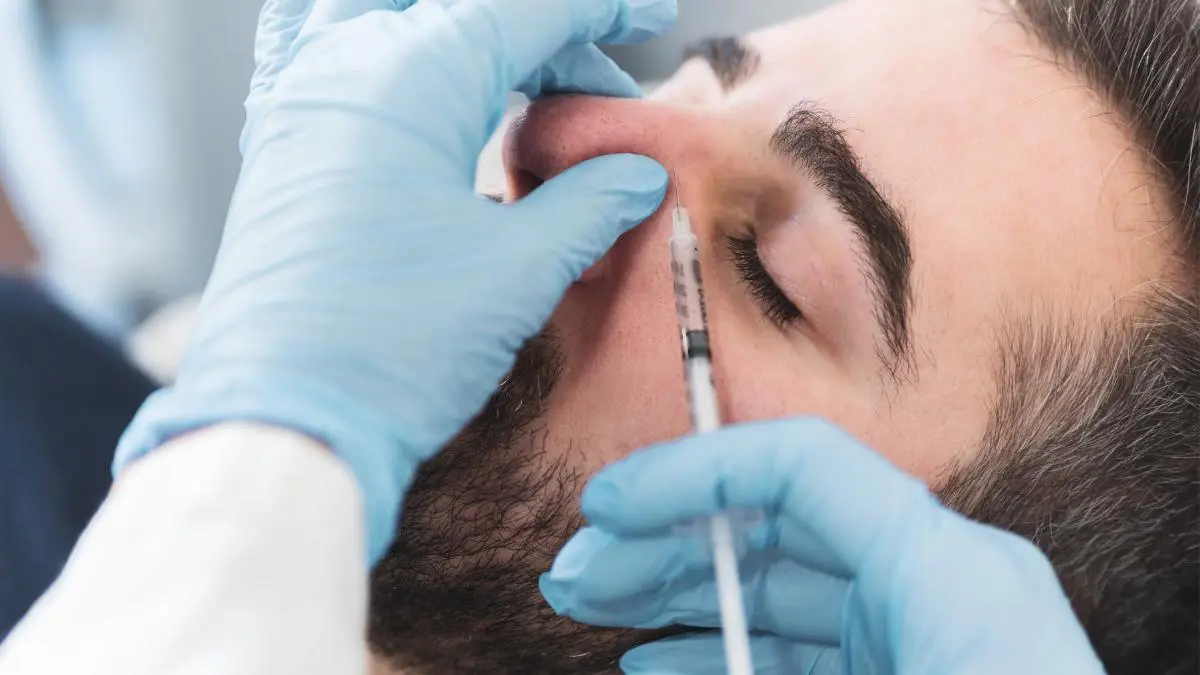
Nose filler treatment, also called non-surgical rhinoplasty or liquid rhinoplasty, is an injectable procedure where a dermatologist places small amounts of dermal filler to refine the appearance of the nose.
It is most often used to smooth a mild bump, improve the look of a low bridge, or create a more balanced side profile. The goal is subtle shaping, not a dramatic change.
What nose fillers can improve?
- Camouflaging a mild dorsal hump so the bridge looks smoother from the side.
- Creating the appearance of a straighter bridge in mild asymmetry or a slightly uneven profile.
- Improving a low or flat-looking bridge, especially when you want more definition.
- Supporting a tip that looks slightly droopy in some expressions (in selected cases).
In most cases, we use hyaluronic acid (HA) fillers for the nose because they can be adjusted, and they gradually wear off over time.
What nose fillers cannot do?
- They cannot reduce a large nose or significantly narrow the nostrils. Fillers add volume, even when used to create the look of a straighter line.
- They cannot correct breathing issues, a deviated septum, or functional problems.
- They cannot replace surgical rhinoplasty for major structural changes, major asymmetry, or significant tip reshaping.
A good consultation is about matching the method to your anatomy and your expectations, so you feel confident about the outcome.
Why people choose nose fillers in Mumbai?
- Quick clinic visit, many people return to routine activity the same day.
- No general anaesthesia, and no hospital stay for the filler procedure.
- Useful for subtle profile refinement when you are not ready for surgery.
- Results appear quickly and then settle gradually over the next 1 to 2 weeks.
- Temporary change, helpful if you prefer flexibility over time.
In Mumbai, many patients ask for natural-looking refinement that suits work schedules and social commitments, without a long recovery phase.
Are nose fillers right for you?
Good candidates
- You want subtle shaping, usually bridge smoothing or profile balancing.
- You have realistic expectations about what fillers can and cannot do.
- You can follow aftercare, especially avoiding pressure and heavy exercise for a short period.
- You are comfortable with a temporary result that needs maintenance.
Who should avoid or postpone nose fillers?
- Pregnancy or breastfeeding, we usually recommend postponing elective injectables.
- Active skin infection, acne flare, cold sore outbreak, or any inflamed lesion near the nose.
- Uncontrolled medical conditions, or any active autoimmune flare, your dermatologist will guide you case by case.
- History of severe allergy or prior serious reaction to dermal fillers, we need an in-depth safety review.
- Recent nasal surgery or significant trauma, timing matters, and you may need a longer wait.
If you have had previous fillers, threads, or implants in the nose, tell us. This changes how we plan the treatment and safety checks.
Your consultation and nose assessment at The Bombay Skin Clinic
Profile analysis, facial balance, and realistic goal-setting
We start with a detailed discussion of what bothers you, what result feels natural to you, and how your nose fits into overall facial balance. Many nose concerns look different from the front versus the side, and we plan for both views.
We also discuss whether fillers are the right tool, or whether another option is more predictable for your goal. This step helps avoid over-treatment.
Medical screening, consent, and safety planning
Safety planning includes reviewing medical history, past procedures, current medicines, and any tendency to bruise or swell. We also discuss known risks, what is common, what is rare but serious, and what to do if something feels off after your visit.
We use a structured consent process and clear post-visit instructions, so you know what to expect and how to contact us.
How nose fillers work
What fillers are typically used for non-surgical rhinoplasty?
Most non-surgical rhinoplasty procedures use hyaluronic acid (HA) fillers. HA is a substance naturally found in the skin. In aesthetic medicine, it is made into a gel with specific properties so it can provide support and shape.
Dermal fillers are regulated medical products, and they should be used by trained clinicians in appropriate clinical settings. At-home or unregulated injections are linked with higher risk. The U.S. FDA also warns against needle-free devices and non-medical use of fillers. [1]
Why the nose is a high-skill area?
The nose has important blood vessels in a compact space. This is one reason nose fillers are considered higher-risk than many other facial areas. Technique, product choice, injection depth, and conservative volumes all matter.
For patients, the practical takeaway is simple. Choose a clinic where a dermatologist assesses you, performs the injections, and has a clear complication protocol and referral pathway in place. [2]
Session plan and comfort, what happens on the day
Treatment duration, numbing, and comfort levels
A typical nose filler appointment is usually 20 to 40 minutes in-clinic, depending on complexity. We often use a numbing cream, and we work with small, slow placements to keep discomfort manageable.
Most patients describe a pressure sensation more than sharp pain. If you are anxious, tell us, we can slow down, take breaks, and keep the experience calm.
How much filler is usually needed?
Many nose refinements need a small amount of filler, but the exact quantity depends on your anatomy and the area being treated. Some noses need a little support at the bridge, others need micro-adjustments to smooth a transition.
We aim for minimal effective correction. Overfilling can look unnatural and can increase risk in a high-skill area.
After the injections, shaping, observation, and when you can leave
After placement, we gently assess symmetry and the overall line. Then we observe you briefly and review aftercare. If you are travelling across Mumbai after the visit, we advise planning a calm commute and avoiding pressure on the nose.
Downtime and recovery after nose fillers
First 24–48 hours, what is normal
- Mild swelling or puffiness around the bridge or tip.
- Minor tenderness when you touch the area.
- Small bruises in some skin types, especially if you bruise easily.
Most patients can return to desk work and routine social activity quickly. If you have a high-visibility event, consider booking your appointment at least 2 weeks in advance so the result can settle.
First 2 weeks, settling, follow-up timing, and event planning
Nose fillers usually settle over 1 to 2 weeks. Small irregularities often smooth out as swelling reduces. In some cases, we may recommend a follow-up review to check symmetry and comfort.
During the settling window, avoid aggressive rubbing, pressing, or any activity that puts sustained pressure on the nose.
Safety, side effects, and contraindications
Common short-term side effects
- Swelling, tenderness, and mild redness at injection points.
- Bruising in some patients.
- Temporary unevenness during the first few days while swelling settles.
Most side effects are mild and settle on their own. However, every injectable procedure has risks, and understanding them helps you make an informed choice. [4]
Contraindications and extra-caution groups
- Active infection near the treatment area.
- Known hypersensitivity to filler components, or a prior serious filler complication.
- Bleeding disorders or use of blood-thinning medicines, this needs a personalised risk review.
- History of complex nasal surgery, implants, or significant scarring, planning must be more conservative.
We do not treat nose fillers as a casual procedure. An in-clinic assessment is the safest way to confirm suitability and reduce risk. [2,4]
Results to expect and realistic timelines
When you will see a change
You usually see an immediate change in the bridge line or profile right after the procedure. Some swelling can make the nose look slightly fuller on day 1, which then settles.
When the result looks “final”
Most results look settled by around 1 to 2 weeks. If you have an upcoming function, wedding, or major shoot, plan your appointment well in advance so you are not rushing the settling phase.
How long nose fillers typically last, and maintenance planning
How long a nose filler lasts depends on the filler type, your metabolism, injection depth, and lifestyle. Many patients plan a review around 9 to 18 months, but this varies.
We usually recommend reviewing when you notice the definition softening rather than waiting for a complete fade. Maintenance is about small refinements, not repeated overfilling.
If you do not like the result, can it be adjusted or reversed?
With hyaluronic acid fillers, adjustment is often possible. In selected situations, a trained clinician may use an enzyme called hyaluronidase to dissolve HA filler. This is a medical decision and should be done in a clinic setting with proper protocols. [3]
The key is to communicate early. Small concerns are often easier to address when assessed promptly.
Nose fillers versus other options
Nose fillers versus surgical rhinoplasty
Surgical rhinoplasty is usually more suitable when you want major size reduction, significant narrowing, or correction of functional breathing issues. Surgery is also the standard option for major structural change.
Nose fillers can be a supportive option for subtle profile refinement, or for people who want a temporary, low-downtime approach.
Nose fillers versus Botox for tip concerns
Botox can help selected tip concerns related to muscle pull in some expressions. It does not add structure to the bridge or smooth a hump.
Fillers add support and shape. Sometimes, both approaches can be discussed, but only after an in-clinic assessment.
Nose fillers versus threads or other non-surgical options
Threads and other methods aim to lift or support tissue in different ways. For the nose, predictability can vary based on anatomy, the technique used, and the concern being treated.
If your goal is a smoother bridge line or mild profile balancing, fillers are often considered because results are visible immediately and can be adjusted. Your dermatologist can explain which option is most appropriate for your nose and your comfort with risk and downtime.
Nose filler cost at The Bombay Skin Clinic
What determines the final cost?
- Filler category and quality, and whether it is suited for structural support in the nose.
- Amount of filler required.
- Complexity of correction, such as asymmetry or post-surgical noses.
- Doctor time, clinical setting, and safety protocols.
In aesthetic medicine, cost should be considered alongside safety and clinician expertise, especially for higher-risk areas like the nose. [2]
Indicative pricing at our Mumbai clinics
Indicative pricing for nose fillers at The Bombay Skin Clinic starts from Rs.35,000. The exact quote is shared after an in-clinic assessment because product choice and quantity are personalised.
If you are comparing nose filler price in Mumbai across clinics, ask what the quote includes, who performs the procedure, product authenticity, and what emergency readiness is in place.
Why choose The Bombay Skin Clinic for nose fillers in Mumbai?
Dermatologist-led injectables, conservative results, and documented protocols
Nose fillers are performed under dermatologist oversight, with a conservative, less-is-more approach. Our focus is to refine, not to change your face. We also prioritise clear counselling so you know what is realistic for your anatomy.
Product authenticity, traceability, and emergency readiness
We use authenticated, medical-grade products with traceability. For injectables, emergency readiness is not optional. Our team follows protocol-driven approaches for recognising and responding to rare complications, including immediate clinical assessment and referral pathways when needed. [2,3]
Hygiene and sterilisation standards across branches
We follow strict infection-control and sterilisation practices, including single-use consumables where appropriate, careful surface disinfection, and staff training protocols. These steps reduce avoidable risks associated with any procedure. [4]
Convenient Mumbai locations and clear booking paths
You can consult us at our Mumbai branches:
- Kemps Corner (South Mumbai)
- Bandra
- Andheri West
- Chembur
FAQs about nose fillers (non-surgical rhinoplasty)
Does a nose filler treatment hurt?
Most patients describe mild discomfort and pressure rather than significant pain. Numbing cream and slow, careful placement usually make it tolerable. If you are nervous, tell us, we can pace the treatment.
Can nose fillers make my nose smaller?
Fillers add volume. They can make a nose look more balanced by smoothing a bump or improving a low bridge, but they do not reduce nose size. If you want a smaller nose, surgical rhinoplasty is usually the more appropriate option.
How long do nose fillers last?
It varies. Many patients notice results lasting around 9 to 18 months, depending on product choice, injection depth, and individual metabolism. A review helps plan maintenance conservatively.
When can I wear glasses after nose fillers?
We usually advise avoiding pressure from heavy glasses on the bridge for 1 to 2 weeks, because pressure can affect settling. If you need glasses daily, we can guide you on practical options to reduce pressure during this period.
How soon before a wedding or big event should I do nose fillers?
Plan at least 2 weeks in advance, and ideally 3 to 4 weeks if you bruise easily or you want extra buffer time. This allows swelling to settle and helps you feel confident in the final look.
References
-
- U.S. Food and Drug Administration. Dermal Fillers (Soft Tissue Fillers). 2023. URL: https://www.fda.gov/medical-devices/aesthetic-cosmetic-devices/dermal-fillers-soft-tissue-fillers
- Murray G, Convery C, Davies E, Walker L. Guideline for the Management of Hyaluronic Acid Filler-induced Vascular Occlusion. J Clin Aesthet Dermatol. 2021;14(5):E61-E69. URL: https://pmc.ncbi.nlm.nih.gov/articles/PMC8211329/
- Murray G, Convery C, Walker L, Davies E. Guideline for the Safe Use of Hyaluronidase in Aesthetic Medicine, Including Modified High-dose Protocol. J Clin Aesthet Dermatol. 2021. URL: https://pmc.ncbi.nlm.nih.gov/articles/PMC8570661/
- Hong GW, Hu Q, et al. Adverse Effects Associated with Dermal Filler Treatments: Part II Vascular Complication. Diagnostics (Basel). 2024;14(14):1555. URL: https://www.mdpi.com/2075-4418/14/14/1555
- Soares DJ, Smedley M, et al. Cosmetic Filler-Induced Vascular Occlusion: A Rising Aesthetic Emergency. Ann Emerg Med. 2024. URL: https://pubmed.ncbi.nlm.nih.gov/37565956/
Dr. Batul Patel (Dermatologist)
Medical Director – The Bombay Skin Clinic
Dr. Batul Patel is an award winning certified dermatologist, honoured as the “Dermatologist of the Year 2023” at the national level by The Economic Times. View profile