

Dr. Batul Patel (Dermatologist)
Medical Director – The Bombay Skin Clinic
Dr. Batul Patel is an award winning certified dermatologist, honoured as the “Dermatologist of the Year 2023” at the national level by The Economic Times. View profile
Overview | At a Glance | How Red Light Therapy Works | Who Is It For? | Who Should Avoid? | Treatment Protocol | Expected Results & Timelines | Risks, Safety & Side Effects | How RLT Fits Into a Broader Dermatology Plan | FAQ’s
Red light therapy (RLT), also known as LED photobiomodulation, is a non-invasive treatment that uses calibrated wavelengths of red and near-infrared light to support skin repair, reduce inflammation, and improve scalp microcirculation. At The Bombay Skin Clinic in Mumbai, RLT is offered under dermatologist supervision as part of broader skin and hair care protocols. While it is not a stand-alone treatment for most medical conditions, research suggests it may enhance comfort, recovery, and visible outcomes when combined with established therapies.
At a Glance
- What it is: Non-invasive light therapy using red and near-infrared LED panels
- Helps with: Post-procedure recovery, acne-prone skin, inflammation, redness, and scalp support for hair thinning
- Session time: 10–20 minutes per area
- Downtime: None for most; temporary redness or warmth may occur
- Supervised by: Dr. Batul Patel and trained therapists at The Bombay Skin Clinic
How Red Light Therapy Works
Red light therapy, also known as photobiomodulation, utilises red and near-infrared wavelengths that penetrate the skin to varying depths. Unlike lasers, which cause controlled damage to stimulate repair, LED therapy is non-ablative.
Research suggests that these wavelengths are absorbed by chromophores within the mitochondria (specifically cytochrome c oxidase). This interaction may influence ATP (adenosine triphosphate) production, nitric oxide signalling, and the activity of inflammatory mediators.
By modulating these cellular processes, the therapy aims to:
- Reduce inflammatory markers.
- Stimulate microcirculation in the treated area.
- Support the natural tissue repair process.
Who Is It For?
At The Bombay Skin Clinic, we assess every patient’s medical history before recommending red light therapy (RLT). It is generally considered suitable for adults and older teens looking to manage inflammation associated with acne or rosacea. It is also frequently recommended for patients recovering from chemical peels, lasers, microneedling, or injectables who wish to reduce redness and discomfort. Furthermore, individuals with early-stage hair thinning, such as androgenetic alopecia, may benefit from the therapy to support scalp health and microcirculation. It is also an option for those seeking to improve overall skin tone and reduce sensitivity.
Who Should Avoid Red Light Therapy?
Although LED therapy is generally well-tolerated, it is not appropriate for everyone, and rigorous screening is required to ensure safety. You should avoid or postpone RLT if you are taking photosensitizing medications, such as certain antibiotics (e.g., doxycycline), retinoids, antifungals, or diuretics. It is also contraindicated for those with photosensitive conditions like lupus or porphyria, and for individuals with a history of skin cancer or suspicious lesions in the treatment area.
Evidence regarding safety during pregnancy or breastfeeding is limited, so decisions are made on a strict case-by-case basis. Patients with active skin conditions, such as open wounds, infections, or untreated scalp disease, should also avoid treatment. Additionally, those with epilepsy or seizure triggers linked to light exposure, as well as patients with recent ocular surgery or unresolved eye disorders, require careful assessment. Eye protection is mandatory for all patients.
Treatment Protocol at The Bombay Skin Clinic
At our clinics in Mumbai, Bandra, Andheri, and Chembur, red light therapy is administered by trained therapists under the strict medical guidance of Dr. Batul Patel, a dermatologist and trichologist. We do not adopt a “one-size-fits-all” approach; instead, every protocol is meticulously customized to align with the individual’s skin type, hair condition, and overall medical goals. This ensures that the therapy is delivered safely and effectively as part of a broader care plan.
What to Expect During Your Visit:
Consultation & Assessment: Before any treatment begins, a full clinical assessment is conducted to confirm suitability and define the treatment goals.
Medical Screening: We review your medical history, specifically screening for photosensitizing medications or underlying conditions that may contraindicate light therapy.
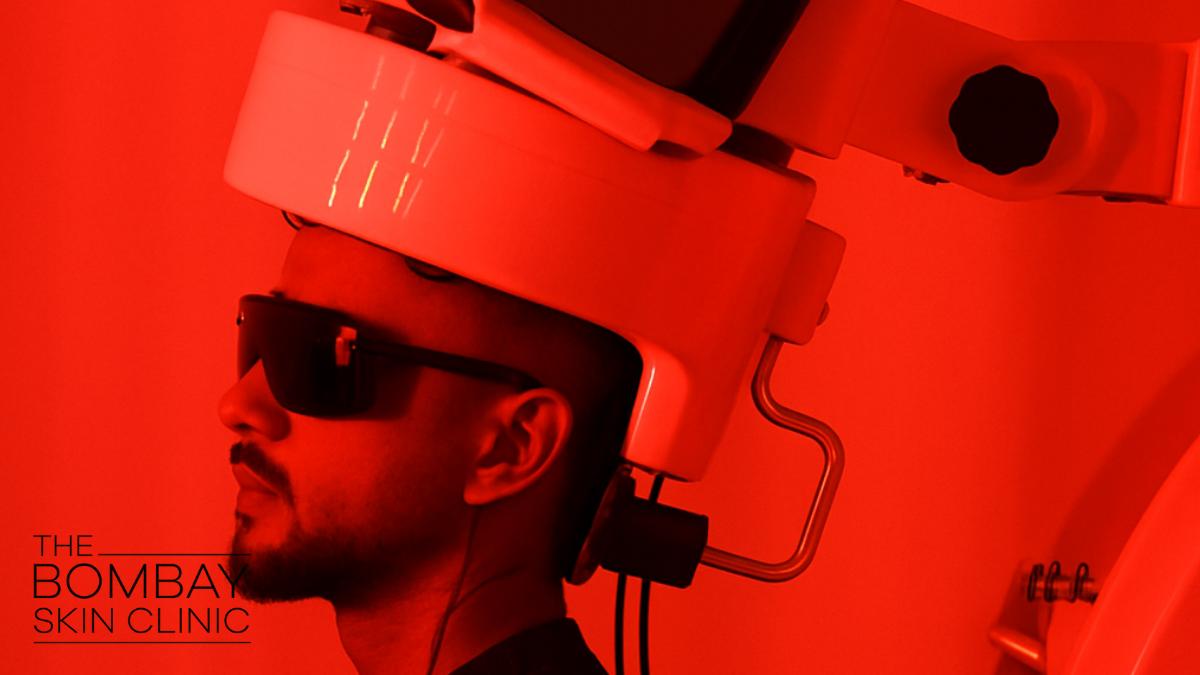
Eye Safety: Medical-grade protective goggles are always used to shield the eyes from direct light exposure during all facial and scalp sessions.
The Session: Treatment takes place in a private, hygienic room and typically lasts between 10 and 20 minutes.
Sensations: The procedure is painless; patients typically experience a gentle warmth. Mild, temporary redness may occur immediately after the session but resolves quickly.
Combination Therapies: Dr. Patel often prescribes red light therapy as an adjunctive treatment to enhance the outcomes of other medical procedures. Common combinations include:
- With Acne Protocols: Used alongside oral or topical prescriptions to help manage inflammation.
- With Hair Restoration Plans: Serves as a supportive therapy alongside PRP (Platelet-Rich Plasma), hair transplants, or Regenera Activa.
- With Skin Rejuvenation: Applied after chemical peels or microneedling to aid recovery and improve patient comfort.
Expected Results & Timelines
It is important to understand that RLT is not a “quick fix”. Changes develop gradually over multiple sessions, and results vary between individuals. For acne and skin sensitivity, the therapy may help reduce inflammation and improve comfort during healing after 3 to 6 sessions. For hair support, it can help improve microcirculation and hair vitality over a longer course of 12 to 16 weeks. It is also often used immediately after other cosmetic procedures to aid in calming the skin. Please note that RLT cannot regrow hair in dead follicles or reverse severe scarring; it is best viewed as a supportive therapy rather than a standalone cure. Maintenance sessions may be advised depending on your broader treatment goals.
Risks, Safety & Side Effects
Red light therapy is generally considered a low-risk, non-invasive procedure when performed under strict medical supervision. At The Bombay Skin Clinic, we ensure all treatments are delivered using medical-grade LED panels that are regularly maintained for consistency and hygiene. While the therapy is non-thermal and does not cause burns in the same way that some thermal lasers might, patients should still be aware of potential physiological responses, which are typically mild and transient.
Possible side effects may include:
Common, mild reactions: Patients often experience a sensation of mild warmth during the session, and some may observe temporary redness or flushing immediately after treatment, which usually resolves quickly without intervention.
Uncommon reactions: In rare cases, patients with very sensitive skin may experience mild dryness, tightness, or a tingling sensation.
Light sensitivity: Individuals who are prone to migraines or have specific photosensitivity triggers may occasionally experience a light-triggered headache.
To ensure maximum safety, protective eyewear is mandatory during all facial and scalp exposures to shield the eyes from direct light. It is also important to note that in-clinic medical devices differ significantly from home-use LED masks, which often vary in intensity and safety standards. Therefore, professional supervision is recommended to manage even these minor risks effectively.
How RLT Fits Into a Broader Dermatology Plan
Red light therapy is rarely used as a standalone solution for complex skin or hair concerns. At The Bombay Skin Clinic, we view it as a supportive modality that enhances the efficacy of a comprehensive, dermatologist-led treatment plan. By integrating LED phototherapy with other evidence-based procedures, we aim to target conditions from multiple angles—improving cellular repair and managing inflammation while other treatments address the root causes.
Common combinations include:
- For Hair Loss & Thinning: RLT is designed to improve scalp microcirculation and cellular energy. It is frequently prescribed to support protocols involving PRP (Platelet-Rich Plasma) therapy, Regenera Activa, oral medications, or trichology-based scalp nutrition.
- For Acne Management: In cases of inflammatory acne, red light helps calm the skin and reduce redness. It is most effective when used to complement evidence-based topical applications or oral medications, helping to manage flares while the primary medication treats the acne bacteria.
- For Post-Procedure Comfort: RLT is highly valued for its ability to soothe the skin. We often utilize it to reduce downtime and improve patient comfort immediately following chemical peels, fractional lasers, or microneedling sessions.
Frequently Asked Questions
Dr. Batul Patel (Dermatologist)
Medical Director – The Bombay Skin Clinic
Dr. Batul Patel is an award winning certified dermatologist, honoured as the “Dermatologist of the Year 2023” at the national level by The Economic Times. View profile