
Overview | What is red light therapy? | Benefits | Right candidate | Expect after each session | Compares | Protocols | Pricing | Why choose
Red light therapy (RLT), also called photobiomodulation, uses specific red and near-infrared light to support skin repair, calm inflammation, and complement hair and skin treatment plans. At The Bombay Skin Clinic in Mumbai, our dermatologists integrate medical-grade LED as a supportive option after an in-clinic assessment. Evidence is stronger for some uses than others, so we position RLT as an adjunct where it helps your overall outcome rather than as a stand-alone cure [1,2].
At a glance
- What it is: non-invasive LED exposure delivered at measured distance and time under dermatologist oversight.
- Helps with: post-procedure calming, support for acne-prone skin, perceived redness, and hair programme support as part of a combined plan [1-3,5-6].
- Session time: typically 10–20 minutes per area in a quiet, comfortable cabin.
- Downtime: none for most people; temporary warmth or mild redness may occur [1].
- Safety note: protective eyewear is mandatory for face/scalp sessions; photosensitising medicines or active infections require caution [1,7].
What is red light therapy?
RLT delivers visible red and often near-infrared light from calibrated LED panels. These wavelengths interact with cellular photoreceptors and may influence mitochondrial activity and downstream signalling associated with tissue repair and inflammation modulation [2,6]. In clinic, we use RLT to make the treatment journey more comfortable and to support recovery after procedures. For acne and hair concerns, it is considered a supportive addition alongside guideline-based therapies, not a replacement [3-5,8-9].
How does red light therapy work?
Laboratory and clinical data suggest red and near-infrared light are absorbed by chromophores within cells, modulating mitochondrial function and nitric oxide pathways. This may help reduce inflammatory mediators, encourage microcirculation, and assist tissue repair and comfort. In acne care, light has been explored for anti-inflammatory effects and, when combined with established topical/oral care, may aid lesion improvement in mild to moderate cases [3-5]. In hair plans, low-level light has supportive evidence for androgenetic hair loss when used consistently over months as part of a dermatologist-led regimen [8-9]. Individual response varies; regular sessions and reassessment are important [2-3,8-9].
Benefits and use-cases
- Post-procedure comfort and recovery support after peels, lasers, or microneedling, as advised by your dermatologist [2,6].
- Adjunct for acne-prone skin where calming, non-UV light may help with inflammation, combined with guideline-based therapy [3-5].
- Support for perceived redness and irritation following procedures, with expectations set conservatively [2].
- Hair and scalp programme support in androgenetic hair loss alongside core treatments, nutrition, and scalp care [8-9].
- Tissue-repair support in selected indications where comfort and healing are priorities [6].
Are you the right candidate?
- Adults and older teens seeking a non-invasive supportive option within a dermatologist-designed plan.
- Patients recovering after in-clinic procedures who would benefit from calming sessions.
- Individuals with acne-prone skin on guideline-based care, looking to add a light-based adjunct under supervision [4-5].
- Men and women with androgenetic hair thinning following a structured hair protocol [8-9].
Use with caution or avoid
- Photosensitivity due to medications or medical conditions; always disclose your prescriptions and health history [1,7].
- Active skin infections or unhealed wounds unless your dermatologist clears LED exposure.
- Seizure disorders, significant light sensitivity, or migraines triggered by light—requires individual risk discussion.
- Pregnancy and breastfeeding—discuss with your clinician; plans are individualised.
- Recent ocular procedures or eye conditions without explicit clearance; protective eyewear is mandatory during facial exposure [1,7].
Session plan and comfort
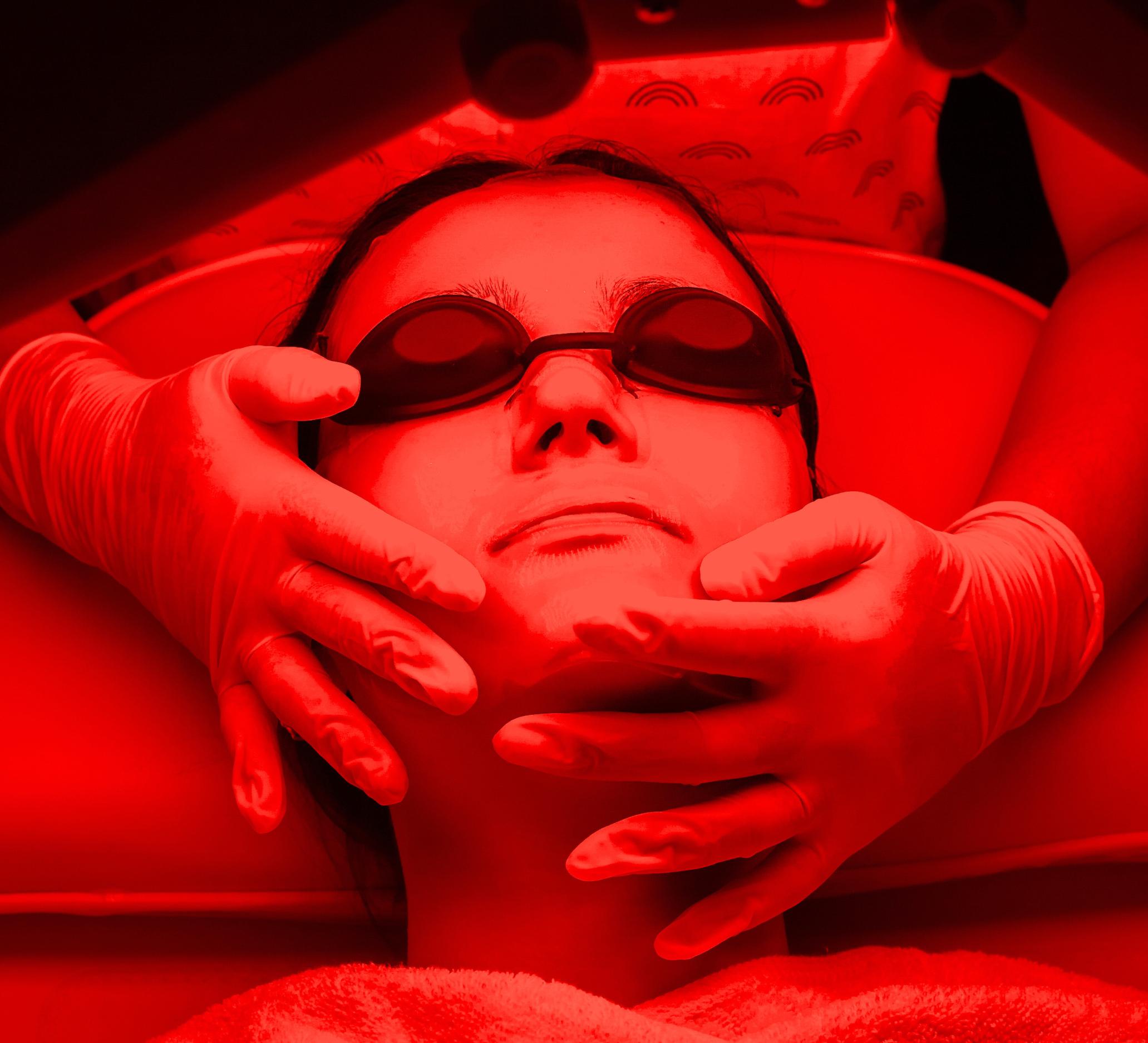
Your plan is customised at consultation. A typical course includes short sessions two to three times per week for several weeks. Each session lasts about 10–20 minutes per area. You will be seated or lying comfortably; the LED panel is placed at a measured distance. Protective eyewear is provided for face/scalp sessions. No anaesthesia is needed, and most patients describe gentle warmth. Your dermatologist will decide timing when combining with procedures such as peels, lasers, microneedling, or hair treatments [1-2].
What to expect after each session
- Immediate feel: gentle warmth; mild temporary redness may occur and usually settles quickly [1].
- Daily routine: you can resume normal activities straight away.
- Skincare: use a gentle cleanser and moisturiser the same day; reintroduce strong actives gradually if advised.
- Sun protection: use a broad-spectrum sunscreen on exposed treated areas during the day.
- Combination plans: continue your prescribed acne, pigmentation, ageing, or hair regimen as directed; LED is supportive [4-5].
Results and timelines
Improvements are gradual. Many patients report better skin comfort and post-procedure ease during the course. For acne-prone skin, adjunct benefits are typically assessed after a few weeks, alongside primary treatments. For hair concerns, programmes usually span several months with periodic reviews. Maintenance sessions may be suggested after your initial course. Because responses vary, we set checkpoints to review progress and adjust as needed [3-5,8-9].
How red light therapy compares
Clinic LED vs home devices
- Clinic panels are medical-grade with controlled output, measured distance, and strict hygiene, supervised by trained dermatology staff.
- Home devices can vary widely in output and user consistency. If you own one, we can guide safe, realistic use as part of your plan [1].
LED vs other energy-based treatments
- IPL and lasers target pigment, vessels, or texture with controlled heat; expected outcomes and downtime differ by device and settings.
- HIFU targets deeper layers for lifting and firming; it addresses different concerns than LED.
- LED is low-energy and designed for comfort and support, not a substitute for definitive corrective treatments.
When we combine LED
- Post-procedure comfort after peels, lasers, or microneedling, based on clinician judgement.
- As an adjunct in acne care alongside guideline-based topical and oral therapies [4-5].
- Within hair protocols that include scalp health, nutrition, and dermatologist-recommended treatments [8-9].
Devices and protocols we use at The Bombay Skin Clinic
We use medical-grade LED panels that deliver consistent irradiance across the treatment field. Protocols are designed by our dermatology team to suit indication, skin phototype, and comfort. We calibrate panel distance and exposure time and enforce protective eyewear. Cabins follow documented cleaning and disinfection, and devices are maintained as per manufacturer and clinic policies. These steps help ensure safety and a consistent experience at every visit.
Safety, risks, and contraindications
- Common: transient warmth and mild redness that resolve quickly [1].
- Uncommon: temporary dryness or irritation in sensitive skin; intervals or settings may be adjusted.
- Eye protection: mandatory during any facial or scalp exposure to minimise ocular risk [1,7].
- Drug-induced photosensitivity: certain antibiotics and other medicines require individual risk discussion [4-5,7].
- Active infections or unhealed wounds: treatment may be deferred until safe.
Aftercare checklist
- Use a broad-spectrum sunscreen on exposed treated areas during the day.
- Prefer gentle cleanser and moisturiser the same day; reintroduce strong actives slowly if advised.
- Avoid very hot showers, saunas, or vigorous workouts immediately after if skin feels flushed.
- Continue your core dermatologist-led plan; LED is supportive, not a replacement for primary therapy.
- Report unexpected irritation, light sensitivity, or headache so we can adjust your protocol.
Where and how we deliver care in Mumbai
Access dermatologist-led LED care across our Mumbai branches: Kemps Corner, Bandra, Andheri West, and Chembur. Appointments are spaced to avoid crowding. Each cabin follows documented hygiene, device disinfection, and eyewear protocols. Consultation is required before first exposure to confirm suitability and personalise your plan.
Red Light Therapy Indicative Pricing
Pricing is indicative and may vary by area size and whether LED is bundled with a procedure. At The Bombay Skin Clinic, red light therapy sessions typically start from Rs.5,000 per session, with value packages available after your dermatologist’s recommendation. Your exact plan and costs are shared transparently during consultation.
Why choose The Bombay Skin Clinic
- Dermatologist-led care with personalised protocols and measured dose-distance.
- Medical-grade panels with protective eyewear and strict hygiene.
- Combination planning with peels, lasers, microneedling, and hair therapies when appropriate.
- Convenient locations across Mumbai with clear counselling and follow-up.
References
- American Academy of Dermatology Association. Is red light therapy right for your skin? URL: https://www.aad.org/public/cosmetic/safety/red-light-therapy
- Hernández-Bule ML, et al. Unlocking the Power of Light on the Skin: Ph Save otobiomodulation in Dermatology. Int J Mol Sci (review). URL: https://pmc.ncbi.nlm.nih.gov/articles/PMC11049838/
- Pei S, et al. Light-based therapies in acne treatment. Indian Dermatol Online J. 2015. URL: https://pmc.ncbi.nlm.nih.gov/articles/PMC4439741/
- National Institute for Health and Care Excellence (NICE). Acne vulgaris: management (NG198). URL: https://www.nice.org.uk/guidance/ng198
- Reynolds RV, et al. Guidelines of care for the management of acne vulgaris. J Am Acad Dermatol. 2024. URL: https://www.jaad.org/article/S0190-9622%2823%2903389-3/fulltext
- de Abreu Chaves ME, et al. Effects of low-power light therapy on wound healing. An Bras Dermatol. 2014. URL: https://pmc.ncbi.nlm.nih.gov/articles/PMC4148276/
- Valter K, et al. Photobiomodulation use in ophthalmology: safety overview. Photobiomodul Photomed Laser Surg. 2024. URL: https://pmc.ncbi.nlm.nih.gov/articles/PMC11358123/
- Pillai JK, et al. Role of low-level light therapy in androgenetic alopecia. Int J Trichology. 2021. URL: https://pmc.ncbi.nlm.nih.gov/articles/PMC8906269/
- Lueangarun S, et al. A systematic review and meta-analysis of randomized controlled trials of FDA-approved LLLT devices for pattern hair loss. Lasers Med Sci. 2021. URL: https://pmc.ncbi.nlm.nih.gov/articles/PMC8675345/
Frequently Asked Questions
About the Author:

Dr. Batul Patel
Dr. Batul Patel is a board-certified dermatologist, trichologist, and Medical Director of The Bombay Skin Clinic, a doctor-led aesthetic centre in South Mumbai, Bandra, Andheri, and Chembur. She has built a strong reputation for her expertise in acne, pigmentation, anti-ageing, hair loss, laser dermatology, and non-surgical body contouring, including technologies such as Emsculpt Neo and CoolSculpting, where she combines clinical precision with advanced medical-grade technology. Dr. Patel is recognised as a trusted celebrity dermatologist in Mumbai, known for her diagnosis-first, “less is more” philosophy that focuses on natural, balanced, and sustainable results for the face, hair, and body. Dr. Batul Patel was honoured as the “Dermatologist of the Year 2023” at the national level by The Economic Times. She is regularly invited as a speaker, trainer, and key opinion leader at dermatology and aesthetic conferences, and is frequently featured in leading publications for her ethical, evidence-based approach and patient-centric care.