

Dr. Batul Patel (Dermatologist)
Medical Director – The Bombay Skin Clinic
Dr. Batul Patel is an award winning certified dermatologist, honoured as the “Dermatologist of the Year 2023” at the national level by The Economic Times. View profile
Overview | Key Differences | Who Is a Good Candidate | Results Timeline | Safety Considerations |
Price |
If you are comparing Density vs Thermage FLX, you are usually not looking for a generic machine comparison. You are trying to answer a more practical question: which non-surgical skin tightening treatment may fit your face, your skin quality, your comfort threshold, and your Mumbai lifestyle better.
At The Bombay Skin Clinic, we look at this decision through a dermatologist-led lens. We do not choose an RF treatment only by brand recognition. We look at the pattern of laxity, skin thickness, textural change, brow and jawline concerns, downtime tolerance, and whether your goal is subtle prevention, early tightening, or a more structured collagen-remodelling plan.
Both Density and Thermage FLX belong to the radiofrequency category. Broadly, radiofrequency treatments can improve facial skin laxity with an acceptable safety profile when used appropriately. The key difference is that they do not deliver energy in exactly the same way, and that can affect treatment planning, comfort, and how versatile the session feels in real practice.[1,2,4]
Quick verdict
Density may be especially useful for patients who want a newer dual-mode RF platform, more tailored area-based planning, and a treatment experience where comfort matters alongside tightening.
Thermage FLX may still be considered when a patient is specifically looking for a well-known monopolar RF treatment, especially in a one-session style plan or when periorbital wrinkle treatment is a major part of the discussion.
In clinic, the better choice is usually not decided by hype. It is decided by anatomy, concern severity, skin quality, and how the treatment fits into a broader anti-ageing plan.
Density vs Thermage FLX at a glance
| Parameter | Density | Thermage FLX |
|---|---|---|
| Technology type | Sequential monopolar and bipolar radiofrequency | Monopolar radiofrequency |
| Main concerns | Early to moderate laxity, texture, contour support, lower face and full-face tightening | Wrinkles, laxity, periorbital lines, overall firming |
| Invasiveness | Non-surgical, non-invasive | Non-surgical, non-invasive |
| Comfort | Usually planned as a more comfort-forward RF session because of cooling and dual-mode delivery | Usually tolerable, but some patients still describe brief heat-related discomfort during treatment |
| Downtime | Usually minimal, temporary redness or mild swelling may occur | Usually minimal, temporary redness or minor swelling may occur |
| Sessions | Depends on concern and plan, often discussed as a single session with maintenance or a staged plan | Commonly positioned as a single-treatment session with maintenance over time |
| Results timeline | Some early tightening may be noticed, with collagen remodelling building over the following weeks to months | Some early tightening may be noticed, with fuller change building over 2 to 6 months |
| Longevity | Varies by age, laxity, lifestyle, and maintenance planning | May last around 1 to 2 years in selected patients, with maintenance often discussed |
| Pricing Overview | More cost-efficient | Often positioned at a premium price point |
What is the difference between Density and Thermage FLX?
How Density works
Density is a radiofrequency platform that can deliver monopolar and bipolar energy sequentially in one treatment pulse, with cryogen cooling and impedance-based energy adjustment.[4]
In practical terms, this means the treatment can be planned to address both deeper and relatively more superficial layers in the same overall session, instead of relying on monopolar RF alone. That dual-mode design is the reason Density often enters the conversation for patients who want tightening, contour support, and a more refined treatment feel across different parts of the face.
For Indian skin, this matters because treatment planning is rarely only about laxity. Many patients in Mumbai also want smoother texture, cleaner lower-face definition, and a practical return to work or social activity. A device that allows concern-based customisation may therefore be more relevant than a one-line promise.
How Thermage FLX works
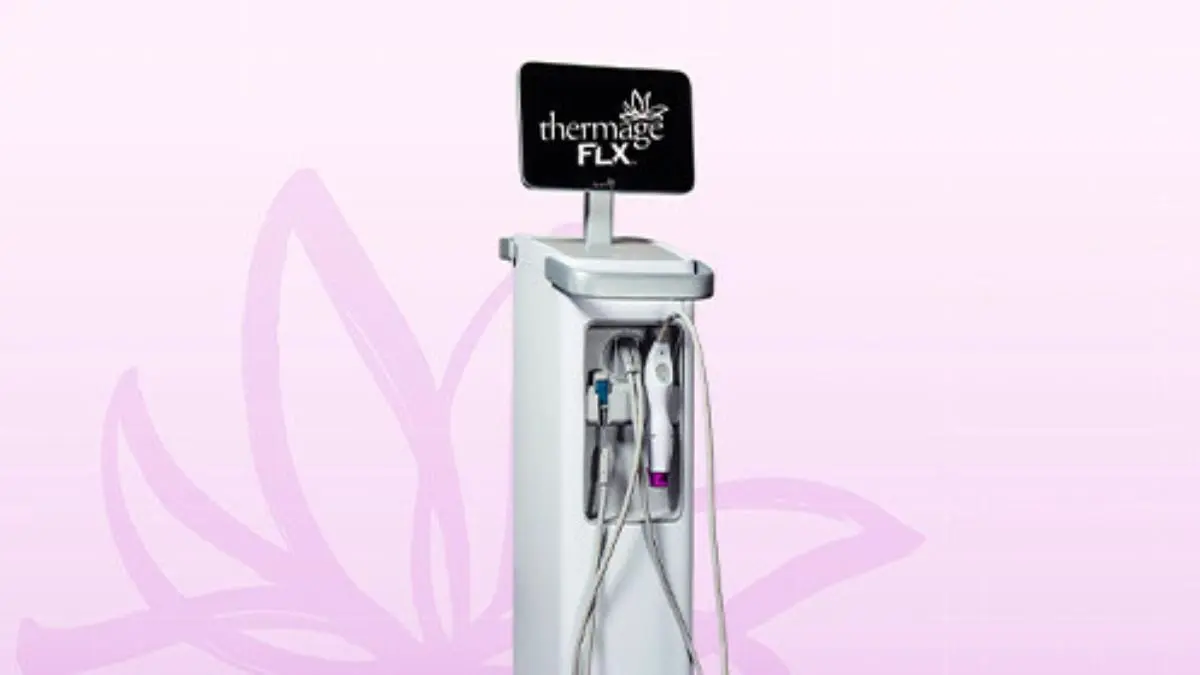
Thermage FLX is a monopolar radiofrequency system. The FDA-cleared system is indicated for non-invasive treatment of periorbital wrinkles and rhytids, including the upper and lower eyelids, and for non-invasive treatment of wrinkles and rhytids. It delivers RF energy while cooling the epidermis, and the platform monitors skin contact and impedance during treatment.[2,3]
Thermage FLX also has dedicated treatment tips, including an eye tip, and incorporates vibration on selected treatments to help patient comfort. In the market, it is often positioned as a legacy, single-session skin tightening treatment with gradual collagen remodelling over the following months.
Who may be a good candidate for Density?
When Density may be especially useful
- Patients with early to moderate facial laxity who want a non-surgical skin tightening treatment without major downtime.
- People who want treatment planning that can be adapted by zone, such as brow area, cheeks, jawline, submental area, or full face.
- Patients who care about comfort and may be cautious about older heat-heavy RF experiences.
- Those seeking a dermatologist-led collagen-remodelling plan that may also consider texture and contour support, not only wrinkle count.
A small 2025 case series on the Density dual-mode RF system in darker skin tones reported improvement in firmness, texture, contouring, and patient satisfaction, with minimal discomfort and no pigmentary change reported in that series. This is encouraging, but it is still early clinical data and should be interpreted as supportive rather than definitive.[5]
What are the key differences between Density and Thermage FLX?
Energy delivery and depth
Density uses sequential monopolar and bipolar RF. Thermage FLX uses monopolar RF. That is the core technical difference, and it is why these two treatments should not be treated as interchangeable.
Skin concerns each treatment may address
Both may be relevant for mild to moderate laxity and wrinkle concerns. Density may be especially useful when we want a broader tightening conversation that also accounts for contour and skin quality. Thermage FLX may still be considered when wrinkle treatment, especially around the eyes, is central to the brief.
Comfort during treatment
Thermage FLX includes cooling and vibration to improve tolerability. Density is built around cooling, impedance feedback, and dual-mode delivery, and is often discussed as a more comfort-forward experience in actual practice.[3,4]
Downtime and recovery
Neither treatment usually requires major downtime. Mild redness or swelling can occur after RF sessions, and this is usually short-lived. In a busy city such as Mumbai, both options may fit patients who need to return to work, events, or family commitments quickly.[3,6]
Number of sessions and treatment planning
Thermage FLX is usually marketed around a single-session approach with gradual improvement afterward. Density can also be used in a single-session format, but in clinic it often lends itself well to more personalised planning based on area, laxity pattern, and maintenance goals.
Flexibility across face and treatment goals
This is where Density often becomes more relevant in a dermatologist-led setting. When the concern is not just loose skin but a mix of jawline blur, lower-face heaviness, early brow drop, or textural ageing, a more nuanced RF plan may be useful.
What is the treatment experience like with Density vs Thermage FLX?
Session time
Session duration varies by area and treatment plan. Thermage FLX offers different tips and is described by the manufacturer as up to 25% faster with the newer 4.0 cm2 total tip versus the older 3.0 cm2 tip.
Density session time depends on the areas covered and whether the session is focused or full-face. In clinic, time is less important than proper coverage, comfort, and whether the face is being treated strategically.
Numbing and comfort measures
Comfort planning matters. Some patients do well with simple cooling and pacing. Others benefit from a more structured comfort protocol. Thermage FLX uses vibration and cooling. Density uses cryogen cooling, adjustable cooling levels, and impedance-based energy adjustment.[3,4]
At our clinic, this part is not handled casually. For Mumbai patients coming in between workdays, shoots, meetings, or social commitments, treatment comfort is part of good planning, not an afterthought.
What recovery usually looks like
Most patients can return to routine activity soon after either treatment. Temporary redness and mild swelling may happen, and usually settle quickly. We generally advise patients to plan the timing sensibly if they have a major event, because even low-downtime treatments are still procedures.[3,6]
How we plan sessions at The Bombay Skin Clinic
We assess facial anatomy, not just age. A 35-year-old with early lower-face laxity and good skin quality is not planned the same way as a 48-year-old with diffuse textural ageing, early jowling, and higher downtime sensitivity. That is one reason a device-only comparison is never enough.
We also factor in Indian skin behaviour, work and travel schedules, and whether the patient may need standalone RF or an adjunctive plan over time.
When do results start and how long may they last?
Density results timeline
With Density, some patients notice an early tightening effect, but the more meaningful change usually depends on collagen remodelling over the following weeks to months. The 2025 DENSITY case series reported visible improvement at 3 months after a single session.[5]
Thermage FLX results timeline
Thermage states that measurable results usually appear gradually over 2 to 6 months following a single treatment session, and may last 1 to 2 years depending on skin condition and ageing process. Real-world monopolar RF patient feedback has also shown that many patients notice change within 1 to 2 months, with peak subjective effect often around that period, although individual response varies.[3,6]
Maintenance and repeat treatment planning
Neither treatment stops ageing. Maintenance depends on baseline laxity, collagen quality, weight change, sun exposure, and how quickly your face is changing over time. In clinic, this is where long-term treatment planning matters more than any one machine.
What are the safety considerations and limitations?
Skin type suitability
Radiofrequency is often considered relevant across a broad range of skin types because it does not rely on pigment targeting in the same way many light-based treatments do. The DENSITY case series in darker skin tones reported no pigmentary change in that small group, which is helpful but still early evidence.
Contraindications and precautions
RF treatment is not for everyone. Thermage safety information lists implantable pacemakers, cardioverters, defibrillators, and other implantable electrical devices as contraindications. The manufacturer also notes limited study in pregnancy, breastfeeding, children, and some other groups.[3]
In practical clinic terms, we also review active infection, irritated skin, recent procedures, history of unusual scarring, and whether the patient’s goals are realistic for non-surgical tightening.
When we may suggest another option or combination plan instead
If laxity is advanced, if volume loss is the real driver, or if the patient needs a layered plan rather than RF alone, we may suggest another treatment or a combination pathway. In evidence-led aesthetic dermatology, devices are tools. They are not diagnoses.
Where Density may have an edge
More tailored treatment planning across concern areas
Because Density combines monopolar and bipolar RF and supports different tips, it may allow more custom planning across facial zones.
May suit patients who want a dermatologist-led, anatomy-based RF plan
For patients whose concern is not just wrinkles but brow position, lower-face heaviness, jawline softness, and textural ageing together, Density may be especially useful in a more anatomy-led treatment design.
May be relevant when comfort and practical downtime matter
Its cooling and feedback features, along with emerging clinical data showing low reported discomfort, may make Density especially relevant for patients who want a modern RF experience with minimal disruption.[4,5]
May work well in a broader collagen-support plan
In a clinic setting, Density may fit well into a longer anti-ageing strategy for patients who want steady collagen support rather than a one-time, brand-led decision.
Where Thermage FLX may still be considered
Patients specifically seeking a legacy monopolar RF platform
Some patients come in already familiar with Thermage. In those cases, it remains a recognised monopolar RF option with a long market history and established indications for wrinkles and periorbital treatment.
Patients prioritising a single-session style plan
Thermage FLX is still commonly associated with a single-treatment session followed by gradual improvement over months.
Certain wrinkle and laxity concerns where monopolar RF is being considered
It may still be relevant for patients whose primary concern is wrinkles and firming, rather than a more tailored multi-zone strategy, especially when the eye area is part of the treatment discussion.
How do we guide this decision at The Bombay Skin Clinic?
Based on facial anatomy and degree of laxity
We look at where the face is changing first. Brow, midface, jawline, neck, and submental fullness do not age in the same way.
Based on skin quality, not just sagging
Texture, pore visibility, fine creasing, and skin thickness all matter. A treatment that sounds right on paper may not be the best match once the skin is assessed properly.
Based on downtime tolerance and Mumbai lifestyle
Patients in Mumbai often want treatments that can fit around office schedules, weddings, travel, and social calendars. That is why we build the decision around practical downtime, not only device popularity.
Based on budget, maintenance preference, and long-term planning
Some patients want a premium legacy platform they already know. Others want the most tailored current plan for their concern. Our job is to match the treatment to the face, the comfort threshold, and the long-term objective.
What is the price of Density vs Thermage FLX in Mumbai?
Density pricing at The Bombay Skin Clinic
Density pricing depends on the treatment area, number of zones covered, and whether the plan is focused or full-face. For many patients, it represents a more comfortable, more accessible, and more cost-effective approach to RF skin tightening. In clinic, we prefer to quote after assessment because the right protocol is not identical for every face.
Thermage FLX pricing expectations in Mumbai
Thermage FLX pricing in Mumbai usually varies by area and shot plan, and may sit at a higher price point depending on the clinic and treatment plan. Since we do not offer Thermage FLX, exact market pricing can vary between providers and consultation protocols.
FAQs
Is Density more painful than Thermage FLX?
Not necessarily. In practice, many patients find Density to be a more comfort-forward experience because of its cooling and energy-delivery design, while Thermage FLX can still involve brief heat-related discomfort even with vibration and cooling.
Does Density need more sessions than Thermage FLX?
Not always. Both may be discussed as single-session treatments with maintenance, but the real answer depends on your degree of laxity, age, skin quality, and treatment goals.
Is there any downtime after Density or Thermage FLX?
Usually, downtime is low with both. Mild redness or swelling can happen, but many patients return to routine activity quickly.
Which treatment may be more relevant for jawline and lower face laxity?
This depends on the pattern of ageing. In many patients with early jawline blur and lower-face laxity, Density may be especially useful because treatment can be planned more selectively across zones.
Are Density and Thermage FLX suitable for Indian skin?
Radiofrequency treatments are often considered suitable across a broad range of skin tones. Still, device choice and settings should be decided by a qualified dermatologist. Early DENSITY data in darker skin tones is encouraging, but more long-term evidence is still needed.
Can these treatments be combined with other anti-ageing procedures?
Yes, in selected patients. But combination planning should be based on your anatomy, timeline, and skin condition. In many cases, RF works best as one part of a broader anti-ageing plan rather than as an isolated decision.
Sources
- Rohrich RJ, Schultz KP, Chamata ES, Bellamy JL, Alleyne B. Minimally Invasive Approach to Skin Tightening of the Face and Body: Systematic Review of Monopolar and Bipolar Radiofrequency Devices. Plast Reconstr Surg. 2022. https://pubmed.ncbi.nlm.nih.gov/35877937/
- U.S. Food and Drug Administration. Thermage FLX System, 510(k) Summary K170758. 2017. https://www.accessdata.fda.gov/cdrh_docs/pdf17/K170758.pdf
- Solta Medical. Thermage FLX system and patient safety information. https://www.thermage.com/ and https://www.thermage.com/hcp/
- Jeisys Medical. DENSITY RF technology overview and FDA 510(k) Summary K230663. https://densityrf.com/en/ and https://www.accessdata.fda.gov/cdrh_docs/pdf23/K230663.pdf
- Lin S, Kumar N. Clinical Evaluation of a Novel Dual-Mode Radiofrequency Device for Facial Laxity: A Case Series. J Cosmet Dermatol. 2025. https://pubmed.ncbi.nlm.nih.gov/41256054/
- Hwang Y, et al. Subjective evaluation of monopolar radiofrequency treatment by patients in aesthetic rejuvenation. Skin Res Technol. 2024. https://pmc.ncbi.nlm.nih.gov/articles/PMC10818126/
Dr. Batul Patel (Dermatologist)
Medical Director – The Bombay Skin Clinic
Dr. Batul Patel is an award winning certified dermatologist, honoured as the “Dermatologist of the Year 2023” at the national level by The Economic Times. View profile