

Dr. Batul Patel (Dermatologist)
Medical Director – The Bombay Skin Clinic
Dr. Batul Patel is an award winning certified dermatologist, honoured as the “Dermatologist of the Year 2023” at the national level by The Economic Times. View profile
What Are Threading Alternatives | Benefits of Clinic-Based Hair Removal | Who Is a Suitable Candidate | Price
Introduction – Why look for clinic alternatives to threading?
Threading is one of the most common ways people in Mumbai shape their eyebrows or remove unwanted facial hair on the upper lip, chin and sides of the face. It is quick, widely available in salons and relatively affordable per sitting.
However, many patients who visit The Bombay Skin Clinic tell us they are tired of frequent threading sessions, skin irritation and worry about long-term effects on their skin. This is where clinic-based alternatives to threading, such as laser hair reduction and dermaplaning, can offer a more controlled and dermatologist-led approach.
What is threading for facial hair and eyebrows?
Threading is a manual hair removal method using a twisted cotton thread to pull out multiple hairs from the root. It is usually used for:
- Eyebrow shaping
- Upper lip and chin hair
- Sides of the face and forehead
Because hair is removed from the root, results last longer than shaving. But threading still needs to be repeated every few weeks, depending on your hair growth.
Common problems patients face with frequent threading
In real life, threading does not suit everyone. At our clinics, patients often report issues such as:
- Redness, burning and small bumps immediately after threading
- Ingrown hair and tiny follicular bumps on the upper lip and chin
- Darkening of the skin (post-inflammatory pigmentation) over time
- Worsening of acne in breakout-prone skin
- Discomfort or pain, especially on sensitive facial areas
- Uneven regrowth or over-thinning of eyebrows if done aggressively
Because of these problems, many people start searching for safer, clinic-based alternatives to threading in Mumbai that can give smoother skin and reduce the need for frequent salon visits.
Key advantages of clinic-based alternatives to threading
Dermatologist-supervised treatments such as laser hair reduction and dermaplaning can offer several advantages over routine threading, especially for facial hair.
- Better safety in a medical setting with trained doctors and therapists
- More predictable and longer-lasting reduction in hair growth compared to threading
- Improved control of skin irritation, bumps and pigmentation
- Customisation for Indian skin tones and different hair thickness
- Use of US-FDA cleared devices and sterilised instruments
- Possibility to address underlying causes like hormonal changes in parallel
Instead of only “removing hair for now”, clinic treatments aim to reduce facial hair growth over a course of sessions and to support overall skin health.
Who should (and should not) consider alternatives to threading?
Good candidates for clinic facial hair removal
You may be a good candidate for clinic-based alternatives to threading if you:
- Have repeated irritation, redness, cuts or bumps after threading
- Notice darkening of the upper lip, chin or sides of the face over time
- Have coarse facial hair on the chin, jawline or upper lip that grows back quickly
- Have fine facial hair (“peach fuzz”) making the face look dull in photos
- Have important events like weddings, shoots or public appearances and want smoother, more even skin
- Prefer a more medical and hygienic setting than a busy salon
People with conditions like PCOS or other hormonal issues causing excess facial hair may also benefit when clinic treatments are combined with medical evaluation and lifestyle advice.
Who should be cautious or avoid these treatments
Certain people need extra evaluation or may need to delay facial laser hair reduction or dermaplaning. For example:
- Pregnant patients, where many aesthetic procedures are usually postponed as a precaution[3]
- People with very active acne, open wounds, infections or cold sores on the treatment area[3,6]
- Those with a history of keloids or abnormal scarring[3]
- People on certain medicines like isotretinoin in the recent past[2]
- Very tanned or recently sunburned skin in the planned treatment area[4]
These are general points from published guidelines and reviews. Your dermatologist at The Bombay Skin Clinic will always assess your medical history, skin type and current medicines before confirming whether a given treatment is suitable for you.
Our main clinic alternatives to threading at The Bombay Skin Clinic
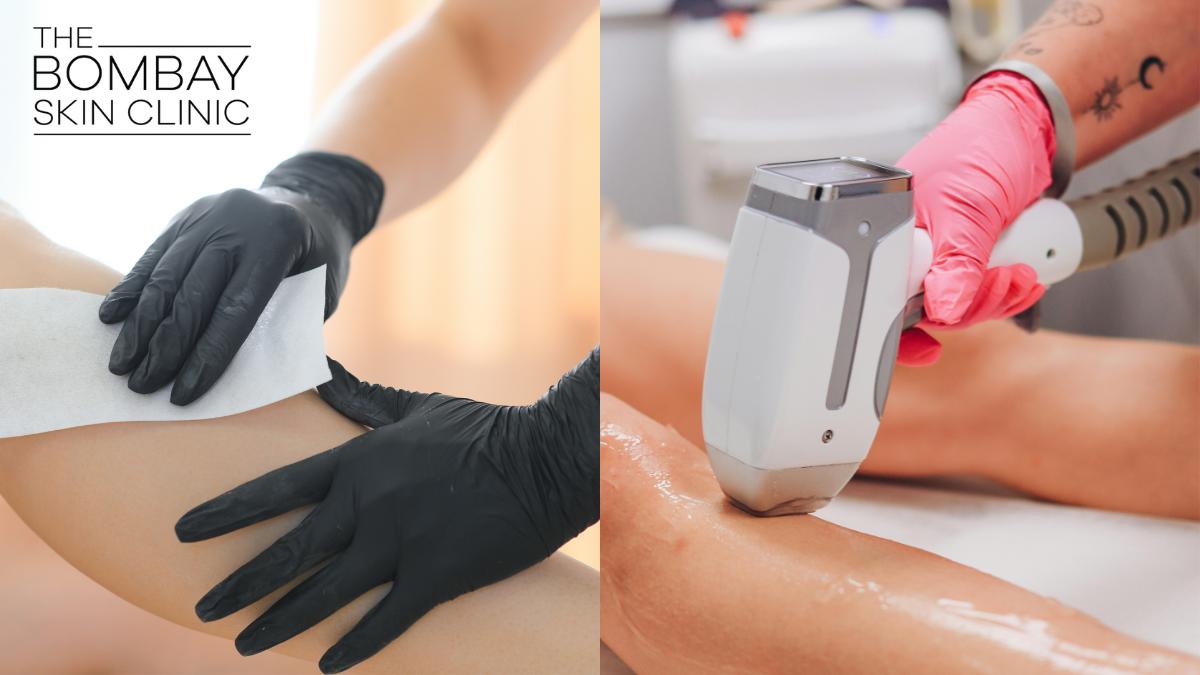
Laser hair reduction for facial hair (upper lip, chin, cheeks, jawline)
Laser hair reduction is a medical procedure where concentrated light is used to target pigment in the hair follicle and gradually reduce hair growth over several sessions.[1,2]
At The Bombay Skin Clinic, we use advanced laser platforms selected for Indian skin types. Common facial areas treated as an alternative to frequent threading include:
- Upper lip
- Chin and jawline
- Cheeks and side locks
- Forehead and mid-brow (in selected cases)
The goal is hair reduction, not complete removal. Over a full course of sessions, many patients notice that hair becomes finer, slower to grow back and easier to manage.[1–3]
Dermaplaning facials for fine facial hair (“peach fuzz”) and glow
Dermaplaning is a controlled skin resurfacing procedure where a sterile blade is gently moved over the skin to remove the topmost layer of dead cells along with fine vellus hair, often called “peach fuzz”.[5–7] It helps to:
- Smoothen uneven skin texture
- Give makeup a more even finish
- Make skin look brighter and more polished
- Temporarily remove fine facial hair without chemicals
Unlike threading, dermaplaning is usually done for the full face (avoiding eyebrows) and is performed by a trained professional in a clinic setting. It is considered a minimally invasive cosmetic procedure when properly done.[6,7]
Medical support for hormonal or excessive facial hair (PCOS and others)
When excess facial hair is linked to hormonal changes, such as in polycystic ovary syndrome (PCOS), weight changes or certain medicines, clinic treatments alone may not be enough. In those cases, our dermatology and trichology teams can work with your gynaecologist or physician to:
- Assess underlying hormonal or metabolic concerns
- Coordinate blood tests if required
- Optimise skincare and hair removal methods that are kinder to your skin
- Support you with lifestyle and maintenance advice
Laser hair reduction and dermaplaning are then used as supportive, local treatments, while the root cause is addressed separately.
How these alternatives to threading actually work on hair and skin
How laser hair reduction targets the hair follicle
Laser hair reduction uses specific wavelengths of light that are absorbed by the pigment (melanin) in the hair shaft and follicle. The absorbed light is converted into heat, which damages the hair follicle enough to slow or reduce future growth.[1–3]
Important points about how it works:
- Hair grows in cycles (growth, resting and shedding). Lasers work best on hair in the active growth phase.
- Because not all hairs are in the same phase at the same time, multiple sessions are needed.
- Modern laser protocols and cooling systems help protect the top layer of skin while focusing energy on the hair follicle.[2]
- Settings are adjusted based on your skin colour, hair thickness and area being treated.
How dermaplaning removes fine hair and surface dead skin
In dermaplaning, a sterile, single-use blade is gently moved at a controlled angle over the skin. This removes:
- The outermost layer of dead skin cells
- Fine vellus hair on the face
- Some surface debris like dry flakes and excess oil
By removing this build-up, dermaplaning can temporarily improve texture and allow skincare products to spread more evenly.[5–7] However, it does not affect the deeper parts of the hair follicle, so it is not a hair reduction treatment in the same way as laser. It is better thought of as an exfoliating facial with added hair removal benefits.
How medical management supports long-term control of facial hair
When facial hair is linked to hormones or certain medical conditions, clinic procedures are only one part of the plan. Medical management may include:
- Evaluation of menstrual history, weight changes and other symptoms
- Discussion about current medicines and possible side effects
- Referral to or coordination with an endocrinologist or gynaecologist where needed
- Regular follow-up to track both skin health and hair growth pattern
In such cases, clinic alternatives to threading are used as supportive tools to improve comfort, confidence and skin appearance, while medical treatment addresses the underlying cause over time.
Session plan & comfort – what to expect at our Mumbai clinics
Your first visit: consultation, skin assessment and patch test
At The Bombay Skin Clinic, every facial hair concern starts with a detailed consultation. During this visit:
- A dermatologist or trained clinician takes your medical and skin history
- Your facial hair pattern, skin type and any pigmentation are assessed
- Previous methods of hair removal and your concerns with threading are discussed
- We explain suitable alternatives such as laser hair reduction or dermaplaning and answer your questions
- A small test spot (patch test) may be done to check your skin’s response, especially for lasers
This approach helps us design a safe, realistic treatment plan rather than a one-size-fits-all package.
On the day of treatment: step-by-step experience
While the exact steps vary by treatment, a typical laser hair reduction or dermaplaning session may include:
- Cleansing the face to remove makeup, sunscreen and excess oil
- Marking or planning the treatment area, especially for facial lasers
- Eye protection for laser treatments
- Use of cool gel or cooling devices to make laser sessions more comfortable
- Controlled passes of the laser handpiece or dermaplaning blade across the skin
- Post-procedure soothing products and sunscreen application
Most facial laser sessions are usually tolerable, with patients describing a quick “rubber band snap” sensation. Dermaplaning is often described as a light scraping or brushing feeling. Numbing cream may be used in selected cases, if appropriate.
Number of sessions, frequency and maintenance visits
The exact number of sessions depends on your hair type, growth pattern and chosen treatment. In general:
- Facial laser hair reduction is usually planned as a course of multiple sessions spaced a few weeks apart, followed by occasional maintenance as advised by your dermatologist.[1–3]
- Dermaplaning is often done every few weeks as part of a skin maintenance or glow programme, depending on your skin sensitivity and goals.[6]
During your consultation, our team will outline a personalised plan and suggested timelines so you can plan around work, social events and travel.
Safety, downtime and contraindications
Common, expected side effects after laser or dermaplaning
When performed by trained professionals using suitable equipment, laser hair reduction and dermaplaning are generally considered safe procedures.[1–3,6] However, some temporary effects are common and usually settle within a short time:
- Mild redness and warmth in the treated area
- Light swelling around hair follicles after laser
- Slight tightness or dryness of the skin after dermaplaning
- Increased sensitivity to sun exposure for a few days
These are usually managed with cool compresses, gentle skincare and strict sun protection, as advised by your dermatologist.[3,4,6]
When to delay or avoid treatment (medical and skin conditions)
Your safety always comes first. Based on published guidance and practical experience, clinic procedures such as facial lasers or dermaplaning may be delayed or avoided if you:
- Have active infections, cold sores, open cuts or uncontrolled acne in the area[3,6]
- Have a history of keloids or very abnormal scarring[3]
- Have very recent sunburn, strong tanning or recent use of self-tanning products[4]
- Are on or have recently finished certain medicines that affect skin healing[2]
- Are pregnant or breastfeeding and your doctor advises postponement for comfort and caution[3]
At The Bombay Skin Clinic, these points are always checked before planning any procedure. If something is not suitable right now, we will suggest alternatives like temporary gentle methods or simple skincare while you wait.
While serious side effects are uncommon in trained hands,[1–3,6] early review helps manage any issue more smoothly.
What results to expect and realistic timelines
Changes after the first few sessions
It is important to keep expectations realistic. After the first one or two laser hair reduction sessions, many patients notice:
- Hair may grow back more slowly between sessions
- Some hairs may shed a few days to weeks after treatment
- New hair feels softer or finer in some areas
Dermaplaning results are usually immediate in terms of smoothness and makeup finish. The face often looks brighter and feels smoother right after the session, as dead cells and fine hair have been removed.[5–7]
Results over a full course of sessions
Over a full, properly spaced course of laser sessions:
- Many patients experience a significant reduction in facial hair thickness and density[1–3]
- Shaving, threading or waxing needs may reduce or become less frequent
- Ingrown hairs and bumps may improve with the right skincare
Dermaplaning, when repeated as advised, can support a regular glow and smoother texture, especially in people who cannot tolerate chemical peels or strong exfoliants.[5–7]
However, individual responses vary. Factors like hormones, genetics, medicines and lifestyle all play a role. Your dermatologist will review progress periodically and adjust your plan as required.
How long improvements usually last and when top-ups are needed
Laser hair reduction offers long-term reduction in many patients, but occasional maintenance sessions are usually needed to keep results stable over the years.[1–3] The timing of top-ups depends on how quickly your hair starts to return.
The smoothing effect of dermaplaning is temporary and generally lasts a few weeks, as the skin naturally renews and fine hair grows back.[6] Regular sessions can help maintain the effect as part of your overall skincare routine.
Threading vs clinic alternatives – which option is better for you?
Threading vs laser hair reduction for facial hair
Threading pulls hair from the root but does not affect the deeper parts of the follicle. Hair grows back within days to weeks and the cycle continues.
Laser hair reduction, on the other hand, acts on the follicle itself and can reduce its ability to produce thick hair over a course of sessions.[1–3] For many patients with strong upper lip, chin or jawline hair, this offers more sustained relief and less frequent visits compared to threading.
However, lasers need a proper medical set-up, clear aftercare and commitment to multiple sessions. They are not a one-time fix.
Threading vs dermaplaning for fine hair and texture
Threading targets specific hairs and is usually focused on eyebrows or small facial areas. It can be too harsh or uneven for full-face fine hair.
Dermaplaning, by contrast, treats larger areas and focuses on overall texture, glow and removal of fine vellus hair.[5–7] It is a good option if your main concern is dullness, makeup not sitting well or visible fine fuzz on the cheeks and jawline.
But dermaplaning is not ideal for shaping eyebrows, as it does not give the same precision as threading or microplucking. In many cases, a combination of careful eyebrow threading and periodic dermaplaning works well.
Threading vs home methods
Home methods such as razors, depilatory creams and epilators can be convenient, but each has limitations:
- Shaving gives very short-term smoothness and may cause a rough feel as hair grows back
- Depilatory creams use chemicals that can irritate sensitive skin
- Epilators pull hair from the root but may cause discomfort and ingrown hair
Compared to these, clinic alternatives to threading in Mumbai provide structured, supervised care with clear safety checks, which many patients find reassuring.
When threading still has a role and when to switch
Threading can still be useful in specific situations, such as:
- Precise shaping of eyebrows in the hands of an experienced therapist
- Temporary touch-ups when you are between laser sessions
- Occasional upper lip or chin hair removal if your growth is very minimal
If you find that you are threading every few weeks, noticing darkening or irritation and feeling self-conscious despite frequent sessions, it may be time to explore clinic-based alternatives with a dermatologist.
Aftercare checklist after a threading-alternative session
Immediate dos and don’ts (first 24–48 hours)
Simple aftercare can greatly reduce the risk of irritation and pigmentation after facial laser or dermaplaning:[3,4,6]
- Keep the area clean and dry; wash gently with a mild cleanser
- Use only the soothing creams suggested by your dermatologist
- Avoid hot showers, saunas, steam and heavy exercise for the first day
- Do not scrub, pick or rub the treated area
- Avoid makeup on freshly treated skin for at least 24 hours, or as advised
Skin-care routine in the weeks between sessions
Between sessions, a simple, consistent routine works best:
- Gentle cleanser used twice daily
- Hydrating moisturiser suited to your skin type
- Avoidance of strong exfoliants or actives on freshly treated areas unless approved by your dermatologist
- Regular follow-up visits as per your session schedule
If you are on any medical creams for acne or pigmentation, discuss the timing of their use around your procedure days so that your skin is not overloaded.
Sun protection and pigmentation prevention tips
Sun protection is essential after any facial procedure. Published guidance on laser hair removal and dermaplaning emphasises the importance of sun avoidance and regular sunscreen use.[3,4,6]
- Apply a broad-spectrum sunscreen of at least SPF 30 during the day
- Reapply sunscreen every few hours if you are outdoors
- Use hats, scarves or umbrellas when stepping out in strong sunlight
- Avoid direct sun exposure on treated areas for the period advised by your dermatologist
These steps help reduce the risk of post-procedure darkening and support more even results.
Indicative pricing for clinic alternatives to threading in Mumbai
At The Bombay Skin Clinic, pricing for facial laser hair reduction and dermaplaning is indicative and customised based on:
- The areas being treated (for example, upper lip alone versus full lower face)
- The number of sessions planned in your course
- Whether treatments are combined with other skin procedures as part of a programme
As a broad indication, single-session prices for small facial areas and dermaplaning start from a level typical for premium dermatology clinics in South Mumbai and western suburbs. Final estimates are always shared clearly after your in-clinic assessment so that you know what is included, such as:
- Consultation and skin assessment
- Treatment sessions and post-care visits where applicable
- Any recommended skincare essentials related to the procedure
Our team will also explain the difference between per-session billing and value-based packages, so you can make an informed decision based on your goals and budget.
Why choose The Bombay Skin Clinic for threading alternatives?
Dermatologist-led care and evidence-based protocols
The Bombay Skin Clinic is a dermatologist-led practice where every treatment plan is overseen by qualified skin specialists. Protocols for laser hair reduction and dermaplaning are based on published guidelines and current dermatology literature, adapted for Indian skin types.[1–3,6,7,23]
This means decisions about your care consider both cosmetic goals and long-term skin health.
Advanced, US-FDA cleared devices and strict hygiene
Our clinics use advanced laser platforms and medical-grade equipment chosen for their safety profile and suitability for a wide range of Indian skin tones. Devices are maintained and calibrated as per manufacturer and safety recommendations.
Each treatment follows strict hygiene protocols, including:
- Single-use consumables where appropriate
- Proper sterilisation of reusable instruments
- Protective gear for patients and staff
- Clean, well-ventilated treatment rooms
Personalised treatment plans for Indian skin tones
Indian skin is diverse. Some people have very fair skin with dark hair, while others have deeper skin tones with varying hair thickness. Our team adjusts laser settings, session spacing and aftercare advice carefully for each individual to reduce the risk of pigmentation or other side effects.[2–4]
Dermaplaning protocols are also adjusted for sensitive, acne-prone or combination skin, so that exfoliation is effective yet gentle.
Multiple branches in Mumbai (Kemps Corner, Bandra, Andheri West, Chembur, Lower Parel)
The Bombay Skin Clinic has a growing presence across Mumbai, with branches in:
- Kemps Corner
- Bandra
- Andheri West
- Chembur
- Lower Parel
This makes it easier for you to choose a location that fits your routine, whether you live or work in South Mumbai, the western suburbs or the eastern corridor.
Easy consult options – in-clinic, phone and WhatsApp support
You can reach us through different channels to plan your visit:
- In-clinic consultations at your nearest branch
- Phone support to help you understand basic details and book appointments
- WhatsApp assistance for quick queries, directions and follow-up clarifications
During your consult, our goal is to educate and guide you, not push you into quick decisions. You are always encouraged to ask questions, think it over and then decide.
FAQs on clinic alternatives to threading
1. Is laser hair reduction really safer than frequent threading for facial skin?
Both methods have their own risks. Threading can irritate the skin, cause small cuts and possibly contribute to pigmentation over time if done very frequently. Laser hair reduction, when performed by trained doctors using appropriate devices and settings, can offer longer-lasting hair reduction with controlled side effects.[1–3] However, it still needs proper assessment, aftercare and sun protection. The safest approach is to have an in-person consultation so that the procedure is matched to your skin type and medical background.
2. Can I stop threading my upper lip completely if I start laser hair reduction?
Many patients are able to reduce or stop regular threading for treated areas after a full course of laser sessions, because hair often becomes finer and slower to grow back.[1–3] That said, some fine hair may remain and occasional touch-ups or maintenance sessions are usually required. It is better to think of laser as a way to significantly reduce hair growth and the need for frequent threading, rather than to remove every single hair forever.
3. Is dermaplaning a good alternative to threading for peach fuzz on the face?
Dermaplaning is a helpful alternative if your main concern is fine facial hair and dull texture, rather than coarse hair.[5–7] It removes vellus hair along with dead skin and can make makeup go on more smoothly. Unlike threading, it is usually done over larger areas of the face and is more focused on glow and texture. It does not give precise eyebrow shaping. For many people, a combination of careful eyebrow threading and periodic dermaplaning works very well.
4. Are threading alternatives safe for darker or tanned Indian skin?
Yes, clinic alternatives such as laser hair reduction and dermaplaning can be used safely in darker Indian skin when done under expert supervision with appropriate devices and protocols.[2–4,6] The key is proper skin assessment, careful choice of laser parameters and strict sun protection. Recently sunburned or very tanned skin may need to wait before laser. Your dermatologist will guide you on timing and aftercare to reduce the risk of pigmentation.
5. What if I have PCOS or hormonal facial hair – will clinic treatments still help?
If you have PCOS or other hormonal causes of facial hair, clinic treatments like laser hair reduction can still improve thickness and visibility of hair, making day-to-day grooming easier. At the same time, hormonal issues need medical evaluation and long-term management. In such cases, we usually work together with your gynaecologist or physician. Think of lasers and dermaplaning as supportive local treatments, not a stand-alone solution for hormonal health.
6. How soon before a big event should I schedule my session?
For first-time treatments, it is wise to schedule your initial consult and patch test at least four to six weeks before your main event. This allows your skin to settle and gives time for one or more sessions depending on the plan. For regular patients on maintenance, we usually time sessions so that mild redness, if any, has settled before your event. Our Mumbai clinics can help you design a simple timeline when you share your dates with us.
Scientific references and guideline sources
- American Academy of Dermatology. Laser hair removal: FAQs. AAD; 2023. Available from: https://www.aad.org/public/cosmetic/hair-removal/laser-hair-removal-faqs
- Buddhadev RM. Standard guidelines of care: Laser and IPL hair reduction. Indian Journal of Dermatology, Venereology and Leprology. 2008;74(Suppl):S63–S75. Available from: https://ijdvl.com/standard-guidelines-of-care-laser-and-ipl-hair-reduction/
- Cleveland Clinic. Laser hair removal: How it works, safety and what to expect. Cleveland Clinic; 2022. Available from: https://my.clevelandclinic.org/health/treatments/21757-laser-hair-removal
- Mayo Clinic Staff. Laser hair removal. Mayo Clinic; 2024. Available from: https://www.mayoclinic.org/tests-procedures/laser-hair-removal/about/pac-20394555
- Medical News Today. What is dermaplaning, and is it good for the skin? Medical News Today; 2020. Available from: https://www.medicalnewstoday.com/articles/dermaplaning
- Cleveland Clinic. Dermaplaning: What it is, benefits and side effects. Cleveland Clinic; 2022. Available from: https://my.clevelandclinic.org/health/treatments/22680-dermaplaning
- Pryor L. Dermaplaning, topical oxygen, and photodynamic therapy. Plastic Surgical Nursing. 2011;31(4):177–180. Available from: https://pubmed.ncbi.nlm.nih.gov/21533984/
- Meghe S, et al. A comprehensive review of minimally invasive dermatosurgical procedures. Journal of Cutaneous and Aesthetic Surgery. 2024;17(1):1–12. Available from: https://pmc.ncbi.nlm.nih.gov/articles/PMC11015872/
Dr. Batul Patel (Dermatologist)
Medical Director – The Bombay Skin Clinic
Dr. Batul Patel is an award winning certified dermatologist, honoured as the “Dermatologist of the Year 2023” at the national level by The Economic Times. View profile