
What Is Laser Hair Reduction | Laser Benefits | Suitable Candidates | Safety & Results | Price
Quick overview: waxing vs laser hair removal in Mumbai
Why patients compare waxing and laser hair reduction
In Mumbai, many people grow up with waxing as the main way to remove body hair. It is easy to access, salon-based and feels familiar. At the same time, laser hair removal, more accurately called laser hair reduction, has become popular for those who want smoother skin with fewer salon visits in the long term.
Both options can work, but they suit different goals, budgets and skin types. This article helps you understand how waxing and laser hair reduction compare, so you can decide when it makes sense to continue waxing and when it may be worth moving to a dermatologist-led laser plan.
Key takeaways at a glance
If you are in a hurry, here is the simple picture.
- Waxing pulls out hair from the root and gives short term smoothness. Hair grows back within a few weeks and may feel prickly or bumpy.
- Laser hair reduction uses focused light to target the hair root and slow future growth over time. It usually needs multiple sessions and gives long term thinning and reduction, not complete removal of every strand.[1,2]
- Indian skin tones need careful laser settings and proper machines. When done under dermatologist guidance, laser hair reduction can be safe and effective for skin types III to VI.[1,3,4]
- Waxing suits last minute grooming, trips and people who are not yet ready for a structured plan. Laser suits those who are comfortable with planned sessions and want to reduce lifetime effort on hair removal.
- The Bombay Skin Clinic offers doctor-supervised laser hair reduction at our Kemps Corner (South Mumbai), Bandra, Andheri and Chembur branches with protocols designed for Indian skin.
What is waxing? What is laser hair removal / laser hair reduction?
What is waxing and how does it remove hair?
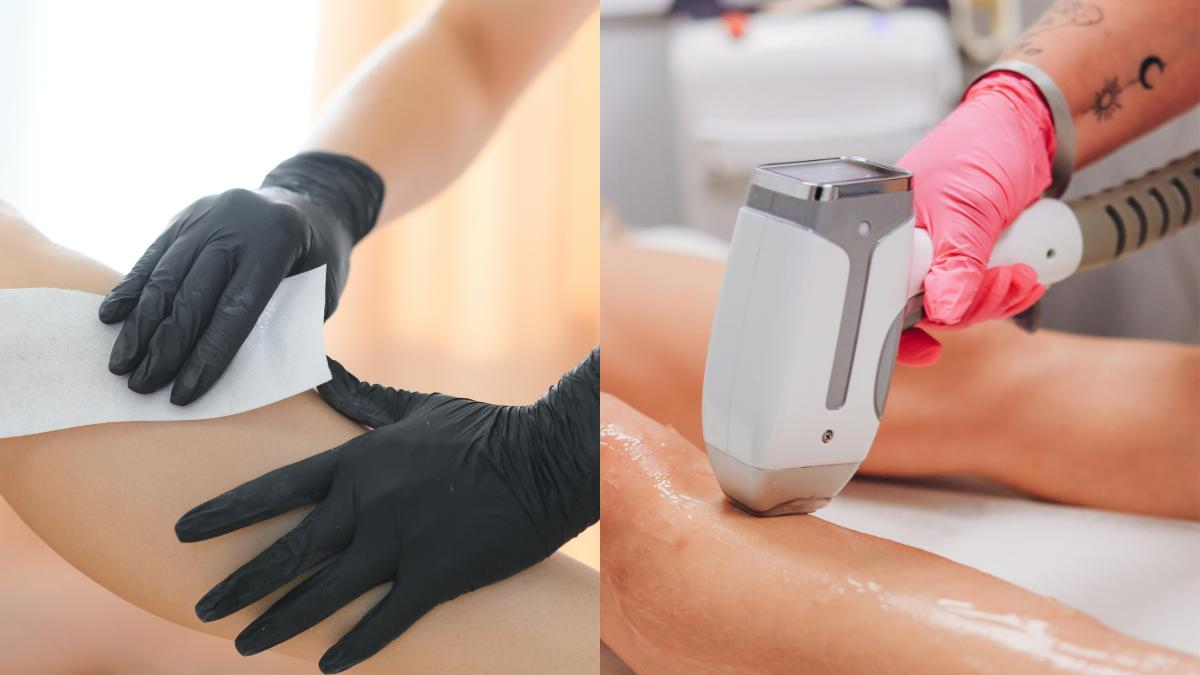
Waxing is a method where warm or cold wax is applied over hair and then pulled off quickly, taking the hair out from the root. Salons in Mumbai commonly use strip wax, hot wax or newer formula waxes on areas like legs, arms, underarms and bikini line.
Because the hair is removed from the root, results usually last longer than shaving. But the entire hair follicle remains alive under the skin, so new hair eventually grows back. Regular waxing can sometimes make hair appear finer in some people, but this is not predictable for everyone.
What is laser hair reduction and how is it different from laser hair “removal”?
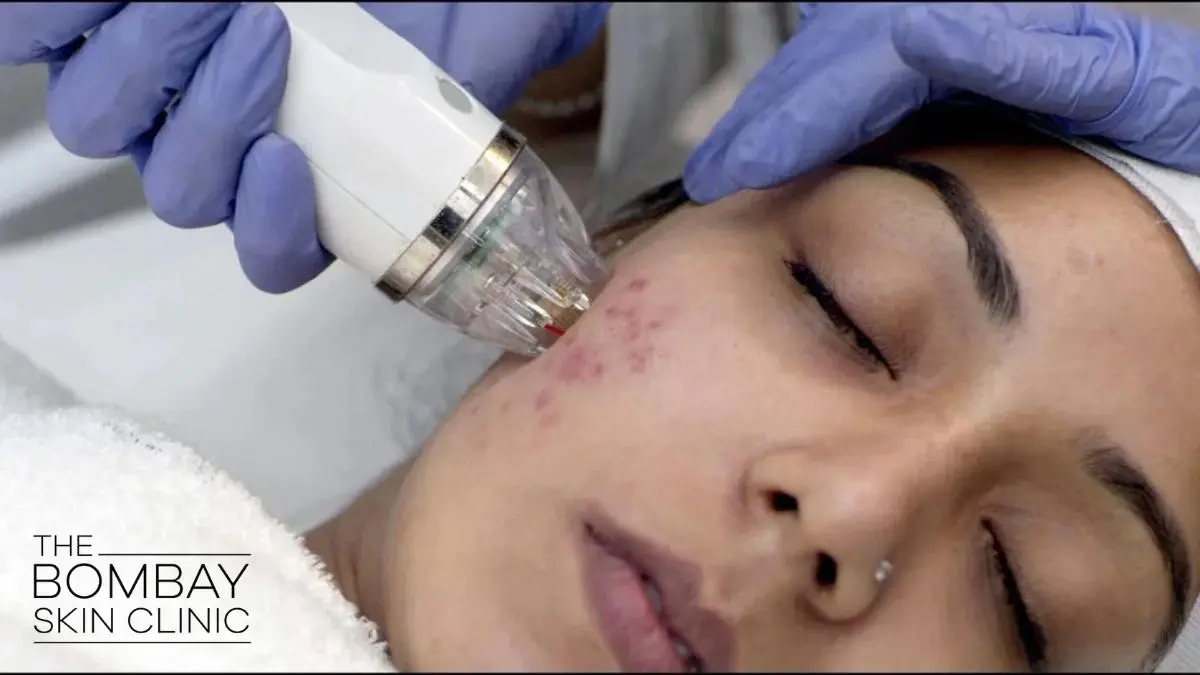
Laser hair reduction uses a medical device that emits a specific wavelength of light. This light targets the pigment in the hair shaft and travels to the follicle. The heat damages the follicle enough to slow future growth.[1,2]
Dermatology guidelines recommend using the term laser hair reduction or long term hair reduction, because most people see a clear decrease in hair thickness and density, not an absolute removal of every hair.[2,5] Hair that does grow back is often finer and lighter. Maintenance sessions may be needed in the future, especially for hormonal hair.
Common body areas treated in Mumbai (face, underarms, bikini, legs, back, male grooming)
At our Mumbai clinics, people request waxing or laser for similar areas, but their expectations differ.
- Face: upper lip, chin, side locks, jawline.
- Underarms: for odour control, hygiene and sleeveless clothes.
- Bikini and intimate areas: for swimwear, comfort and grooming.
- Arms and legs: for everyday smoothness and work wear.
- Back, chest and shoulders: commonly requested by men for a cleaner look.
- Beard shaping in men: for tidy necklines and cheek lines with less frequent shaving.
Waxing remains common for occasional grooming, while laser hair reduction is increasingly chosen by students, professionals and bridal clients who want a planned, long term approach.
Advantages of waxing vs laser hair removal
Advantages of waxing (short term)
Waxing has some practical benefits in the short term.
- Instant results after one session.
- Available in almost every neighbourhood salon in Mumbai.
- No machine or medical set up needed.
- Works on almost all hair colours, including lighter hair, because it does not depend on pigment.
- Cost per session is usually lower than a single laser session.
Advantages of laser hair reduction (long term)
Laser hair reduction offers a different set of benefits when you look at the bigger picture.[1,2,5]
- Targets many follicles at once, so large areas like legs or back are treated relatively quickly per session.
- Over a series of sessions, most people notice fewer, finer and slower growing hair, so grooming frequency reduces.[5]
- When planned properly, there is less risk of repeated wax-related trauma on sensitive areas such as bikini line and underarms.
- Well planned laser protocols can be helpful as an adjunct for women with conditions like PCOS-related facial or body hair, along with medical care for the underlying hormonal issue.[6]
- Sessions are scheduled in advance, which suits people with busy work or travel schedules who prefer predictability.
Waxing vs laser hair removal: pros and cons summary
Waxing looks simpler, but it is a lifetime maintenance habit. Laser hair reduction is a planned medical procedure with a beginning, clear middle course and then occasional touch ups. For most regular waxers in Mumbai, the total expense and time spent over several years can be comparable to or even higher than a structured laser plan, especially for larger areas like legs or full body.
Who is eligible for waxing vs laser hair removal?
Who is a good candidate for waxing?
Waxing generally suits people who:
- Have no active skin infections, rashes or open wounds on the area.
- Are not on treatments that thin the skin in that region, such as strong topical retinoids or certain prescription creams.
- Do not have a history of severe reactions to wax or resins.
- Want temporary hair removal for a holiday, festival or event and are comfortable repeating it every few weeks.
Who is a good candidate for laser hair reduction in Indian skin types?
Laser hair reduction works best when there is good contrast between hair and skin, such as darker hair on lighter to medium skin. However, modern long wavelength lasers and careful protocols now allow safe treatment across Indian Fitzpatrick skin types III to VI when performed by trained dermatologists.[1,3,4]
In general, you may be a suitable candidate if you:
- Have noticeable unwanted hair on face or body that is affecting confidence, comfort or grooming time.
- Have darker, thicker hair strands, especially on underarms, bikini line, legs, chest or back.
- Are willing to follow a structured course of multiple sessions and aftercare instructions.
- Are ready to avoid waxing, threading or plucking in the treated areas during the course, and switch to trimming or shaving between sessions.
Who should avoid or delay waxing or laser hair removal (medical conditions, pregnancy, medications)?
Both waxing and laser hair reduction may need to be delayed or modified in certain situations.
- Active skin conditions at the site such as infection, herpes, eczema flare, psoriasis plaque or open wounds.
- Very recent sunburn or strong tanning of the area, which increases both waxing irritation and laser side effects.[1,2]
- Use of medicines that increase photosensitivity or thin the skin in that area, which must be reviewed by a dermatologist first.
- Pregnancy and breastfeeding, where many clinics prefer to postpone laser hair reduction and limit waxing to essential areas after medical clearance.
- History of keloids or abnormal scarring, especially if the treatment area is large.
At The Bombay Skin Clinic, a dermatologist reviews your medical history, medicines and expectations before planning any laser hair reduction.
How waxing and laser hair removal work on the hair follicle
What waxing does to the hair and skin
Waxing grips the hair shaft above the skin and pulls it out from the follicle. This gives a clean, smooth result immediately. However, the action also puts mechanical stress on the skin surface and follicle opening.
Studies on pubic and body hair removal show that a high percentage of people experience at least one complication such as minor skin abrasion, irritation, burns or ingrown hair after hair removal, especially in delicate areas.[7] When waxing is done repeatedly on the same area, this repeated trauma can lead to tanning, small bumps, folliculitis and more ingrown hair in some people.
How laser hair reduction targets the follicle and growth cycle
Laser hair reduction works on the principle of selective photothermolysis. The laser light is absorbed by melanin inside the hair shaft. This energy is converted to heat, which travels to the follicle and partially damages its ability to grow hair.[1,2]
Hair grows in cycles, and laser is most effective in the active growth (anagen) stage. Because not all hairs are in this stage at the same time, multiple sessions are needed to catch different batches of follicles.[5] This is why a course is usually spaced a few weeks apart to match typical growth cycles on face and body.
Why waxing and laser should not be mixed between sessions
Laser targets the hair root inside the follicle. If you wax between sessions, you remove the entire hair shaft and root. When the next laser session is done, there may be no target inside the follicle for the laser to act upon, which can reduce the effectiveness of the treatment.[1,2]
During a laser course, we usually recommend shaving or trimming the area if needed between sessions. Your dermatologist will explain exactly how and when to do this based on the region being treated.
Session plan, comfort and downtime
What to expect during a waxing session
In a typical waxing session in Mumbai:
- The area is cleaned and sometimes lightly powdered.
- Warm or cold wax is applied in the direction of hair growth.
- A strip is pressed on and pulled off quickly in the opposite direction of growth.
- The area may be cleaned again and a soothing lotion may be applied.
Discomfort is usually sharp and short lived at the moment of pulling. Redness or bumps can last from a few hours to a couple of days in sensitive skin, especially over underarms and bikini line.[6,8]
What to expect during a laser hair removal session at The Bombay Skin Clinic
At our clinics, a typical laser hair reduction session includes:
- Consultation and mapping of areas, along with photographs for medical records if needed.
- Cleansing of the area and shaving of visible hair if required on the day.
- Application of numbing cream for appropriate body areas to improve comfort, followed by a waiting period.
- Use of protective eyewear for you and the operator during facial or upper body treatments.
- Laser delivery in small sections, with cooling methods as needed depending on the device.
- Post procedure application of soothing gel or cream and clear aftercare instructions.
Sessions are performed or supervised by dermatologists trained in laser protocols for Indian skin. Settings are individualised based on your skin type, hair thickness, medical history and response to earlier sessions.[2,4]
Session frequency and total number of sessions (waxing vs laser)
Waxing usually needs to be repeated every three to six weeks depending on hair growth and your comfort with small regrowth.
Laser hair reduction typically needs a course of multiple sessions. Facial hair may require shorter gaps initially, while body hair sessions are often spaced a few weeks apart.[2,5] The exact number of sessions varies with area, hair density, hormonal status and machine used. After the main course, some people need occasional maintenance sessions.
Pain, numbing options and comfort tips
Most people describe waxing pain as a strong pulling sensation that is worst during the first few sessions or over sensitive areas. Pain can be higher if the wax is too hot, the strip is not removed correctly or the skin is dry and irritated.[6]
Laser discomfort is often described as a rubber band snap or warm prickling sensation. With appropriate numbing creams, cooling devices and correct settings, many people find it tolerable and often less intense over time as hair becomes finer.[2,4] Your dermatologist can adjust parameters and suggest options to keep you comfortable.
Downtime, work, workouts and social events
Both waxing and laser hair reduction usually have minimal downtime when done correctly.
- With waxing, there may be redness or small bumps for a day or two. It is usually better to avoid tight clothing, heavy workouts, swimming pools and saunas immediately after waxing sensitive areas.
- With laser, mild redness or follicular bumps can last for a few hours to a day. You are generally able to work the same day, but harsh sun exposure, hot showers, steam and aggressive workouts over the treated area are best avoided for a short period as advised.[1,2]
We usually advise bridal or event-based clients in Mumbai to complete their last waxing or laser session at least a few days before the main function to allow any redness to settle.
Safety, side effects and contraindications
Typical side effects and risks of waxing (ingrown hair, irritation, infection)
Common waxing side effects include pain, small red bumps, follicle irritation and ingrown hairs, especially on areas with coarse or curly hair.[7,8] In some people, repeated waxing can lead to darkening of the skin, especially in the bikini and underarm areas.
More serious but less common risks include burns from overheated wax, skin tears, infection in the hair follicles and allergic reactions to wax ingredients. Pubic and bikini waxing can carry higher risk of complications if hygiene is poor or the skin barrier is already compromised.[7]
Typical side effects and risks of laser hair reduction (for Indian skin tones)
Laser hair reduction is a medical procedure and must be treated with the same respect as any other dermatology treatment, especially in Indian skin types where melanin levels are higher.[1,3,4]
Common, short term effects can include mild redness, swelling around follicles and a warm sensation for a few hours. When protocols are followed, these usually settle without issue. Potential complications include blisters, burns, pigment darkening or lightening and, rarely, scarring, especially if incorrect settings are used or the skin is recently tanned.[3,4,9]
This is why we insist on dermatologist supervision, patch testing where needed and strict safety checks before and during treatment.
When we are extra cautious: sensitive areas, darker skin, hormonal hair, medicines
At The Bombay Skin Clinic, we take special care in cases such as:
- Very sensitive or already irritated skin.
- Darker Fitzpatrick skin types where the risk of pigment change is higher.[3,4]
- People with hormonal conditions like PCOS, thyroid imbalance or high androgen levels, where hair growth patterns may be more stubborn and need long term planning along with medical treatment.[6]
- People on medicines that increase photosensitivity or affect healing.
In these situations, laser hair reduction can still be considered, but only after a detailed medical evaluation and realistic discussion about expected outcomes, especially for facial and hormonal hair.[6,9]
Patch testing, eye protection and safety protocols at our Mumbai clinics
Before treating a new area or skin type, we may perform a patch test to see how your skin responds to the chosen device and settings. Protective eye shields are always used for both patient and operator during facial and upper body treatments.
Our Mumbai branches follow strict hygiene standards, use single use disposables where appropriate and maintain regular maintenance and calibration for laser machines. Treatment rooms are designed for privacy and comfort, which is especially important for bikini, chest, back and full body sessions.
Results: what to realistically expect from waxing vs laser hair removal
How long do waxing results last?
Waxing usually keeps the area visibly hair free for about two to four weeks for many people, though this can vary with genetics, hormones and body area. New hair that grows back may feel prickly at first as it breaks through the skin, then softens.
Over years of waxing, some people notice that hair seems less dense in certain regions, but this is not guaranteed, and ingrown hair or bumps may remain a recurring problem for some.[7,8]
How many laser hair reduction sessions are usually needed?
There is no single fixed number of sessions that works for everyone. Clinical studies of laser and light-based devices report meaningful long term hair reduction after multiple sessions, with better results on body areas that have longer growth cycles, such as underarms and legs.[5]
In practice, many people need several sessions for visible improvement, followed by top ups at longer intervals. Facial and hormonal hair often needs more frequent review and may not respond in the same way as body hair, especially in PCOS.[6]
Cost comparison in Mumbai: waxing vs laser hair removal
Typical salon waxing costs over 12–18 months
Waxing prices vary across Mumbai based on location, brand, type of wax and hygiene levels. When you add up regular sessions every three to six weeks for areas like underarms, legs and bikini line, the yearly spend can be significant.
For example, if you wax underarms and full legs roughly once a month, plus bikini waxing before holidays or events, the total spend over twelve to eighteen months often comes close to the cost of a structured laser plan for the same areas in a medical clinic, especially for premium salons.
Indicative laser hair reduction pricing at The Bombay Skin Clinic (per area)
At The Bombay Skin Clinic, laser hair reduction is a medical treatment carried out with high quality machines and dermatologist supervision. Prices vary with area size, hair density and the number of sessions planned after assessment.
As an approximate guide, smaller areas such as underarms may start from around Rs.2,000 to Rs.3,000 per session, while larger areas such as full arms, full legs or back can range higher depending on coverage and hair growth. Package pricing for multiple sessions is usually more cost efficient than single sessions. Final costs are confirmed only after an in-clinic consultation and mapping of your treatment plan.
Full body laser hair removal cost vs regular waxing packages
Full body laser hair reduction is a larger investment in the short term compared to single waxing sessions. However, when you compare it to high quality full body waxing every month or every few weeks over several years, many people find that laser becomes cost effective in the medium to long term, especially when they consider time saved, comfort and reduction in ingrown hair issues.
When laser hair reduction becomes cost-effective in the long run
Laser hair reduction tends to become cost-effective when:
- You are already waxing or threading regularly over large areas.
- You value your time and want to reduce frequent salon visits.
- You are troubled by repeated ingrown hairs, pigmentation or irritation from waxing and want a different approach.
During your consultation, we can roughly compare your current waxing pattern and spend with a proposed laser course so you can make an informed choice.
Aftercare checklist: waxing vs laser hair reduction
After-waxing care to reduce bumps and ingrown hair
Simple steps after waxing can reduce discomfort and bumps.
- Keep the area clean and dry for the rest of the day.
- Avoid tight clothing, especially over underarms and bikini line, to reduce friction.
- Do not scratch or pick at small bumps.
- Use gentle, non-perfumed moisturiser as advised by your skin doctor if you are prone to dryness or irritation.
- Once the skin has settled, regular gentle exfoliation may help reduce ingrown hairs for some people, but should be done carefully to avoid over-irritation.[8]
Post-laser hair removal care at home (face and body)
After laser hair reduction, we usually suggest:
- Keeping the treated area cool and avoiding hot showers immediately after the session.
- Using only the soothing creams or moisturisers advised by your dermatologist for a few days.
- Avoiding harsh scrubs, peels, actives or DIY treatments over the treated skin.
- Applying broad spectrum sunscreen on exposed areas like face, arms or legs when stepping outdoors.
- Not waxing, threading or plucking the treated area between sessions; trimming or shaving can be used if needed.
Following these instructions helps reduce the risk of pigment changes and irritation in Indian skin.[1,2]
What to avoid after both treatments (sun, heat, active skincare, salon procedures)
After both waxing and laser hair reduction, it is generally sensible to:
- Avoid strong sun exposure, tanning beds and sunbathing for a short period.
- Postpone very hot showers, steam, saunas and intense workouts for the rest of the day.
- Delay other procedures on the same area, such as chemical peels, strong exfoliants or other lasers, until your dermatologist confirms it is safe.
If you notice severe redness, blisters, crusting, spreading rash or any worrying change, you should contact your treating dermatologist or clinic promptly for review.
Moving from waxing to laser hair reduction: how to transition safely
If you plan to move from waxing to laser hair reduction, it is best to:
- Stop waxing the area at least a few weeks before your first laser session, so hair roots are present for the laser to target.[1]
- Switch to shaving or trimming if you need grooming in between.
- Have a full skin and hair assessment at the clinic to decide on areas, sequence and device choice.
Why choose laser hair reduction at The Bombay Skin Clinic?
Dermatologist-led care and medical oversight
Laser hair reduction at The Bombay Skin Clinic is designed and supervised by doctors experienced in treating Indian skin. We follow evidence-based guidelines that emphasise long term hair reduction, realistic expectations and patient safety.[1,2]
Advanced laser platforms suited for Indian skin tones
Our clinics use advanced laser platforms selected for their safety profile in pigmented skin. Indian Fitzpatrick skin types require specific wavelengths, pulse durations and cooling methods to minimise the risk of burns and pigment changes.[3,4,9] These parameters are fine tuned for each person rather than copied from generic settings.
Hygiene, privacy and single-use disposables across our South Mumbai, Bandra, Andheri and Chembur clinics
Across our Kemps Corner (South Mumbai), Bandra, Andheri and Chembur branches, we maintain strict hygiene protocols, use single use disposables where appropriate and follow clear checklists for each laser session. Treatment rooms are private and designed to make you comfortable during bikini, chest, back and full body sessions.
Personalised treatment plans for students, working professionals and brides / grooms
We see a wide mix of people, from students to corporate professionals and busy parents. Treatment plans are customised to your schedule, skin type, medical history and hair pattern. Bridal and groom programmes can include laser hair reduction combined with skin health plans where appropriate.
Transparent pricing, patch tests and honest expectations
During the consultation, we explain expected number of sessions, approximate pricing, likely timelines and possible limitations. Patch tests are offered where needed, especially for new areas or skin types with higher risk. Our goal is to help you make a calm, informed decision without pressure.
FAQs on waxing vs laser hair removal in Mumbai
Is laser hair removal safer or more painful than waxing?
Safety and pain levels depend on who is performing the treatment, what device is used and how your skin responds. Many people find waxing to be sharply painful during each strip pull, while laser feels like short snaps or warm pricks that can be managed with numbing and cooling.
When done under dermatologist supervision with suitable machines and proper settings for Indian skin, laser hair reduction has a good safety profile, but there is still some risk of burns or pigment change, especially on recently tanned skin.[1,3,4,9] Waxing carries its own risks such as burns, skin tears, ingrown hairs and infection if done incorrectly.[7,8]
Is laser hair reduction safe for dusky or tanned Indian skin?
Laser hair reduction can be performed on dusky and darker Indian skin tones when the right lasers, wavelengths and parameters are used by experienced dermatologists, and when pre and post care is followed.[3,4,9] We are extra cautious with recently tanned skin, very dark patches and people with a history of pigment issues or keloids. A patch test is often advised before treating larger areas.
Is laser hair removal safe if I have PCOS, thyroid issues or take hormonal pills?
Many women with PCOS or thyroid issues do receive laser hair reduction safely, but their hair growth can be more persistent and may need more sessions or maintenance.[6] Laser in these cases is considered a supportive cosmetic treatment and not a stand-alone solution for the hormonal problem. We usually work along with your gynaecologist or endocrinologist to coordinate care.
References and medical sources
[1] Indian Association of Dermatologists, Venereologists and Leprologists. Laser hair reduction. IADVL. Available from: https://public.iadvl.org/laser-hair-reduction
[2] Buddhadev RM, Nair PA, Karia SB, et al. Standard guidelines of care: Laser and IPL hair reduction. Indian J Dermatol Venereol Leprol. 2008;74(Suppl):S63–S74. Available from: https://ijdvl.com/standard-guidelines-of-care-laser-and-ipl-hair-reduction/
[3] DeMaria AL, Flores M, Hirth JM, Berenson AB. Complications related to pubic hair removal. Am J Obstet Gynecol. 2014;210(6):528.e1–5. Available from: https://www.ncbi.nlm.nih.gov/pmc/articles/PMC4040320/
[4] Cleveland Clinic. Ingrown hair. Cleveland Clinic. Available from: https://my.clevelandclinic.org/health/diseases/17722-ingrown-hair
[5] Sharma AN, colleagues. Laser Fitzpatrick skin type recommendations. In: StatPearls. StatPearls Publishing; 2023. Available from: https://www.ncbi.nlm.nih.gov/books/NBK557626/
[6] Dorgham NA, Atluri A, Al-Turkait A, et al. Lasers for reduction of unwanted hair in skin of colour: A systematic review. J Eur Acad Dermatol Venereol. 2020;34(12):2764–2777. Available from: https://onlinelibrary.wiley.com/doi/10.1111/jdv.15995
[7] Krasniqi A, et al. Efficacy of lasers and light sources in long-term hair reduction. J Cosmet Laser Ther. 2022;24(5):227–236. Available from: https://pubmed.ncbi.nlm.nih.gov/35634805/
[8] Bhat YJ, Zeerak S, Hassan I. Laser treatment in hirsutism: An update. J Cutan Aesthet Surg. 2020;13(1):3–10. Available from: https://www.ncbi.nlm.nih.gov/pmc/articles/PMC7190465/
[9] Arsiwala SZ. Methods to overcome poor responses and challenges of laser hair removal in dark skin. Indian J Dermatol Venereol Leprol. 2019;85(1):16–24. Available from: https://ijdvl.com/methods-to-overcome-poor-responses-and-challenges-of-laser-hair-removal-in-dark-skin/