

Dr. Batul Patel (Dermatologist)
Medical Director – The Bombay Skin Clinic
Dr. Batul Patel is an award winning certified dermatologist, honoured as the “Dermatologist of the Year 2023” at the national level by The Economic Times. View profile
What Is Yellow Peel Treatment | Benefits of Yellow Peel Treatment | Who Is Suitable for Yellow Peel | Safety, Side Effects & Results Timeline | Price
Introduction to Yellow Peel Treatment
What is a Yellow Peel?
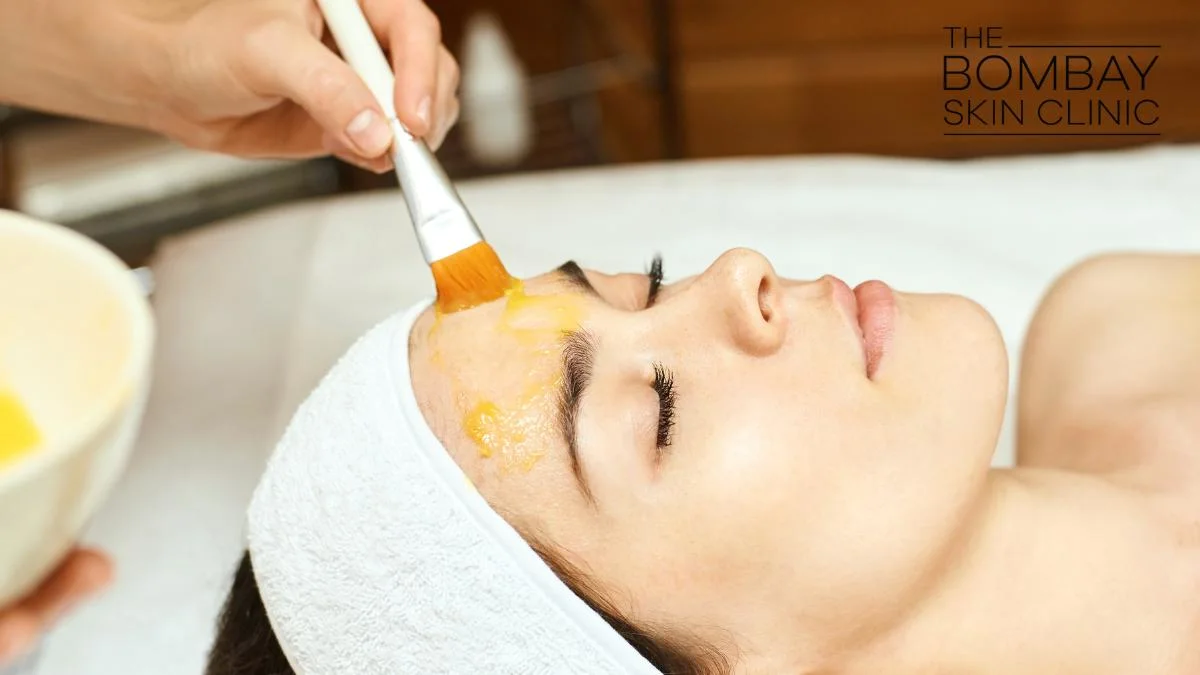
A yellow peel is a type of medical chemical peel in which a dermatologist applies a yellow-coloured peel containing a combination of exfoliating and brightening ingredients on your skin. It is usually a superficial to superficial–medium peel designed to support concerns like uneven skin tone, melasma, tan, acne marks and early-ageing changes.
Unlike salon facials, a yellow peel is a medical procedure. The strength, number of layers and contact time are controlled by a dermatologist after assessing your skin, medical history and lifestyle. The goal is to gently remove the upper damaged layers, encourage skin renewal and gradually improve pigmentation and texture while keeping safety in mind.
How is a Yellow Peel different from a regular chemical peel?
In a regular chemical peel, a single ingredient such as glycolic acid or salicylic acid is often used to exfoliate the skin. A yellow peel usually combines retinoic acid or retinol with other ingredients like alpha-hydroxy acids, antioxidants and pigment-balancing agents. This combination is applied as a yellow mask that may be left on the skin for a prescribed duration before washing off at home, depending on the protocol chosen by your dermatologist.
Because the formulation is multi-ingredient and the application is more like a leave-on mask, a yellow peel can be tailored for Indian skin types and is commonly used as a supportive option in melasma and other pigmentation concerns when done under expert supervision.
Key Benefits of Yellow Peel Treatment
Skin brightening and evening out pigmentation
The main aim of a yellow peel is to gently accelerate cell turnover and reduce excess pigment in the upper layers of the skin. By shedding the dull, damaged layer and promoting a more even distribution of melanin, many people notice fresher, brighter-looking skin over a series of sessions.
For city residents in Mumbai who face heat, humidity and pollution on a daily basis, this can help soften the look of tan, patchy darkness and tired-looking skin when combined with good sun protection and daily skincare.
Supportive treatment for melasma, tanning and sun damage
Melasma and other forms of facial hyperpigmentation are chronic conditions, and management usually needs a combination of sun protection, prescription creams and, in some cases, in-clinic procedures such as chemical peels.
Retinoid-based chemical peels, which are conceptually similar to what many yellow peel formulations do, have been studied as one of the options for melasma and can improve pigment and quality of life when used in a planned, repeated manner under medical care.
Role in acne, acne marks and early-ageing changes
Because yellow peels frequently contain retinoic acid or retinol, they can help in supporting management of certain types of acne and post-acne marks. Retinoids can reduce clogged pores and improve superficial pigmentation over time. In some individuals, repeated superficial peels may also soften the look of fine lines and photo-damage on the surface.
For active, inflamed acne or deeper scars, your dermatologist at The Bombay Skin Clinic may suggest additional or alternative treatments, and use yellow peels as one part of a broader plan if suitable.
Texture refinement, pores and overall skin radiance
By promoting controlled exfoliation, a yellow peel can smoothen rough patches, reduce the appearance of enlarged pores and enhance overall glow. The effect is usually progressive over weeks as the skin renews itself. It is not a quick-fix or instant transformation, but rather a gradual, layered improvement that works best when you follow home-care advice and sun protection consistently.
Who is Yellow Peel Treatment Suitable For?
Concerns that Yellow Peel can help with
At The Bombay Skin Clinic, we usually consider yellow peel treatment for adults with:
- Dull, tired-looking skin that does not respond well to basic facials.
- Tan and uneven skin tone due to sun exposure and pollution.
- Epidermal pigmentation such as certain types of melasma, age spots and post-acne marks, where your dermatologist feels a superficial peel may help.
- Early fine lines, mild photo-damage and uneven skin texture.
- Selected cases of mild, comedonal acne as part of a broader treatment plan.
Yellow peel treatment is tailored for Indian skin types (usually Fitzpatrick III–V). The exact protocol is customised after a face-to-face assessment.
Who should avoid or delay a Yellow Peel
Your safety comes first. We may advise against or postpone a yellow peel if you have any of the following:
- Very sensitive, reactive or allergy-prone skin that flares up easily.
- Active infections, cold sores, dermatitis, eczema or open wounds in the treatment area.
- A recent history of strong skin treatments such as medium/deep peels, aggressive lasers, dermabrasion or in some cases recent oral isotretinoin use.
- Pregnancy or breastfeeding, where certain peel ingredients may not be preferred.
- History of keloids or problematic scarring, especially after minor injuries or procedures.
- Unrealistic expectations or an upcoming major social event in the immediate few days, where even mild peeling and redness may be unacceptable.
During your consultation at our Mumbai clinics, the dermatologist will review your medical history, medications, lifestyle and skin examination before confirming whether a yellow peel is appropriate for you.
How Yellow Peel Treatment Works on Your Skin
Active ingredients
Most yellow peel systems combine a vitamin A derivative (retinoic acid or retinol) with exfoliating acids and brightening or antioxidant molecules. These may include ingredients such as alpha-hydroxy acids, phytic acid, azelaic acid, kojic acid and vitamin C, depending on the exact formulation chosen by your dermatologist.
The retinoid component encourages faster cell turnover, while the acids and pigment-balancing agents support the removal of excess pigment and help to even out skin tone. This multi-step action is what differentiates yellow peels from single-acid superficial peels.
What happens in the skin during and after the peel
Chemical peels work by creating a very controlled, predictable injury in the upper layers of the skin. This triggers shedding of the outer, more damaged layers and stimulates the skin’s natural repair and renewal process.
In the days after a yellow peel, the treated skin may appear slightly red, tight and dry, followed by visible or micro-peeling. As the superficial layer sheds, newer skin with more uniform pigment and smoother texture emerges. For pigmentation concerns, this usually needs to be repeated as a series rather than a single session.
Why Yellow Peel is often preferred for Indian skin tones
For Indian and darker skin tones, dermatology guidelines usually favour superficial chemical peels over aggressive medium or deep peels to reduce the risk of post-inflammatory hyperpigmentation and scarring.
Yellow peels are typically designed as superficial or superficial–medium peels with adjustable contact times and strengths. This allows dermatologists at The Bombay Skin Clinic to individualise the peel intensity according to your skin type, concern and previous treatment history, while watching closely for any signs of irritation.
Safety, Risks and Contraindications
How safe is Yellow Peel for Indian skin?
When performed by trained dermatologists using appropriate formulations and protocols, superficial chemical peels are generally considered safe for Indian skin. However, darker skin tones are more prone to pigmentary changes if the peel is too aggressive or aftercare is not followed properly.
At The Bombay Skin Clinic, we use medical-grade peels, start conservatively and adjust strength only after observing your skin’s response. The key to safety is correct patient selection, proper priming when needed, careful application and close follow-up.
Possible side effects
Common, usually short-term effects include:
- Redness, warmth and tightness for a few days.
- Dryness, flaking and peeling.
- Temporary darkening or mottling of pigmentation before it lightens.
- Mild burning or stinging with certain products during the healing phase.
How we minimise risks at our Mumbai clinics (patch testing, graded strengths, strict protocols)
The Bombay Skin Clinic follows structured protocols for chemical peels, including yellow peel treatment. Where needed, we do a small-area test application first, use milder strengths initially and increase the intensity slowly if your skin tolerates it well.
We emphasise pre-peel priming and post-peel maintenance when appropriate, use standardised application methods and maintain high hygiene standards in all our branches in Kemps Corner (South Mumbai), Bandra, Andheri and Chembur.
Results: What to Expect and When
Early changes after the first session
Within the first week or two after a yellow peel, many people notice:
- Smoother feel of the skin.
- Milder dullness and a slight brightness once peeling settles.
- Makeup sitting more evenly on the skin.
These early changes are usually subtle. Deeper pigmentation, melasma and acne marks typically require multiple sessions and long-term care.
Timelines for pigmentation, acne marks and texture improvement
For pigmentation and melasma, improvement tends to be gradual and layered. You may see noticeable change only after several weeks and repeated peels, along with consistent sunscreen use and prescription creams. Even then, melasma often behaves unpredictably and can relapse if sun exposure is not controlled.
Post-acne marks and textural irregularities may respond somewhat faster, but again, there is significant individual variation and no uniform timeline that fits everyone.
How long results usually last with proper skin care
The longevity of results depends on ongoing sun protection, hormonal factors, skin care and lifestyle. With disciplined use of sunscreen, maintenance creams and occasional touch-up procedures as advised, the benefits can be maintained for longer periods. If these are neglected, pigmentation can slowly return even after a good response.
When Yellow Peel works best as a supportive / adjunct treatment rather than a stand-alone solution
For many people, yellow peel treatment is not a stand-alone solution but a supportive part of a comprehensive plan that may include:
- Prescription lightening creams.
- Other types of superficial peels for acne or oil control.
- Microneedling, lasers or energy-based devices for selected, resistant cases.
- Lifestyle and skincare changes to protect the skin barrier and reduce triggers.
Your dermatologist will explain where yellow peel fits into your broader management plan and when another approach may be more appropriate.
Yellow Peel vs Other Treatment Options
Yellow Peel vs standard superficial chemical peels
Standard superficial peels typically use a single acid such as glycolic, salicylic or lactic acid. They can be very useful for acne, oiliness, fine lines or superficial pigmentation, and are often the first line for many people.
Yellow peels add a strong retinoid component plus additional brightening molecules, which may offer broader benefits for certain patterns of pigmentation and photo-damage. At the same time, they can be more intense and require stricter aftercare. In some cases, your dermatologist may alternate yellow peels with single-acid peels to balance efficacy and tolerability.
Yellow Peel vs laser pigmentation treatments
Laser treatments such as Q-switched lasers or other pigment-targeting devices can be helpful for some types of deeper or resistant pigmentation and for selected spots.
Compared with lasers, yellow peels:
- Are usually more affordable per session.
- Work mainly on the upper layers of the skin.
- Have shorter in-clinic time but a few days of peeling at home.
Lasers may be considered for specific cases where the pigment is deeper, resistant to topical care and peels, or where localised lesions need targeted treatment. For Indian skin, laser settings and protocols must be carefully chosen to reduce the risk of post-treatment darkening, so the choice between peel and laser is highly individualised.
Yellow Peel vs medi-facials and brightening facials
Medi-facials and brightening facials offered at dermatology clinics typically use milder exfoliation, hydrating masks and devices like hydra-dermabrasion for glow with minimal downtime. These are often suitable for regular skin maintenance and for people who cannot afford visible peeling or downtime.
Yellow peels, on the other hand, are more corrective than pampering. They usually cause visible peeling and demand more disciplined aftercare. Your dermatologist may recommend medi-facials between peel sessions to maintain hydration and barrier health.
When we may suggest another treatment instead of a Yellow Peel
We may prefer other options instead of a yellow peel if:
- Your acne is very active, nodular or cystic and needs medical treatment first.
- Your pigmentation is mostly dermal or due to conditions where peels offer limited benefit.
- You have significant textural scars that may respond better to microneedling, laser or subcision-based treatments.
- Your lifestyle or occupation makes post-peel care and sun avoidance very difficult.
In such cases, the dermatologist will explain the reasons and suggest a more suitable sequence of treatments.
Why Choose The Bombay Skin Clinic for Yellow Peel in Mumbai?
Dermatologist-led, evidence-based treatment protocols
The Bombay Skin Clinic is a dermatologist-led practice where every yellow peel protocol is designed and supervised by qualified skin specialists. We base our decisions on recognised dermatology guidelines, published evidence and our clinical experience with Indian skin, rather than on salon or trend-driven approaches.
Experience with Indian skin and complex pigmentation
Our team regularly manages complex pigmentation patterns, melasma, post-acne marks and sun damage in diverse skin types. This experience helps us judge when yellow peel treatment is appropriate, what strength to start with and when to combine or switch treatments to keep your skin safe.
Advanced medical-grade peel systems and customised strengths
We use medical-grade peel systems sourced from reputable manufacturers. Based on your skin response, we can fine-tune the number of layers, contact time, frequency and combination with other peels or devices. The focus is on gradual, sustainable improvement rather than short-lived, aggressive results.
Strict hygiene, safety and sterilisation practices
All branches of The Bombay Skin Clinic follow standardised hygiene protocols, including single-use applicators where required, proper disinfection, fresh linen and carefully monitored storage of peel solutions. This helps reduce the risk of infections and cross-contamination during treatments.
Indicative Yellow Peel Pricing at The Bombay Skin Clinic
As an approximate guide, yellow peel treatment at The Bombay Skin Clinic typically starts from around Rs.4500 per session. This is indicative and may vary based on the exact peel system, area treated and whether additional procedures are done in the same sitting.
When Yellow Peel May Not Be the First Choice
Situations where we may recommend other chemical peels
We may lean towards other superficial peels such as glycolic, lactic or salicylic acid peels instead of a yellow peel if:
- Your main concern is oily, acne-prone skin without significant pigmentation.
- You have very sensitive skin that may not tolerate a strong retinoid-based peel initially.
- You have only fine textural irregularities with minimal colour change.
In such cases, gentler peels may be used first to build tolerance and strengthen your skin barrier before considering yellow peel or other options.
Cases where lasers or energy-based devices work better
For certain types of deeper pigmentation, resistant melasma, vascular issues or pronounced texture changes, lasers or energy-based devices may offer additional benefit. However, these options must be used carefully in Indian skin and are usually considered after optimising topical care and superficial procedures.
How our dermatologists decide the safest and most effective option for you
The decision between yellow peel, other peels, lasers and non-procedural care is based on multiple factors:
- Type, depth and distribution of pigmentation or scarring.
- Your skin’s baseline sensitivity and barrier health.
- Your medical history, including hormonal status and medications.
- Your ability to follow sun protection and aftercare.
- Your comfort with downtime and budget.
During your consultation at The Bombay Skin Clinic, your dermatologist will walk you through these considerations and suggest a plan that balances safety and expected benefit.
FAQs on Yellow Peel Treatment
How many Yellow Peel sessions will I usually need?
The number of yellow peel sessions needed varies from person to person. Some may notice meaningful change after a few sessions, while others with long-standing melasma or deeper pigmentation may need a longer course and additional treatments. During your consultation, we will give you an approximate plan, but it may be refined based on how your skin responds over time.
Will my skin become very red or peel a lot after the treatment?
A certain amount of redness, dryness and peeling is expected after yellow peel treatment. In most people, this is mild to moderate and lasts only for a few days. We usually start with conservative strengths to observe your reaction before intensifying the protocol. If your work or social commitments allow very little downtime, we can tailor a gentler plan or suggest alternative treatments.
Can I go to work or attend social events after a Yellow Peel?
Many people are able to go to work the day after the peel, especially in indoor, air-conditioned environments, though mild redness and flaking may be visible. For important social events where photographs and close interaction matter, it is safer to schedule your peel at least one to two weeks beforehand so that peeling is over and the skin looks settled.
Can Yellow Peel be combined with lasers, microneedling or PRP?
Yes, yellow peels are sometimes combined in a broader program that may include lasers, microneedling, PRP or other procedures, depending on your concerns. These are not done on the same day in most cases. The sequence and spacing between treatments are planned by your dermatologist to protect your skin barrier and reduce the risk of irritation or pigmentation.
References
- Soleymani T, Lanoue J, Rahman Z. A practical approach to chemical peels. J Clin Aesthet Dermatol. Available from: https://www.ncbi.nlm.nih.gov/pmc/articles/PMC6122508/
- Khunger N. Standard guidelines of care for chemical peels. Indian J Dermatol Venereol Leprol. Available from: https://ijdvl.com/standard-guidelines-of-care-for-chemical-peels/
- American Academy of Dermatology. Chemical peels: Overview. Available from: https://www.aad.org/public/cosmetic/younger-looking/chemical-peels-overview
- Magalhães GM, et al. Double-blind randomized study of 5% and 10% retinoic acid peels in the treatment of melasma. Surg Cosmet Dermatol. Available from: https://docs.bvsalud.org/biblioref/2018/05/883921/2011_17-ing.pdf
- Andrade ACDV, et al. Peeling with retinoic acid in microemulsion for treatment of melasma. J Cosmet Dermatol. Available from: https://pubmed.ncbi.nlm.nih.gov/37782679/
- Doolan BJ, et al. Melasma. Aust J Gen Pract. Available from: https://www1.racgp.org.au/ajgp/2021/december/melasma
Dr. Batul Patel (Dermatologist)
Medical Director – The Bombay Skin Clinic
Dr. Batul Patel is an award winning certified dermatologist, honoured as the “Dermatologist of the Year 2023” at the national level by The Economic Times. View profile