

MEDICALLY REVIEWED BY
Dr. Batul Patel (Dermatologist)
Medical Director – The Bombay Skin Clinic
Dr. Batul Patel is an award-winning celebrity dermatologist with over 20 years of experience. She was honoured as “Dermatologist of the Year 2026” by Financial Express and “Dermatologist of the Year 2023” by The Economic Times. She also served as a jury member at the Vogue Beauty & Wellness Honours 2026. View profile
What Is Morpheus8 | How It Works | Side Effects & Safety | Results | FAQs
Morpheus8 is a branded fractional radiofrequency microneedling treatment designed to deliver controlled RF energy through microneedles placed at selected depths in the skin and underlying soft tissue. It is commonly discussed for concerns such as skin texture, mild laxity, enlarged-looking pores, fine lines and selected acne scars.
This guide is written from a dermatological perspective for people researching Morpheus8 treatment in Mumbai. The Bombay Skin Clinic does not offer Morpheus8 technology. The aim is to explain the evidence, limitations, safety questions and comparisons that matter before treatment.
What Is Morpheus8 and How Is It Different From Generic RF Microneedling?
Morpheus8 is one specific RF microneedling platform. RF microneedling is the broader treatment category. In all RF microneedling systems, needles enter the skin and radiofrequency energy is delivered at controlled depths to create thermal zones within the tissue. These controlled micro-injuries are intended to trigger wound healing, collagen remodelling and changes in skin structure over time. [1]
Different RF microneedling devices vary in needle design, energy delivery, treatment depths and controls. Outcomes therefore depend on the device, diagnosis, anatomy, settings and operator technique.
Morpheus8 has been studied for facial laxity, texture and scarring, but the evidence base for RF microneedling as a category is larger than the evidence for Morpheus8 alone.
Morpheus8 Technology: Microneedles, Bipolar RF and Treatment Depths
Morpheus8 combines mechanical microneedling with bipolar radiofrequency. The needles first create controlled channels into the skin. RF energy then passes between electrodes, producing heat around selected tissue zones. Published reviews describe this as fractional treatment because only small columns of tissue are directly treated while surrounding tissue remains relatively spared. [2]
Published Morpheus8 literature describes adjustable depths, with the original facial handpiece reaching up to about 4 mm. Deeper is not automatically better. An appropriate depth for the cheek may be unsuitable for thinner areas.
The plan should match the target. Texture, an atrophic acne scar and lower-face laxity are different problems, so depth, energy and passes should be selected for the tissue being treated.
What Can Morpheus8 Treat on the Face and Body?
Morpheus8 is most often researched as a skin remodelling treatment rather than as a simple facial. It may be considered for selected patients who want gradual improvement in texture or mild to moderate tissue laxity without a surgical procedure.
Commonly discussed facial concerns include:
- Uneven or coarse skin texture
- Fine lines and early textural ageing
- Mild skin laxity around the lower face and jawline
- Atrophic acne scars in appropriately selected patients
- Enlarged-looking pores or irregular surface texture
RF microneedling is also used on selected body areas for texture, scars, striae and mild laxity. Evidence varies by indication and body area.
For acne scars, a 2025 systematic review of fractional RF microneedling included 16 studies and 481 patients. It concluded that the treatment is likely to be effective as a monotherapy for facial acne scarring, while also noting the need for stronger trials and more standardised treatment parameters. [3]
Morpheus8 for Skin Tightening, Texture, Pores and Acne Scars
Morpheus8 is often marketed for tightening and resurfacing. A more realistic description is controlled tissue remodelling. It may improve skin quality and mild laxity, but it does not reproduce surgical tissue repositioning.
For texture and pores, change is linked to dermal remodelling rather than instant pore shrinking. For acne scars, scar type, depth and tethering should be assessed before choosing RF microneedling.
A 2026 systematic review of RF microneedling for facial rejuvenation found improvements across measures of skin texture and tightening, with redness and swelling among the most commonly reported short-term effects. The review also highlighted variation between devices, treatment protocols and study designs. [4]
If a concern is primarily pigmentation, active acne, significant facial volume loss or advanced laxity, Morpheus8 may not be the most direct treatment. The diagnosis should determine the technology, not the other way around.
Who Is a Suitable Candidate for Morpheus8?
A suitable candidate is generally someone with a concern that is likely to respond to fractional RF microneedling, realistic expectations and no medical or skin-related reason to delay treatment.
Potential candidates may include people with:
- Mild to moderate skin laxity where a non-surgical approach is preferred
- Textural changes, fine lines or enlarged-looking pores
- Selected atrophic acne scars
- A preference for gradual improvement rather than an immediate structural change
- Willingness to accept several days of visible redness, swelling or surface roughness
Indian skin tones require thoughtful planning. Darker skin can develop post-inflammatory hyperpigmentation after inflammation or injury, so pigment history, recent tanning and active skin disease should be assessed before treatment.
Who Should Avoid or Delay Morpheus8?
RF microneedling should not be treated as a walk-in cosmetic service. Medical history and the condition of the treatment area matter. The US FDA advises that microneedling procedures may not be suitable in several situations, including active skin infection, certain bleeding disorders, immune suppression, uncontrolled diabetes, active rashes, a tendency to keloid scarring, pregnancy or breastfeeding, and some medication-related situations. [5]
A dermatologist may advise delaying treatment when there is:
- Active bacterial, viral or fungal infection in the treatment area
- An active herpes outbreak, inflamed rash or uncontrolled dermatitis
- Recent significant sun exposure or tanning
- Poor wound-healing history or a strong tendency to form keloids
- A medical condition or medication that changes bleeding, immunity or healing
This is not a self-screening checklist. Contraindications can be relative or device-specific. A complex medical history, implants, medications or previous adverse reactions should be disclosed during consultation.
What Happens During a Morpheus8 Treatment Session?
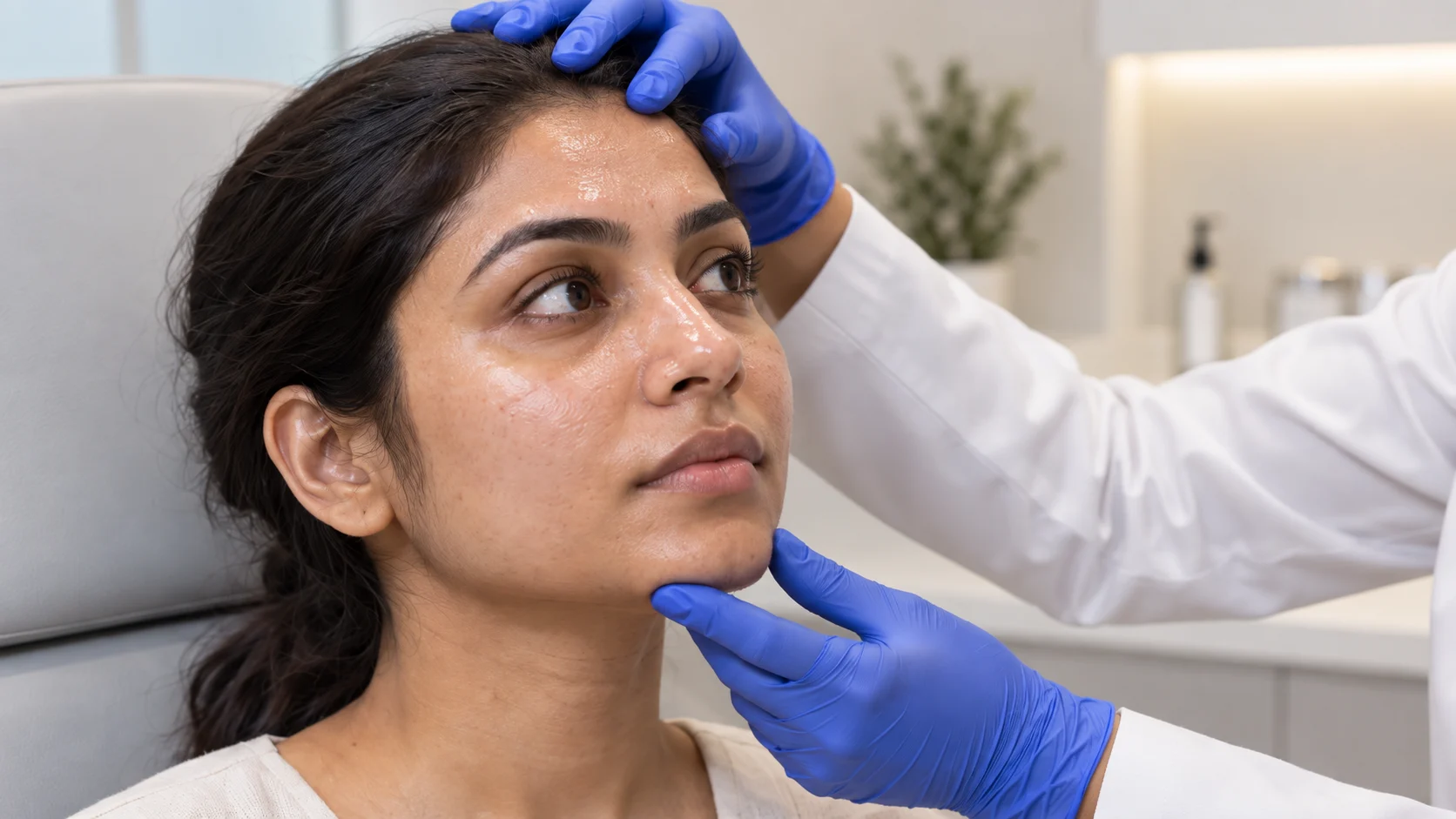
A session usually begins with assessment of the treatment area and planned depth. A topical anaesthetic is commonly used because needle penetration and thermal energy can cause discomfort.
The active treatment itself may take roughly 30 to 60 minutes depending on the area, although the complete appointment is longer when preparation and anaesthetic time are included. During treatment, the handpiece is placed against the skin and pulses are delivered in a planned pattern.
Comfort varies. Pressure, heat, pinching or brief sharp sensations can occur. More aggressive settings may increase discomfort and recovery, and higher intensity is not automatically better.
Published Morpheus8 protocols vary, but treatment courses are often described as one to three sessions spaced several weeks apart. The number of sessions should depend on the concern, previous response and recovery rather than a fixed package for every patient. [1]
How Many Morpheus8 Sessions May Be Needed?
There is no universal Morpheus8 session count. Some patients may be treated once, while others may undergo a short course. Published clinical literature commonly describes one to three treatments, often separated by several weeks. [1]
A dermatologist may adjust the plan based on:
- Whether the goal is scar remodelling, texture improvement or mild tightening
- The thickness and anatomy of the treatment area
- Skin type and tendency to develop pigmentation
- How much downtime the patient can reasonably accept
- Response to the first session
More sessions do not automatically mean a better outcome. Adequate recovery matters, and an unexpected reaction should be medically reviewed before further treatment.
Morpheus8 Downtime and Recovery: What to Expect Day by Day
Morpheus8 downtime is usually shorter than that of more aggressive ablative resurfacing, but it is not a zero-downtime procedure. Recovery depends on energy, needle depth, number of passes, treatment area and individual skin response.
A typical recovery pattern may look like this:
- First 24 hours: redness, warmth, swelling, sensitivity and visible needle-point marks may occur.
- Days 2 to 3: redness may settle, while mild swelling, dryness or a rough texture can remain.
- Days 3 to 5: tiny crusts or a sandpaper-like feel may become more noticeable before shedding naturally.
- After several days: many people look closer to baseline, although residual dryness, redness or pigment change can last longer.
These are general ranges, not a promised recovery schedule. Bruising, prolonged redness, infection or pigment change can occur, including post-inflammatory darkening in deeper skin tones.
Post-procedure instructions should come from the treating clinician. In general, protecting healing skin from unnecessary friction and strong sun exposure is important while the barrier recovers.
Morpheus8 Results: When Do Changes Become Visible?
Morpheus8 results are usually gradual because collagen remodelling takes time. Some early change may be noticed as swelling settles or skin texture recovers, but this should not be confused with the final biological response.
Texture and firmness are generally assessed over several weeks to a few months. Dermal remodelling can continue for months after treatment. [4]
Realistic expectations are important:
- Texture may improve gradually rather than after one dramatic change.
- Atrophic acne scars usually improve in degree rather than disappear completely.
- Mild laxity may look firmer, but RF microneedling does not replace a surgical lift for advanced sagging.
- Results can vary between facial areas because skin thickness and underlying fat differ.
If a clinic promises an identical percentage of tightening, a fixed number of years of effect or the same result for every face, that is not consistent with how biological tissue responds.
Morpheus8 Safety, Side Effects and the FDA RF Microneedling Safety Communication
Common short-term effects of microneedling procedures include redness, tightness, dryness, peeling, discomfort, bruising, crusting and temporary swelling. Less common problems can include infection, pigment change and reactivation of cold sores. [5]
There is also an important recent safety update. On 15 October 2025, the US FDA issued a safety communication after receiving reports of serious complications with certain uses of RF microneedling devices. Reported events included burns, scarring, fat loss, disfigurement and nerve damage, with some cases requiring medical or surgical treatment. [6]
The FDA communication applies to RF microneedling as a device category. It does not mean every device or patient carries the same risk, but it reinforces that this is a medical energy-based procedure.
Risk reduction depends on appropriate patient selection, anatomical knowledge, device-specific training, conservative judgment where needed, correct cartridge use, infection-control practices and the ability to recognise complications early.
Why Device Authenticity, Treatment Depth and Dermatologist Oversight Matter
The machine name alone does not determine safety. The same platform can produce different tissue effects depending on depth, energy, pulse pattern, overlap, number of passes and the anatomy underneath the skin.
This matters particularly where skin is thin or facial fat has an important structural role. Poorly selected thermal injury can differ greatly from controlled dermal remodelling.
Before undergoing any RF microneedling procedure, useful questions include:
- Is the device authentic and being used within its approved or locally permitted indications?
- Who will perform the treatment, and what training do they have with this specific platform?
- How will the clinician choose depth and energy for my anatomy and skin type?
- Is a new single-use needle cartridge opened for each session?
- What is the clinic’s plan if I develop persistent redness, pigment change, infection, burns or unexpected volume change?
The FDA specifically advises patients to ask about provider training, device cleaning and the use of a new microneedle cartridge for each patient and treatment session. [5]
Morpheus8 vs Microneedling
Traditional microneedling and Morpheus8 both create controlled needle injury, but Morpheus8 also delivers radiofrequency energy, adding a targeted thermal effect.
Standard microneedling may be appropriate when the treatment goal is mainly superficial texture or selected scars. RF microneedling may be considered when a clinician also wants controlled dermal heating as part of the remodelling process.
Neither is automatically better. The more appropriate option depends on scar type, laxity, skin thickness, pigment risk, downtime and the depth of treatment required.
Morpheus8 vs Other RF Microneedling Treatments
Morpheus8 and other RF microneedling systems are not interchangeable. They can differ in needle design, RF delivery, depth options and software controls.
Current evidence does not establish one RF microneedling brand as the preferred option for every concern. Head-to-head data are limited, and treatment settings vary across studies. [2,4]
The more useful comparison is whether the concern is correctly diagnosed, the operator understands the device and the clinic has a clear safety plan.
Morpheus8 vs HIFU
Morpheus8 and HIFU are both energy-based procedures, but they deliver energy differently. Morpheus8 uses needles to place RF energy at selected depths. HIFU uses focused ultrasound delivered through the skin without needles.
Morpheus8 is often considered when texture, scars and dermal remodelling are part of the treatment goal. HIFU is more commonly selected when the primary aim is non-invasive tissue tightening at ultrasound target depths.
The choice should be based on anatomy, skin quality and the dominant concern rather than online popularity.
Morpheus8 vs Potenza
Potenza and Morpheus8 are both branded RF microneedling systems. Their technical platforms and available treatment modes differ, but both rely on controlled needle penetration combined with RF energy.
Direct comparative clinical evidence is limited. Settings, operator technique, needle configuration and patient selection can influence outcomes as much as the brand name.
A dermatologist comparing these devices should focus on the indication being treated, the available tip and depth options, safety for the specific anatomy, and their own training with the platform.
Morpheus8 vs Sofwave
Sofwave and Morpheus8 are structurally different treatments. Morpheus8 is minimally invasive because needles enter the skin and deliver RF energy. Sofwave is non-invasive and uses ultrasound energy delivered from the skin surface.
Morpheus8 may be considered when microneedling-based texture or scar remodelling is relevant. Non-invasive ultrasound may appeal when avoiding needle penetration is a priority.
There is no useful one-line answer to “Sofwave vs Morpheus8” without knowing the concern. Texture, acne scarring, laxity, facial volume, skin thickness and tolerance for downtime can lead to different choices.
How Much Does Morpheus8 Cost in Mumbai?
Morpheus8 cost in Mumbai varies by clinic, treatment area, practitioner, consumables, number of passes and whether the quote covers a single session or a package. Publicly advertised prices in Mumbai vary widely, with many current listings falling roughly around ₹25,000 to ₹60,000 per session for facial treatment.
This should be treated only as an indicative market range, not a standard medical fee. Full-face treatment, face plus neck, body areas and combination procedures can be priced differently.
The Bombay Skin Clinic does not offer Morpheus8, so we do not publish or quote a TBSC Morpheus8 treatment price. If you are comparing clinics, ask exactly what the fee includes and whether consultation, consumable tips, aftercare and review appointments are separate.
FAQs About Morpheus8
What is Morpheus8 treatment?
Morpheus8 is a branded fractional RF microneedling procedure. Microneedles enter the skin at selected depths and bipolar radiofrequency energy is delivered through them to create controlled thermal zones intended to stimulate tissue remodelling.
How does Morpheus8 work?
It combines mechanical microneedling with RF-generated heat. The controlled injury activates wound-healing responses, while thermal energy changes collagen-rich tissue. Improvement develops gradually as the skin remodels over the following weeks and months.
How much downtime does Morpheus8 have?
Many patients experience several days of redness, swelling, dryness or rough texture. More intensive treatment may produce longer recovery. Pigment change, infection, burns or prolonged redness are less common but important complications that require clinical review.
Is Morpheus8 the same as RF microneedling?
Morpheus8 is one brand of RF microneedling. RF microneedling is the broader treatment category, which includes several devices with different needle designs, energy-delivery systems and treatment settings.
Can Morpheus8 help acne scars?
Fractional RF microneedling has supportive evidence for selected atrophic acne scars, and Morpheus8 is used within this treatment category. Scar type matters. Deep tethered, ice-pick, raised or pigment-dominant scars may require different or combined approaches rather than RF microneedling alone. [3]
Does The Bombay Skin Clinic offer Morpheus8?
No. The Bombay Skin Clinic does not offer Morpheus8 technology. This article is an educational dermatological review. Patients can still consult our dermatologists to understand their skin concern and discuss suitable treatment options available within our clinics.
Scientific References
- Hendricks AJ, Farhang SZ. Dermatologic facial applications of Morpheus8 fractional radiofrequency microneedling. J Cosmet Dermatol. 2022;21(Suppl 1):S11-S19. https://pubmed.ncbi.nlm.nih.gov/35916259/
- Chandra S, Mysore V, Shah S, Malayanur D, Shivani SR. Physics of fractional microneedle radiofrequency: a review. J Cutan Aesthet Surg. 2024;17(3):177-183. https://pubmed.ncbi.nlm.nih.gov/39483649/
- Niaz G, Ajeebi Y, Alshamrani HM, Khalmurad M, Lee K. Fractional Radiofrequency Microneedling as a Monotherapy in Acne Scar Management: A Systematic Review of Current Evidence. Clin Cosmet Investig Dermatol. 2025;18:19-29. https://pubmed.ncbi.nlm.nih.gov/39781098/
- Kumar N, Suh DH, Lee SJ, Kasif SA, Carruthers JDA. Radiofrequency Microneedling for Facial Rejuvenation: A Systematic Review. J Cosmet Dermatol. 2026;25(4):e70845. https://pubmed.ncbi.nlm.nih.gov/41947517/
- US Food and Drug Administration. Microneedling Devices. FDA. https://www.fda.gov/medical-devices/aesthetic-cosmetic-devices/microneedling-devices
- US Food and Drug Administration. Potential Risks with Certain Uses of Radiofrequency (RF) Microneedling: FDA Safety Communication. 15 October 2025. https://www.fda.gov/medical-devices/safety-communications/potential-risks-certain-uses-radiofrequency-rf-microneedling-fda-safety-communication
MEDICALLY REVIEWED BY
Dr. Batul Patel (Dermatologist)
Medical Director – The Bombay Skin Clinic
Dr. Batul Patel is an award-winning celebrity dermatologist with over 20 years of experience. She was honoured as “Dermatologist of the Year 2026” by Financial Express and “Dermatologist of the Year 2023” by The Economic Times. She also served as a jury member at the Vogue Beauty & Wellness Honours 2026. View profile