

MEDICALLY REVIEWED BY
Dr. Batul Patel (Dermatologist)
Medical Director – The Bombay Skin Clinic
Dr. Batul Patel is an award-winning celebrity dermatologist with over 20 years of experience. She was honoured as “Dermatologist of the Year 2026” by Financial Express and “Dermatologist of the Year 2023” by The Economic Times. She also served as a jury member at the Vogue Beauty & Wellness Honours 2026. View profile
What Is Ultherapy | How It Works | Results | Side Effects & Safety | FAQs
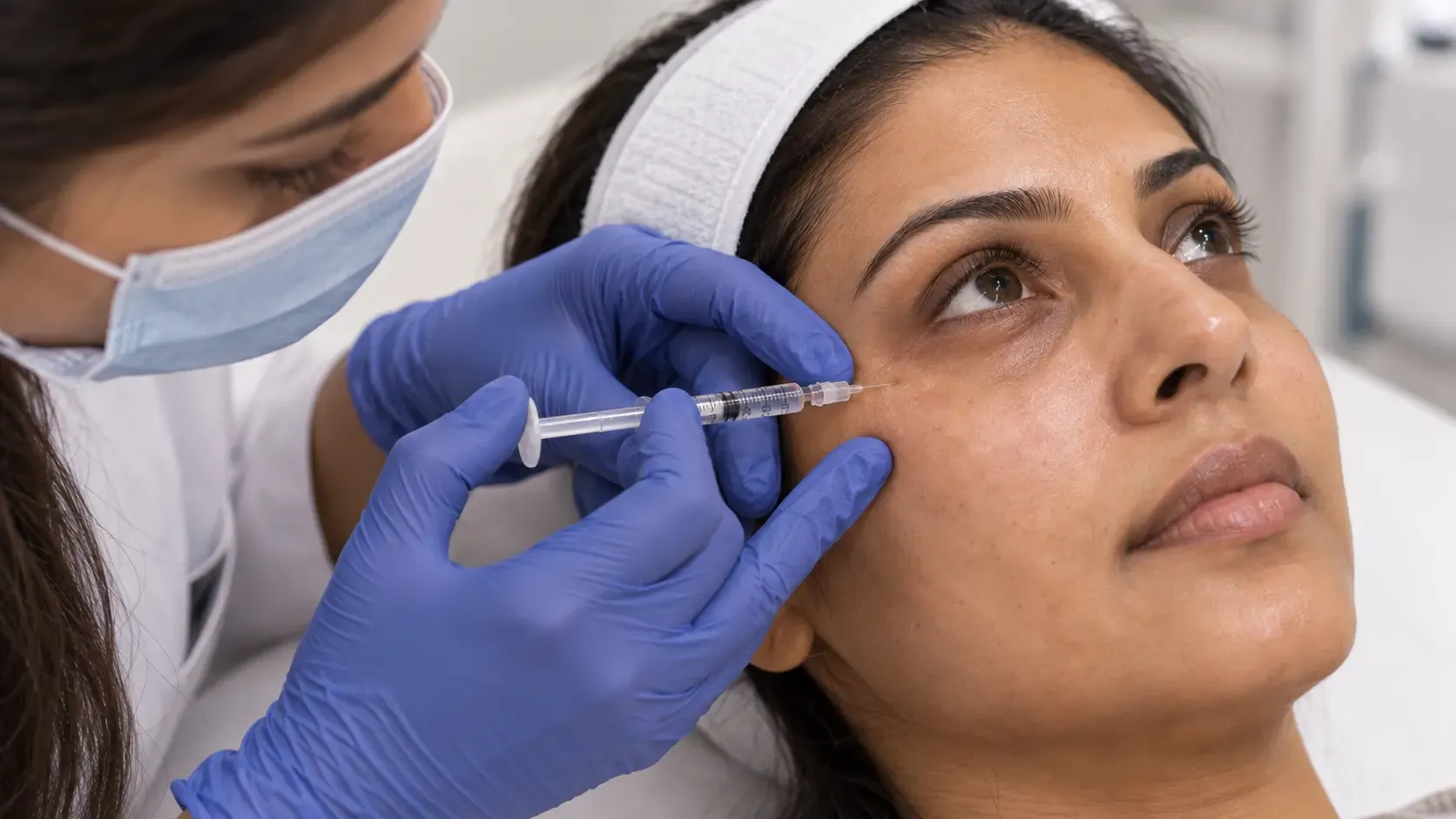
Ultherapy is a non-invasive ultrasound-based treatment used for selected concerns related to skin laxity. It delivers microfocused ultrasound energy at specific tissue depths while allowing real-time visualisation of the treatment area. The aim is gradual collagen remodelling rather than an immediate surgical-style lift.[1][3]
Ultherapy is not currently available at The Bombay Skin Clinic. This guide explains suitability, results, safety, cost in Mumbai and key alternatives.
What Is Ultherapy?
Ultherapy is a branded microfocused ultrasound with visualisation, or MFU-V, system. Focused ultrasound creates controlled thermal points beneath the skin, which can trigger collagen remodelling over time.[1][3]
Current US indications include lifting the eyebrow and lax tissue beneath the chin and on the neck, plus selected décolletage and body uses.[1]
What is microfocused ultrasound with visualisation, MFU-V?
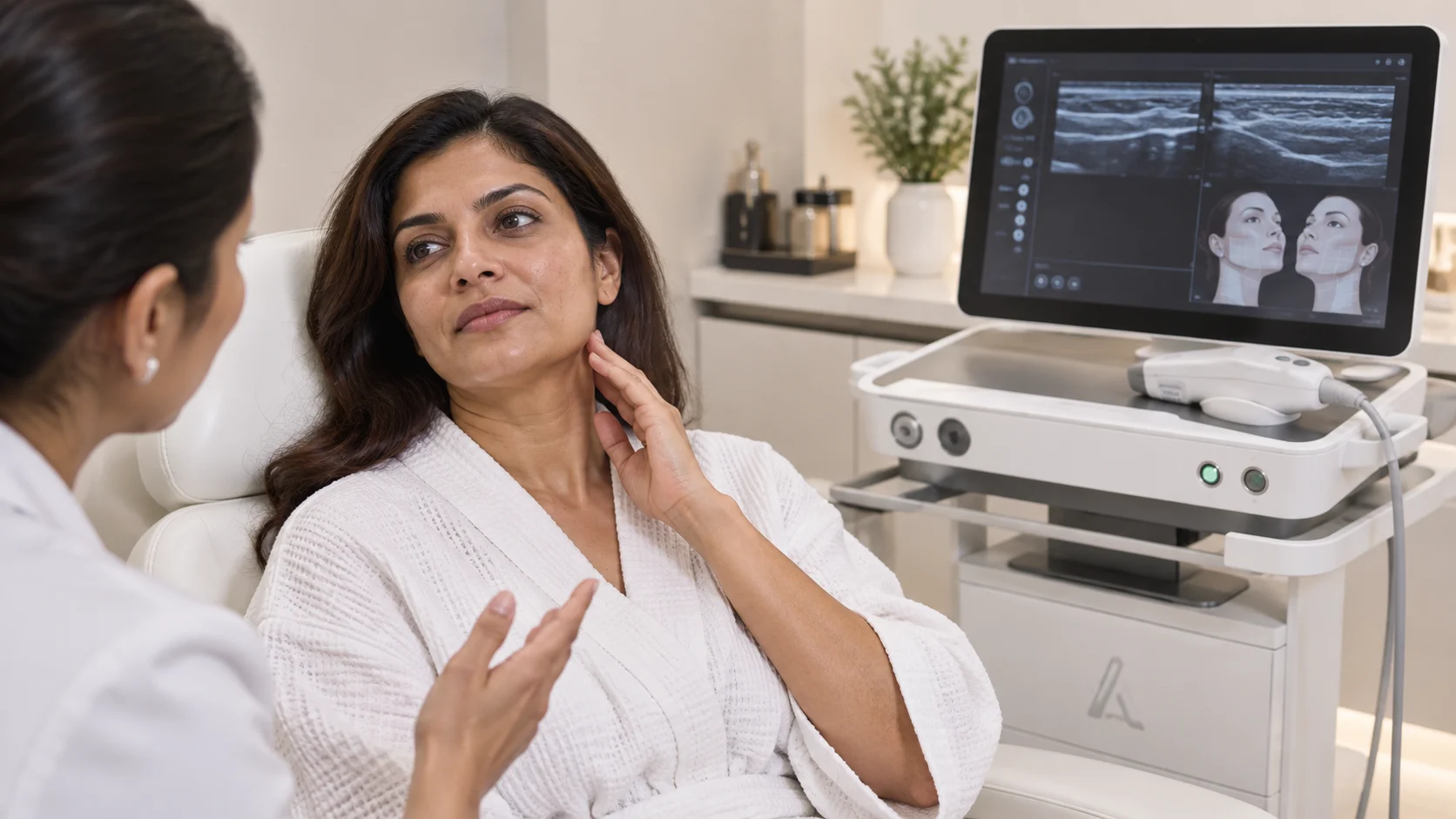
MFU-V combines focused ultrasound treatment with real-time visualisation. The practitioner can view tissue layers below the skin, confirm contact and select an appropriate treatment depth before delivering energy.[1]
Is Ultherapy the same as HIFU?
Ultherapy belongs to the wider focused ultrasound category often called HIFU, but it is a specific branded MFU-V system. Devices sold as HIFU can differ in treatment depths, energy delivery, visualisation features, protocols and supporting clinical evidence.
Is Ultherapy a laser treatment?
No. Ultherapy uses acoustic ultrasound energy, not laser light. Laser, radiofrequency and focused ultrasound interact with tissue differently, so the right option should be chosen according to the concern and anatomy rather than the word “lifting” alone.
What Makes Ultherapy Different From Standard Ultrasound Skin Tightening?
Real-time ultrasound visualisation and treatment depth
The visualisation function can show dermal and subdermal layers and help confirm that energy is being delivered at an appropriate depth. It supports anatomy-aware treatment planning, but it does not replace practitioner training or clinical judgement.[1]
Ultherapy and Ultherapy PRIME: What has changed?
Ultherapy PRIME is a newer version of the Ulthera platform. An updated PRIME control unit received FDA clearance in 2025. The treatment principle remains focused ultrasound with visualisation, while the newer platform updates the treatment interface and visualisation workflow.[2]
Why the device, treatment protocol and practitioner matter
Results depend on more than the brand name. Treatment depth, line placement, coverage, tissue contact, anatomy and operator technique can influence comfort and response. Reviews also show considerable variation between study protocols.[3][5]
What Areas Can Ultherapy Treat?
Ultherapy for the face and lower face
Ultherapy may be considered when early facial laxity makes the lower face look softer or less defined. It is intended to support tissue tightening through collagen remodelling, not to replace facial volume that has been lost with age.
Ultherapy for the neck, jawline and jowls
Ultherapy has established use for lax tissue beneath the chin and on the neck.[1] In selected patients, gradual tightening may improve the appearance of mild jowling or a less defined jawline. It cannot remove substantial excess skin.
Ultherapy for the brow and under-chin area
The Ulthera System is cleared for eyebrow lifting and lax submental tissue.[1] Under-chin fullness can also be caused by fat, so a person searching for Ultherapy double chin treatment may need assessment to separate skin laxity from fat-related fullness.
Other treatment areas and why regulatory indications matter
The current Ulthera System also has selected non-facial indications.[1] A treatment being technically possible does not mean every area should be treated. Patients should ask whether the proposed area is within intended use and supported by appropriate evidence.
What Are the Advantages and Limitations of Ultherapy?
- It is non-invasive and does not require surgical incisions.
- Focused ultrasound can treat selected tissue depths.
- Real-time visualisation is built into the system.
- Formal downtime is usually limited.
- Results develop gradually rather than immediately.
- Response varies and is usually subtler than surgical lifting.
- Some patients find the treatment moderately uncomfortable.[3]
A 2025 systematic review and meta-analysis found overall aesthetic improvement and patient satisfaction across MFU-V studies, but also highlighted differences between studies and the need for stronger trials.[3]
Who Is a Good Candidate for Ultherapy?
Ultherapy may be considered for
- Mild to moderate laxity around the lower face, jawline or neck.
- Early softening of facial contours where skin laxity is a major factor.
- People who prefer limited downtime and realistic, gradual improvement.
Because focused ultrasound does not depend on targeting skin pigment, skin colour alone is not usually the main deciding factor. Other clinical factors still need assessment.
Who may not be an ideal candidate?
- People with marked laxity who expect a surgical-level lift.
- People with active infection, open wounds or significant inflammation in the treatment area.
- People whose concern is mainly caused by volume loss, fat distribution or structural ageing.
- People with relevant implants, medical conditions or recent procedures that require individual review.
Evidence suggests response becomes less predictable as laxity becomes more advanced.[6]
How Does Ultherapy Skin Tightening Work?
How focused ultrasound creates controlled thermal treatment points
The handpiece directs acoustic energy to defined focal depths. Energy is concentrated beneath the skin rather than spread only across the surface, creating small zones of controlled heating in targeted tissue.
How Ultherapy supports collagen and elastin remodelling
Controlled heating triggers a wound-healing response that can support collagen contraction, new collagen formation and longer-term tissue remodelling. Reviews of MFU-V report improvement in selected measures of laxity and skin quality.[3]
Why Ultherapy results develop gradually rather than immediately
The treatment does not physically pull tissue upward during the session. Visible change depends mainly on biological remodelling, so the more meaningful result usually develops over several weeks and is often assessed around two to three months.[3][6]
Is There Downtime After Ultherapy?
What you may notice immediately after treatment
The treated area may look mildly red or feel tender. Swelling, bruising, tingling or altered sensation can occur and may become more noticeable over the next few days. Persistent or worsening symptoms should be reviewed by the treating clinician.[3][4]
When can normal work and social activities usually resume?
Many people resume work and social activity on the same day or the following day. This should be treated as a general expectation, not a promise of zero downtime, because swelling, redness or tenderness varies between patients.
What Results Can You Expect From Ultherapy?
When do Ultherapy results start to show?
Some early firmness may be noticed within the first few weeks, but collagen remodelling takes time. A useful assessment is usually made several weeks after treatment rather than immediately.
What changes may be seen at 2 to 3 months?
Suitable patients may notice firmer-looking skin, a slightly sharper contour or improvement in mild laxity at around two to three months. A pooled 2025 review reported overall improvement across MFU-V studies, while also noting study-to-study variation.[3]
How long do Ultherapy results last?
There is no single duration for everyone. Studies report improvement lasting for months, sometimes a year or longer, but ageing continues and longer-term evidence is less consistent.[6]
Why results differ from person to person
Response varies with skin quality, collagen, fat distribution, skeletal support, degree of laxity, age and previous procedures. Treatment depth, line placement and coverage also matter, which is why realistic expectations should be discussed before treatment.
Is Ultherapy Safe? Side Effects, Risks and Contraindications
Ultherapy is non-invasive, but it remains an energy-based medical aesthetic procedure. Temporary redness, swelling, tenderness, bruising and altered sensation are among the more commonly reported effects.[3][4]
A 2025 adverse-event review found that serious events were uncommon in published clinical literature, while post-market reports included lipoatrophy, neurological symptoms and scarring.[4] These reports support careful patient selection and technique.
Common temporary effects after Ultherapy
- Redness or warmth.
- Swelling.
- Tenderness or soreness.
- Bruising.
- Temporary tingling, numbness or altered sensitivity.
Less common and reported adverse effects
Less common reported complications include persistent sensory symptoms, focal fat loss, nerve-related symptoms, skin injury or scarring.[4] These are not expected outcomes and should be assessed if they occur.
When Ultherapy should be avoided or postponed
Treatment is generally postponed when there is active infection, an open wound or significant inflammation in the planned area. Medical conditions, implants, prior surgery or recent procedures may also change suitability and should be discussed during consultation.
Why correct treatment depth and anatomical assessment matter
The face and neck contain nerves, vessels, fat compartments and bony landmarks at different depths. Real-time visualisation can support depth selection, but safe treatment still depends on practitioner training, correct mapping and appropriate device use.[1]
Ultherapy vs HIFU vs Ultraformer MPT: What Is the Difference?
Ultherapy vs generic HIFU skin tightening
Ultherapy is a specific MFU-V system with real-time ultrasound visualisation. HIFU is a broad treatment category containing many devices. Patients should therefore compare exact device names rather than assume every HIFU treatment is equivalent.
Ultherapy vs Ultraformer MPT
Ultraformer MPT is another focused ultrasound platform with its own handpieces, cartridges and treatment modes. The appropriate choice depends on the treatment area, tissue depth, comfort and clinical goal. The Bombay Skin Clinic offers Ultraformer MPT assessment but does not offer Ultherapy.
Does real-time ultrasound visualisation make Ultherapy different?
Yes. Real-time tissue visualisation is a defining feature of Ultherapy and allows the operator to view tissue depth and confirm contact before energy delivery.[1] It is a meaningful technical difference, but it does not guarantee a better result for every patient.
Why one ultrasound treatment is not automatically better for every patient
A 2025 review of focused ultrasound studies found promising results but also significant variation between protocols and limited high-quality comparative data.[5] Treatment choice should therefore be based on anatomy, goals and safety rather than a universal device ranking.
Ultherapy vs Radiofrequency Skin Tightening and Other Non-Surgical Options
Ultherapy vs Thermage and monopolar RF
Thermage is a monopolar radiofrequency platform, not an ultrasound treatment. RF may be selected when broader tissue heating fits the treatment goal. Neither category is automatically superior, and suitability depends on anatomy, skin quality and expected outcome.
Ultherapy vs Density RF
Density RF is also radiofrequency-based and therefore interacts with tissue differently from focused ultrasound. The useful clinical question is which tissue layer and concern need treatment, not which brand has the stronger marketing message.
Ultherapy vs RF microneedling
RF microneedling uses fine needles to deliver radiofrequency energy into the skin. It may be considered when texture, acne scarring or superficial laxity are also concerns. Ultherapy does not use needles and generally targets deeper tissue through intact skin.
When a combination approach may be considered instead of one technology
Ageing can involve laxity, texture change, volume loss and pigmentation at the same time. A staged combination plan may sometimes address these separate concerns more logically than repeating one technology. Combination treatment should still be individualised and medically assessed.
Looking for Ultherapy Near Me in Mumbai? What Should You Check Before Booking?
Is the clinic using genuine Ultherapy or another HIFU device?
Ask for the exact device and model. Ultherapy refers to the Ulthera System and should not be used as a generic name for every HIFU machine. Another device may have different features, protocols and evidence.
Who performs and supervises the treatment?
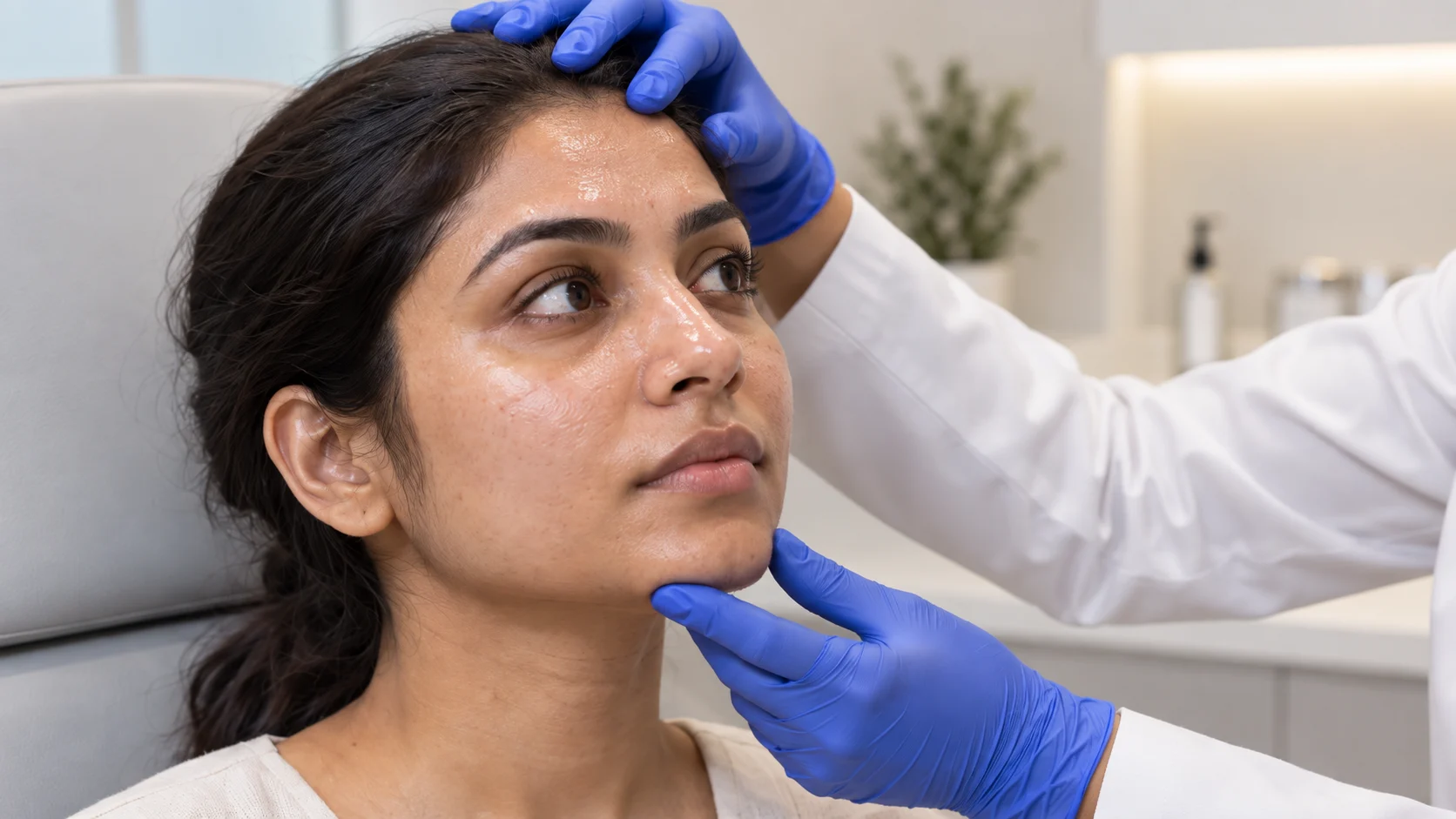
Ask who assesses your skin, who selects the treatment settings and who will manage an unexpected reaction. Appropriate medical oversight is especially relevant for face and neck procedures because important structures lie close to the treatment field.
How is treatment depth selected for your anatomy?
The consultation should explain which tissue layers are being targeted and why. Treatment depth should relate to anatomy rather than follow an identical plan for every patient. Previous fillers, threads, surgery and energy-based procedures should also be disclosed.
What questions should you ask during consultation?
- What exact device will be used?
- Why is ultrasound suitable for my type of laxity?
- Which areas and tissue depths will be treated?
- What level of improvement is realistic?
- What temporary effects and less common risks should I know about?
- What alternatives would you consider if ultrasound is not the best fit?
How Much Does Ultherapy Cost in Mumbai?
Indicative Ultherapy treatment cost in Mumbai
As a broad 2026 market guide, smaller Ultherapy areas may start from around ₹25,000, while lower-face, full-face or face-and-neck plans can cost substantially more. Some full-face plans exceed ₹1,00,000 depending on coverage.
These are indicative market figures, not The Bombay Skin Clinic prices, because we do not offer Ultherapy.
Why Ultherapy cost varies by face, neck, jawline and treatment area
A brow treatment has a smaller treatment footprint than a full face and neck plan. Larger or more complex areas generally require more treatment lines, different depths and more practitioner time, which can affect total cost.
Treatment lines, practitioner expertise and device authenticity
Price should not be judged only by the headline amount. Treatment lines, genuine consumables, practitioner training, consultation standards and follow-up can all affect cost. If quotes vary widely, check whether the same device and treatment coverage are being compared.
Why Ultherapy pricing should not be compared directly with generic HIFU pricing
Generic HIFU includes many devices at different price points. Ultherapy is a specific MFU-V platform with real-time visualisation and proprietary transducers. A lower HIFU price therefore may not represent the same treatment, device or treatment coverage.
Frequently Asked Questions About Ultherapy
Is Ultherapy the same as HIFU?
Ultherapy is a specific microfocused ultrasound with visualisation system, while HIFU is a broader category. Ultherapy includes real-time tissue visualisation and device-specific protocols. Other HIFU systems can differ in cartridges, treatment depths, visualisation and evidence.
How many Ultherapy sessions are needed?
Ultherapy is often performed as one treatment followed by reassessment. The need for another session depends on baseline laxity, treatment area, response and future ageing changes. Collagen remodelling should be given time before further treatment is considered.
How long does Ultherapy take to show results?
Some early firmness may appear within weeks, but a more meaningful result is usually assessed around two to three months as collagen remodelling develops. Further change may continue beyond this period.[3][6]
How long do Ultherapy results last?
There is no fixed duration for every patient. Studies report improvement lasting for months and sometimes a year or longer, but ageing continues and longer-term evidence is less consistent.[6] Maintenance should be based on reassessment rather than a guaranteed timetable.
Is Ultherapy safe for Indian skin tones?
Focused ultrasound does not rely on targeting melanin, so skin colour is not usually the main limiting factor. Safety still depends on correct assessment, treatment depth, anatomy, device use and practitioner technique. An individual consultation remains important for Indian skin tones.
What is the difference between Ultherapy and Ultraformer MPT?
Both are focused ultrasound technologies, but they are different systems with different handpieces, cartridges and treatment modes. Ultherapy includes real-time ultrasound visualisation. The Bombay Skin Clinic offers Ultraformer MPT assessment for suitable patients but does not currently offer Ultherapy.
Citation Sources
References
- U.S. Food and Drug Administration. Ulthera System Expanded Indications, 510(k) K260618. FDA. https://www.accessdata.fda.gov/cdrh_docs/pdf26/K260618.pdf
- U.S. Food and Drug Administration. Ulthera System, UC-1 Control Unit PRIME Model 2.1, 510(k) K250418. FDA. https://www.accessdata.fda.gov/scripts/cdrh/cfdocs/cfpmn/pmn.cfm?ID=K250418
- Amiri M, Ajasllari G, Llane A, et al. Microfocused Ultrasound With Visualization (MFU-V) Effectiveness and Safety: A Systematic Review and Meta-Analysis. Aesthetic Surgery Journal. https://pubmed.ncbi.nlm.nih.gov/39540440/
- Humphrey VS, Rambhia PH, Gmyrek R, Chapas A. Microfocused Ultrasound With Visualization: A Systematic Review of Adverse Events and Risk of Subsequent Facelift Compromise. Dermatologic Surgery. https://pubmed.ncbi.nlm.nih.gov/39625163/
- Modena DAO, Ferro AP, Rangon FB, Guirro ECO. Systematic Review and Meta-Analysis: Microfocused Ultrasound Treatment for Sagging Skin. Lasers in Medical Science. https://pubmed.ncbi.nlm.nih.gov/40167815/
- Pakfetrat A, et al. A Systematic Review of the Efficacy of Microfocused Ultrasound for Facial Skin Tightening. Journal of Cosmetic Dermatology. https://pubmed.ncbi.nlm.nih.gov/36674277/
MEDICALLY REVIEWED BY
Dr. Batul Patel (Dermatologist)
Medical Director – The Bombay Skin Clinic
Dr. Batul Patel is an award-winning celebrity dermatologist with over 20 years of experience. She was honoured as “Dermatologist of the Year 2026” by Financial Express and “Dermatologist of the Year 2023” by The Economic Times. She also served as a jury member at the Vogue Beauty & Wellness Honours 2026. View profile