

MEDICALLY REVIEWED BY
Dr. Batul Patel (Dermatologist)
Medical Director – The Bombay Skin Clinic
Dr. Batul Patel is an award-winning celebrity dermatologist with over 20 years of experience. She was honoured as “Dermatologist of the Year 2026” by Financial Express and “Dermatologist of the Year 2023” by The Economic Times. She also served as a jury member at the Vogue Beauty & Wellness Honours 2026. View profile
What Is Dry Skin | Best Routine | Ingredients | What to Avoid | FAQs
A good skincare routine for dry skin focuses on three basics: gentle cleansing, regular moisturising and daily sun protection. Serums, toners, exfoliants and retinoids are optional, and some may irritate a stressed skin barrier.
In my practice, I build the routine around barrier support first, then consider other products for concerns such as pigmentation, acne, sensitivity or ageing.
What Is Dry Skin?
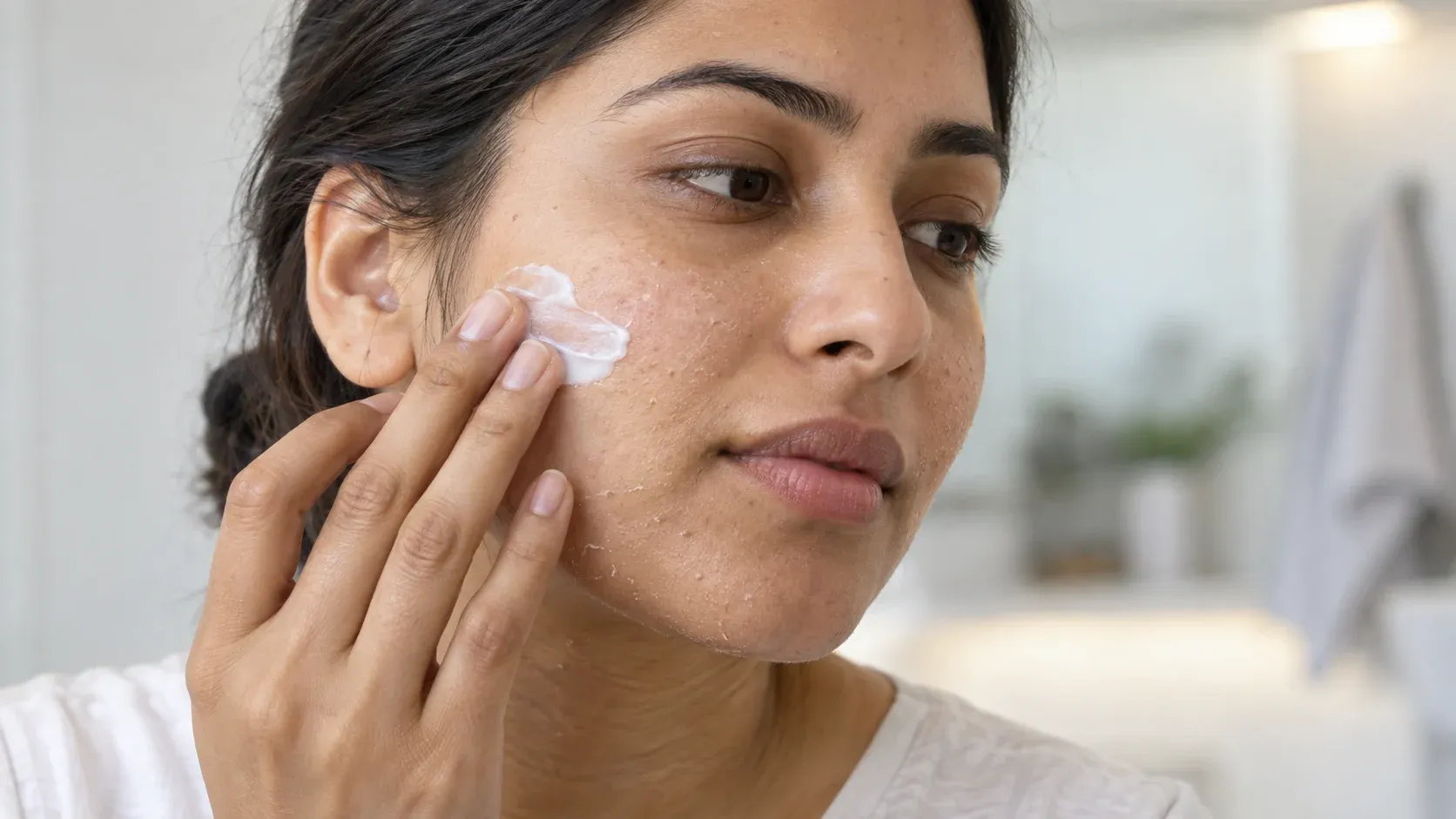
Dry skin, also called xerosis, happens when the outer layer of the skin cannot hold enough water and lipids to stay smooth and flexible. It may feel tight, rough or itchy, and can look flaky or dull. In more marked dryness, small cracks may develop.
The outermost layer of the skin, the stratum corneum, acts as a protective barrier. It helps limit water loss and reduces exposure to irritants and other external factors. When this barrier is disturbed, dry and sensitive skin symptoms can become more noticeable.[1]
Dryness may be a long-term skin tendency, a temporary response to weather or skincare, or part of a dermatological condition. That distinction matters because the right routine depends on the cause.
Dry Skin vs Dehydrated Skin: What Is the Difference?
Dry skin and dehydrated skin are related but different. Dry skin generally involves reduced surface lipids and impaired barrier function, while dehydration describes reduced water content in the skin.
Dry skin
Dry skin often feels rough, tight or flaky over time. It may need richer moisturising support and gentler cleansing to reduce further barrier disruption.
Dehydrated skin
Dehydration can occur temporarily in many skin types, including skin that also becomes oily. The skin may feel tight or uncomfortable even when oil is present.
Persistent roughness and flaking suggest true dryness, while temporary tightness can also reflect dehydration. Redness, itching, recurrent scaling or rash may need dermatologist assessment.
What Is the Best Skincare Routine for Dry Skin?
The best skincare routine for dry skin is usually a simple one: cleanse gently, add hydration if needed, apply an appropriate moisturiser and finish the morning routine with sunscreen. The aim is to support the skin barrier without overloading the skin with unnecessary active ingredients.
Step 1: Cleanse Gently
A face wash for dry skin should remove dirt, sunscreen and residue without leaving the skin tight. Gentle, low-foaming or cream cleansers are often easier to tolerate than harsh soaps.
Use lukewarm rather than very hot water and avoid scrubbing. The American Academy of Dermatology recommends gentle cleansing and shorter warm showers for excessive dryness.[2] Morning cleansing can be adjusted to skin type, sweating, makeup and products used overnight.
Step 2: Add Hydration Only If Your Skin Needs It
A hydrating serum for dry skin is optional. Ingredients such as glycerin, hyaluronic acid, panthenol or niacinamide may support hydration or barrier function depending on the formula and individual tolerance.
A toner is optional too. If it stings, feels drying or repeatedly irritates the skin, it does not need to be part of the routine.
Step 3: Apply Moisturiser
Moisturiser is usually the central step in a dry skin care routine because it helps increase hydration and reduce water loss. Creams and ointment-based products are generally richer than lotions and may suit more noticeable dryness.[3]
Moisturisers often combine different ingredient types:
- Humectants such as glycerin and hyaluronic acid help attract and hold water.
- Emollients help smooth the spaces between surface skin cells.
- Occlusive ingredients such as petrolatum or dimethicone help reduce evaporation from the skin surface.
Barrier-support products may also contain ceramides, lipids naturally found in the stratum corneum. There is no single best moisturiser for everyone, because texture, sensitivity, acne tendency and degree of dryness all matter.[3]
Step 4: Protect With Sunscreen
Dry skin still needs daily sun protection. A broad-spectrum sunscreen with SPF 30 or higher is recommended for exposed skin.[2]
Many people with dry facial skin find creamier sunscreen textures more comfortable than highly mattifying formulas. If sunscreen alone does not keep the skin comfortable, moisturiser can be applied underneath.
Morning Skincare Routine for Dry Skin
A morning skincare routine for dry skin can be kept to four practical steps:
- Cleanse gently, or use a minimal morning cleanse if appropriate for your skin.
- Apply an optional hydrating serum if your skin needs additional hydration.
- Use a suitable moisturiser.
- Finish with broad-spectrum SPF 30 or higher.
The morning routine should protect and support the barrier. More products do not automatically mean better results. IADVL advises adapting skincare to individual needs rather than following every online trend.[4]
Night Skincare Routine for Dry Skin
A night skincare routine for dry skin should remove sunscreen, makeup, sweat and residue without leaving the face stripped. Follow cleansing with any genuinely needed treatment, then moisturise.
- Remove makeup or resistant sunscreen gently where required.
- Cleanse with a mild face cleanser.
- Apply a hydrating or dermatologist-advised treatment product if relevant.
- Finish with moisturiser, using a richer texture if your skin benefits from it.
Retinoids and exfoliating acids can be useful for specific concerns, but they may also increase dryness and irritation. They should not be treated as compulsory night-care steps. If the skin is already flaky, sore or stinging, restoring comfort and barrier function may need to come first.[2]
Which Ingredients Are Good for Dry Skin?
Useful ingredients for dry skin generally increase water content, support surface lipids or reduce water loss. The overall formulation matters as much as any single ingredient.
Ceramides
Ceramides are part of the skin’s natural lipid barrier. Ceramide-containing moisturisers may support barrier function, particularly when dryness is associated with a disrupted outer skin layer.[1]
Glycerin
Glycerin is a humectant that helps retain water in the outer skin. It is commonly used in moisturisers and can be suitable across many dry skin routines.
Hyaluronic Acid
Hyaluronic acid is another water-binding ingredient frequently used in hydrating serums and moisturisers. It can support hydration, although it should not be presented as a stand-alone solution for every damaged skin barrier.
Petrolatum and Other Occlusives
Occlusive ingredients reduce water loss by forming a protective layer. They can help very dry areas, although heavier textures may not suit every acne-prone face.
Urea and Other Moisturising Ingredients
Urea can help with xerosis in suitable formulations, while ingredients such as glycerol and ceramides may also be selected according to the degree and pattern of dryness. Evidence-based xerosis guidance supports choosing moisturising ingredients according to symptoms, body site and individual needs rather than relying on one universal formula.[5]
What Should You Avoid If You Have Dry Skin?
Dry skin usually does better when repeated irritation is reduced. Common triggers include very hot water, prolonged bathing, harsh cleansers, frequent scrubbing and introducing several strong active ingredients at the same time.
- Avoid washing the face repeatedly just to create a very clean or tight feeling.
- Reduce physical scrubbing when the skin is already flaky or sensitive.
- Be cautious with fragrance if it repeatedly causes stinging or irritation.
- Do not layer exfoliating acids, retinoids and other strong actives simply because they are trending.
- Apply moisturiser soon after washing if your skin tends to become tight quickly.
AAD guidance for excessive dryness also advises fragrance-free products, gentle cleansing and regular moisturising, especially after bathing or washing.[2]
How Does Mumbai’s Climate Affect Dry Skin?
Mumbai is humid for much of the year, but humidity does not prevent dry skin. Moving between hot outdoor weather and air-conditioned spaces, frequent cleansing after sweating and long indoor hours can change how dry or tight the skin feels.
Your moisturiser may need to change with the season and daily environment. A lighter cream may feel comfortable in humid weather, while richer support may suit periods of increased dryness or prolonged air-conditioning. Adjust texture and frequency to the skin’s actual needs.
Does Dry Skin Need Exfoliation?
Dry skin does not automatically need exfoliation. Flakes are sometimes mistaken for a sign that the skin must be scrubbed, but repeated exfoliation can make an already irritated barrier feel tighter, more sensitive or more inflamed.
If an exfoliating acid or retinoid is being used for acne, pigmentation, texture or ageing concerns, the frequency and product choice should depend on tolerance. When the skin is actively stinging, cracking or peeling, it is reasonable to have the routine reviewed before adding more exfoliation.
When Is Dry Skin More Than a Skincare Problem?
Dry skin needs medical assessment when it is persistent, severe or accompanied by symptoms that suggest an underlying skin condition. Xerosis can occur on its own, but excessive dryness may also be associated with conditions such as atopic dermatitis, ichthyosis or psoriasis.[6]
Consider seeing a dermatologist if dryness:
- continues despite a gentle skincare routine
- causes significant itching or disturbs sleep
- becomes red, inflamed or painful
- cracks or bleeds
- keeps returning in the same areas
- is accompanied by a persistent rash
- causes burning or stinging with products that were previously comfortable
A dermatologist can assess the pattern of dryness and decide whether the priority is barrier care, avoiding a trigger, treating an underlying condition or adjusting existing skincare.[6]
Dermatologist’s Approach to Building a Dry-Skin Routine in Mumbai
When we build a skincare routine for dry skin, we first look at why the skin is dry. We consider sensitivity, acne tendency, active ingredients, age, existing skin conditions, recent procedures, lifestyle and climate exposure.
Two people with dry-feeling skin may need different routines. One may need gentler cleansing and a richer moisturiser, while another may have eczema, irritant dermatitis or over-exfoliation.
Frequently Asked Questions About Skincare for Dry Skin
How many times should I wash my face if I have dry skin?
Many people with dry skin do well with gentle cleansing once or twice daily, but there is no fixed number for everyone. Makeup, sunscreen, sweating, pollution exposure and skin sensitivity should guide the routine. If cleansing leaves the face tight every time, the cleanser or cleansing frequency may need review.
Should I use a serum if I have dry skin?
A serum is optional. A hydrating serum can add comfort when a moisturiser alone is not enough, but a well-formulated moisturiser may be sufficient for a simple dry skin routine.
Is hyaluronic acid good for dry skin?
Hyaluronic acid can support hydration because it binds water. It often works best as part of a complete formulation or when followed by a moisturiser that helps reduce water loss.
Are ceramides good for a damaged skin barrier?
Ceramides are natural components of the skin barrier, and ceramide-containing moisturisers can be useful in barrier-support routines. The full formula and the individual’s skin condition still matter.[1]
Can dry skin use retinol?
Some people with dry skin can use retinoids, but they may increase dryness, peeling or irritation. They should not be added automatically, especially when the skin barrier is already uncomfortable or inflamed.[2]
How long does it take for a dry-skin routine to start helping?
Comfort and hydration may improve after a suitable routine is started, but there is no single timeline for everyone. Persistent xerosis, eczema or another condition may need targeted medical management. Results vary with the cause, product tolerance and consistency.
When Should You See a Dermatologist for Dry Skin in Mumbai?
If dry skin remains uncomfortable despite a simple routine, or if you develop persistent itching, redness, scaling, cracking or burning, a dermatologist can help identify the cause. This is especially useful before adding several new products or strong active ingredients.
References
- Fluhr JW, Moore DJ, Lane ME, Lachmann N, Rawlings AV. Epidermal barrier function in dry, flaky and sensitive skin: A narrative review. J Eur Acad Dermatol Venereol. 2024;38(5):812-820. https://pubmed.ncbi.nlm.nih.gov/38140732/
- American Academy of Dermatology Association. Dermatologists’ top tips for relieving dry skin. AAD. https://www.aad.org/public/everyday-care/skin-care-basics/dry/dermatologists-tips-relieve-dry-skin
- American Academy of Dermatology Association. How to pick the right moisturizer for your skin. AAD. https://www.aad.org/public/everyday-care/skin-care-basics/dry/pick-moisturizer
- Indian Association of Dermatologists, Venereologists and Leprologists. Everyday Skin Care: Patient Care Guide. IADVL Public. https://public.iadvl.org/everyday-skin-care
- Augustin M, Wilsmann-Theis D, Körber A, Kerscher M, Itschert G, Dippel M, Staubach P. Diagnosis and treatment of xerosis cutis: a position paper. J Dtsch Dermatol Ges. 2019;17 Suppl 7:3-33. https://pubmed.ncbi.nlm.nih.gov/31738016/
- American Academy of Dermatology Association. Dry skin: Diagnosis and treatment. AAD. https://www.aad.org/public/diseases/a-z/dry-skin-treatment
MEDICALLY REVIEWED BY
Dr. Batul Patel (Dermatologist)
Medical Director – The Bombay Skin Clinic
Dr. Batul Patel is an award-winning celebrity dermatologist with over 20 years of experience. She was honoured as “Dermatologist of the Year 2026” by Financial Express and “Dermatologist of the Year 2023” by The Economic Times. She also served as a jury member at the Vogue Beauty & Wellness Honours 2026. View profile