

Dr. Batul Patel (Dermatologist)
Medical Director – The Bombay Skin Clinic
Dr. Batul Patel is an award winning celebrity dermatologist, practising since 20 years. Honoured as “Dermatologist of the Year 2026” by Financial Express, “Dermatologist of the Year 2023” by The Economic Times and Jury Member at Vogue Beauty & Wellness Honours 2026. View profile
What Is Glutathione | Key Advantages | How It Works | Safety | Treatment Cost
If you have been researching ways to address uneven skin tone, dullness, or pigmentation, you may have come across glutathione injections or IV drips. At The Bombay Skin Clinic, we approach glutathione as a doctor-led antioxidant therapy, considered only after understanding your skin concerns, medical history, and treatment goals. But what does it actually do, how safe is it, and is it right for you?
This guide answers those questions honestly, so you can walk into any consultation — including one with our dermatologists at The Bombay Skin Clinic — already informed and confident.
What Is Glutathione Injection / IV Treatment?
Glutathione is a tripeptide antioxidant produced naturally by every cell in your body. It is made up of three amino acids — glutamine, cysteine, and glycine — and it plays a central role in neutralising free radicals, supporting detoxification, and protecting cells from oxidative stress. [1]
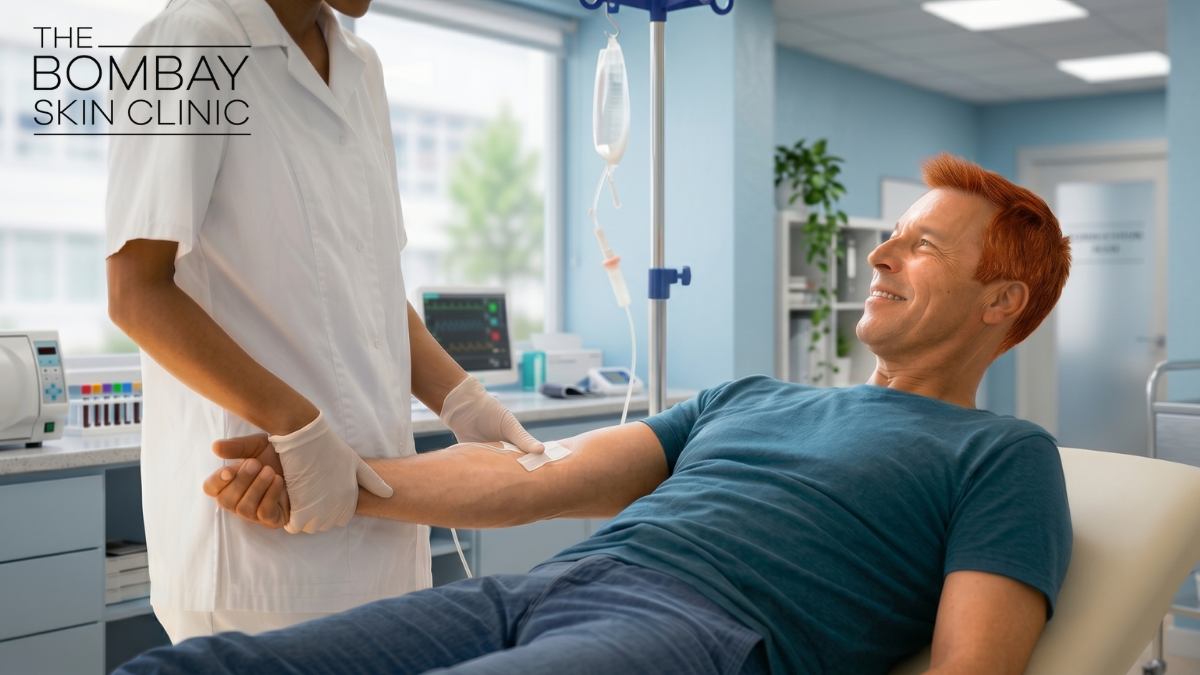
When administered as an intravenous (IV) infusion or intramuscular injection in a clinical setting, glutathione bypasses the digestive system entirely and enters the bloodstream directly. This route delivers the antioxidant to tissues at higher concentrations than oral supplementation typically achieves. In dermatology, IV glutathione is used as a supportive adjunct to address skin dullness, uneven tone, and certain types of hyperpigmentation — always as part of a broader, personalised skin care plan. It is often recommended alongside treatments such as PRP therapy or topical prescription protocols for a more comprehensive approach to skin health.
Key Advantages of Glutathione IV Therapy
When administered by a qualified dermatologist after a thorough assessment, IV glutathione may offer the following benefits:
- Antioxidant support. Glutathione helps neutralise oxidative stress caused by pollution, UV exposure, and lifestyle factors — all of which are particularly relevant in a city like Mumbai. [1]
- Adjunct to pigmentation management. Research suggests glutathione can interfere with the melanin synthesis pathway, making it a useful supportive option alongside evidence-based pigmentation treatments. [2]
- Systemic delivery. The IV route achieves blood concentrations that oral supplements cannot reliably replicate, which is why some patients and clinicians prefer it when a more direct approach is needed.
- Broad skin wellness support. Beyond pigmentation, many patients notice an improvement in overall skin radiance and texture as part of a structured treatment plan.
- Non-surgical. The procedure involves a simple intravenous infusion administered in a clinical setting — no incisions, no recovery room.
Who Is It For? Eligibility at a Glance
Glutathione IV therapy is not a one-size-fits-all treatment. A proper dermatologist consultation is essential to determine whether it is appropriate for you.
You May Be a Good Candidate If
- You have concerns about dull, uneven, or lacklustre skin and are looking for a systemic supportive approach alongside topical or in-clinic treatments.
- You have been assessed by a dermatologist and do not have any contraindicated medical conditions.
- You understand that results vary, that this is an adjunct treatment rather than a standalone skin-lightening solution, and that realistic expectations have been set at consultation.
It May Not Be Right for You If
- You are pregnant or breastfeeding — systemic antioxidant IV therapy is generally deferred during this period.
- You have known allergies to glutathione or any of the compounds used in the infusion.
- You have pre-existing kidney disease, liver conditions, or certain blood disorders — a thorough medical history review is mandatory before any IV therapy.
- You are looking for a dramatic or rapid skin colour change — glutathione does not work in that way, and any clinic suggesting otherwise should be approached with caution.
How Glutathione Injection Works
Your skin colour is determined primarily by melanin, a pigment produced by specialised cells called melanocytes. The enzyme tyrosinase drives the melanin production process — the more active tyrosinase is, the more melanin is produced. [2]
Glutathione is thought to influence melanin synthesis in two key ways. First, it can inhibit tyrosinase activity, which may slow the rate at which melanin is produced. Second, it can shift the balance of melanin production — favouring eumelanin (darker pigment) moving towards phaeomelanin (lighter, more yellowish pigment). [2][3] Together, these mechanisms may lead to a gradual brightening of the skin over a course of treatments.
It is important to understand that this is a supportive biochemical effect, not a bleaching action. The changes are subtle and gradual, and the degree of response varies considerably from person to person based on skin type, existing melanin levels, and how consistently the treatment protocol is followed.
Beyond melanin, glutathione also acts as a powerful free radical scavenger. Oxidative stress — worsened by Mumbai’s air pollution, UV radiation, and a busy urban lifestyle — accelerates skin ageing and contributes to pigmentation. By reducing oxidative burden at a cellular level, IV glutathione may help the skin maintain a healthier, more radiant baseline over time. [1] This mechanism also makes it a useful complement to collagen-supporting treatments; you can read more about the role of collagen in skin health in our guide to collagen-boosting treatments in Mumbai.
Your Session Plan and Comfort
How Long Each Session Takes
A single glutathione IV session typically takes between 20 and 45 minutes, depending on the infusion volume and whether other supportive nutrients (such as Vitamin C, which may enhance glutathione’s activity) are included in the formulation. The procedure is carried out in a clinic treatment room, with the cannula placed in a vein in your forearm or hand. Most patients find it comfortable and use the time to relax quietly.
How Many Sessions You May Need
The number of sessions varies according to your skin concern, your skin type, and the specific protocol recommended at assessment. In general, a course of 6 to 12 sessions — administered weekly or fortnightly — is a common starting framework, though your dermatologist will design a plan tailored to your individual response. [3]
There is no “one-size” protocol for glutathione IV therapy. Overuse or self-administered treatment outside a clinical setting carries real risks, which is why every session at our clinic is supervised and monitored. Downtime is generally nil — patients can return to normal activities immediately after the infusion. Mild bruising or tenderness at the injection site is occasionally reported and resolves quickly.
Safety and Contraindications
Glutathione IV therapy, like all IV treatments, carries risks that must be discussed openly. The evidence base for its cosmetic use is still evolving, and regulatory bodies in several countries — including the Philippine FDA, which issued an advisory specifically on IV glutathione for skin lightening — have raised concerns about unapproved protocols. [4]
- Renal and thyroid function. Some case reports and reviews have linked repeated high-dose IV glutathione use to changes in kidney and thyroid function. A baseline blood workup is advisable before starting. [2][3]
- Allergic reactions. Anaphylaxis, though rare, is a documented risk with any IV infusion. Sessions must be conducted in a facility equipped to manage allergic emergencies.
- Lack of standardised dosing. There are no globally accepted dosing guidelines for IV glutathione in cosmetic dermatology. Protocols that use excessively high doses without medical oversight carry a higher risk of adverse effects.
- Interaction with medications. Glutathione may interact with certain chemotherapy agents and immunosuppressants. Always disclose your complete medication list.
- Pregnancy and breastfeeding. IV glutathione therapy is contraindicated during pregnancy and breastfeeding pending safety data.
At The Bombay Skin Clinic, our dermatologists review your medical history, conduct a skin assessment, and advise on whether IV glutathione is appropriate for you — and at what protocol. We do not administer IV therapy without this evaluation.
Results and Realistic Timelines
Patients considering glutathione IV therapy should have realistic expectations. The scientific evidence for its skin brightening effect is promising but not yet conclusive — available studies show variability in outcomes, and long-term data remain limited. [2][3]
Many patients who complete a full course notice an improvement in skin radiance, a more even tone, and a reduction in mild hyperpigmentation — particularly when the treatment is combined with sun protection and other prescribed skincare. Results typically begin to become visible after 4 to 6 sessions, though this varies.
Results are not long-lasting without maintenance. Once the course is complete, many patients choose periodic maintenance sessions to sustain the effect. Ceasing treatment, combined with continued sun exposure and oxidative stress, will gradually allow melanin production to return to its baseline. Your dermatologist will advise on an appropriate maintenance interval. For patients also dealing with signs of ageing alongside pigmentation, our team may recommend pairing glutathione IV therapy with treatments such as Mesobotox or Vampire Facial for a more holistic outcome.
How It Compares to Related Treatments
Glutathione IV therapy is best understood as a systemic, adjunct treatment — it works from within rather than targeting pigmentation on the skin’s surface. The table below gives a clear overview of how it compares to other commonly considered approaches:
| Treatment | Route | Primary Action | Onset of Visible Results | Downtime | Best Combined With |
|---|---|---|---|---|---|
| Glutathione IV / Injection | Intravenous / IM | Inhibits tyrosinase; reduces oxidative stress systemically | 4–6 sessions (gradual) | None | Laser treatments, topical Rx, PRP |
| Oral / Sublingual Glutathione | Oral | Antioxidant support (lower bioavailability) | Variable; often slower | None | IV glutathione maintenance, topicals |
| PRP Therapy | Intradermal injection | Growth factor stimulation; skin rejuvenation | 2–4 weeks post-session | Minimal (redness 24–48 hrs) | Glutathione IV, microneedling |
| Laser / Light-Based Treatments | External (skin surface) | Targets melanin deposits directly in skin | 1–3 sessions | Mild (redness, peeling) | Glutathione IV, topical brighteners |
| Topical Brighteners (Niacinamide, Kojic Acid, Hydroquinone) | Topical | Inhibits melanin at epidermal level | 4–8 weeks (consistent use) | None | Glutathione IV, sunscreen |
The right approach — whether standalone or combined — depends entirely on your individual assessment. Our dermatologists will map out a plan using the best-evidenced options for your specific concern. For patients interested in non-invasive volumising alongside brightening, treatments such as Sculptra Under-Eye Filler may also be discussed at consultation.
Why Choose The Bombay Skin Clinic
At The Bombay Skin Clinic, every IV glutathione treatment begins with a dermatologist-led consultation. We do not offer IV therapy as a walk-in or “quick fix” — because responsible administration requires understanding your skin, your health history, and your goals.
Our team of qualified and experienced dermatologists personalises every treatment protocol. If IV glutathione is appropriate for you, we design the course around your skin type, your pigmentation concern, and your medical profile — not a generic template. If a different or complementary approach will serve you better, we will say so clearly.
We use only clinical-grade formulations in our infusions, administered in a fully equipped treatment room by trained medical professionals. Strict hygiene and sterilisation protocols are followed at every session. Emergency management protocols are in place for the rare event of an allergic response.
We also integrate IV therapy with other in-clinic treatments — such as Face Wave RF, chemical peels, or a structured topical skincare plan — where this serves the patient’s goals. This multi-modal approach, informed by assessment rather than assumption, is what sets a dermatologist-led clinic apart from a wellness spa or a beauty salon offering drips.
To book a consultation at our Mumbai clinic, or to learn more about our glutathione IV programme, WhatsApp or call the clinic directly. Our team will be glad to help.
Pricing and Investment
The cost of glutathione IV therapy at The Bombay Skin Clinic is not fixed. It depends on your individual skin concern, the formulation selected, the number of sessions recommended, and any complementary treatments included in your plan. Your dermatologist will outline a personalised treatment plan and the associated investment at your consultation appointment — there are no standard packages, as every patient’s requirements are different.
We encourage you to be cautious of clinics that quote a flat “skin whitening package” price without conducting a prior assessment. A proper evaluation is what ensures safe, appropriate, and effective care.
Frequently Asked Questions
Is glutathione injection safe?
At The Bombay Skin Clinic, IV glutathione is considered only after a doctor-led health assessment, medical history review, and appropriate safety precautions. When planned and monitored carefully, it is generally well tolerated by most suitable patients. However, it can still carry risks, including allergic reactions and possible effects on kidney or thyroid function with repeated high-dose use. This is why a medical evaluation before treatment is non-negotiable.
How many sessions of glutathione injection will I need?
Most patients require a course of 6 to 12 sessions, administered weekly or fortnightly, to begin noticing a difference. The exact number depends on your skin type, the severity of your concern, and your individual response to treatment. Your dermatologist will reassess progress during the course and adjust the plan accordingly.
Will the results last without maintenance?
The effects of glutathione IV therapy require maintenance to sustain. Melanin production is an ongoing biological process, and results will gradually fade if treatment is stopped and sun exposure continues. Many patients schedule maintenance sessions every 4 to 8 weeks after completing their initial course.
Can I combine glutathione injections with other skin treatments?
Yes — in fact, combination approaches often produce better outcomes. Glutathione IV therapy is frequently used alongside PRP treatments, laser treatments, chemical peels, and prescription topicals at our clinic. Your dermatologist will design a combined plan based on your goals and ensure the timing of each treatment is appropriate.
Is glutathione injection the same as a skin bleaching treatment?
No. Glutathione works by supporting the body’s antioxidant systems and modulating the melanin synthesis pathway — it does not bleach the skin chemically. The effect is a gradual, subtle brightening and evening of skin tone over a course of sessions, not a sudden or dramatic colour change.
Can I take oral glutathione instead of injections?
Oral and sublingual glutathione supplements are available and carry a lower risk profile than IV administration. However, their bioavailability — the amount that actually reaches your bloodstream intact — is lower than IV delivery. Whether oral supplementation is sufficient depends on your specific concern. Your dermatologist can help you weigh the options.
References
- Pizzorno J. Glutathione! Integrative Medicine (Encinitas). 2014;13(1):8–12. https://www.ncbi.nlm.nih.gov/pmc/articles/PMC4684116/
- Sonthalia S, Jha AK, Lallas A, Jain G, Jakhar D. Glutathione for skin lightening: a regnant myth or evidence-based verity? Dermatology Practical & Conceptual. 2018;8(1):15–21. https://www.ncbi.nlm.nih.gov/pmc/articles/PMC5843359/
- Weschawalit S, Thongthip S, Phutrakool P, Asawanonda P. Glutathione and its antiaging and antimelanogenic effects. Clinical, Cosmetic and Investigational Dermatology. 2017;10:147–153. https://www.ncbi.nlm.nih.gov/pmc/articles/PMC5413479/
- Philippine Food and Drug Administration. FDA Advisory No. 2011-006: IV Glutathione for Skin Whitening. FDA Philippines. https://www.fda.gov.ph/
Dr. Batul Patel (Dermatologist)
Medical Director – The Bombay Skin Clinic
Dr. Batul Patel is an award winning celebrity dermatologist, practising since 20 years. Honoured as “Dermatologist of the Year 2026” by Financial Express, “Dermatologist of the Year 2023” by The Economic Times and Jury Member at Vogue Beauty & Wellness Honours 2026. View profile