

MEDICALLY REVIEWED BY
Dr. Batul Patel (Dermatologist)
Medical Director – The Bombay Skin Clinic
Dr. Batul Patel is an award-winning celebrity dermatologist with over 20 years of experience. She was honoured as “Dermatologist of the Year 2026” by Financial Express and “Dermatologist of the Year 2023” by The Economic Times. She also served as a jury member at the Vogue Beauty & Wellness Honours 2026. View profile
What Is It | How It Works | Safety & Risks | Results Timeline | Treatment Cost
What Is Stim Prime Facial Toning?
Stim Prime facial toning is a non-surgical, device-based treatment that uses a technology called Diatermocontraction to work on the muscles and connective tissue of the face. The device pairs controlled radiofrequency (RF) heating with a patterned electrical impulse that triggers gentle, repeated muscle contractions in the treated area, rather than relying on heat alone.
The approach is generally considered for people who notice mild loss of facial muscle tone, softness along the jawline, or early skin laxity, and who want a non-surgical option to support a firmer, more defined facial appearance. It is positioned as a supportive, adjunct option rather than a stand-alone solution for significant sagging, and your dermatologist will assess whether it genuinely fits your concern before recommending it.
In Mumbai’s climate, many patients also mention practical goals: a more defined jawline for photographs and events, support alongside an existing skincare or fitness routine, or a low-downtime option that fits around a demanding work schedule. We treat these as reasonable, everyday goals, while still keeping expectations grounded in what the technology and current evidence can realistically support.
Key Advantages of Stim Prime Facial Toning
- Non-surgical, with typically minimal to no downtime, so most patients return to their day soon after a session.
- Combines two mechanisms in one session: RF-based thermal support for the skin and a muscle-activation component for tone, rather than addressing only one aspect.
- Sessions are structured and time-bound, which suits patients balancing work, travel, or family schedules across Mumbai.
- Comfort is adjustable, intensity is tailored to your tolerance and the treatment zone, making it a reasonable starting point for patients new to device-based facial toning treatments.
- Can be planned as part of a broader, personalised protocol alongside other treatments, when your dermatologist feels this adds genuine value.
Who Is It For? Eligibility at a Glance
You May Be a Good Candidate If
- You have mild to moderate loss of facial muscle tone or early skin softening, rather than significant, long-standing sagging.
- You are close to a stable weight and are looking for a non-surgical way to support facial definition and firmness.
- You prefer a minimal-downtime treatment and are willing to commit to a course of sessions rather than expecting change from a single visit.
- You already look after your skin health and want a supportive, device-based option alongside your existing routine.
It May Not Be Right for You If
- You are pregnant, or you have a cardiac pacemaker, implantable cardioverter defibrillator, cochlear implant, or another implanted neurostimulator.
- You have significant skin or soft-tissue laxity where a surgical consultation is likely to be more appropriate.
- You have an active skin infection, open wound, or significant inflammation in the treatment area.
- You have a history of seizures or a significant neurological condition that has not been discussed with your treating dermatologist.
How Stim Prime Facial Toning Works
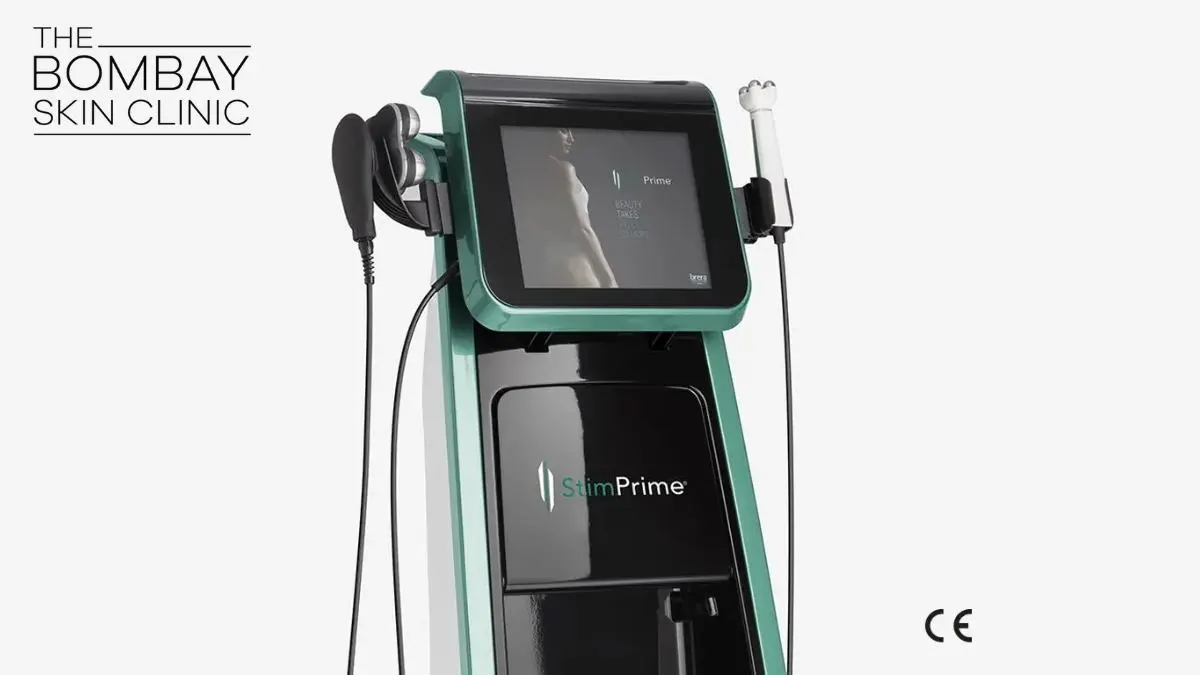
The Stim Prime platform is built around a technology the manufacturer calls Diatermocontraction, which pairs diathermic (RF) heating with an electrical impulse designed to be physiologically recognised by the muscle. In simple terms, think of it as two actions layered into a single session: controlled heat is delivered to the deeper tissue layers, while a patterned impulse prompts the treated facial muscles to contract rhythmically, similar to a structured workout for that specific area.
Radiofrequency devices in aesthetic medicine are well studied for their ability to deliver heat to the dermis in a controlled way, which is linked to collagen remodelling and a firmer feel to the skin over time. [2,3] Separately, technologies that use electrical or electromagnetic muscle stimulation have been studied for their ability to activate skeletal muscle fibres, which may support tone and definition in the treated area. [1,4] Stim Prime’s facial applicator, referred to by the manufacturer as bQuad, is designed to apply both mechanisms to smaller, more delicate facial zones, with an integrated thermal sensor intended to help keep energy delivery within a controlled range.
It is worth being transparent that most of the published, peer-reviewed evidence available for this category of technology comes from studies on related radiofrequency and muscle-stimulation devices, since newer combined platforms are still building their own dedicated body of research. Your dermatologist will explain what outcomes are realistic based on current evidence, your facial anatomy, and your specific concern, rather than relying on marketing claims alone.
How This Differs From Heat-Only Facial Devices
Some facial devices rely on thermal energy alone to support skin tightening. Stim Prime’s approach adds a muscle-activation component, which is intended to be relevant when tone and definition, not only surface laxity, are part of what you want to address. Your dermatologist will help you understand which mechanism is likely to matter more for your specific facial concern.
What Happens in the Skin, Muscle, and Connective Tissue
Skin and connective tissue: controlled RF heat is intended to support collagen fibre contraction and gradual remodelling, which can improve the feel and appearance of mild laxity in selected candidates. [2,3]
Muscle: the patterned impulse aims to create a training-like stimulus in the treated facial muscles, which may support tone and a more defined look over a course of sessions, especially alongside good overall skin and lifestyle habits. Evidence for electromagnetic and electrical muscle-stimulation technologies is still developing, with reviewers noting genuine benefit in some studies alongside a need for larger, more standardised trials. [1,4]
Connective support: by combining heat and contraction in the same session, the aim is a more rounded effect on tissue quality than either mechanism alone, though individual response depends on your baseline anatomy and how consistently you complete the recommended course.
Your Session Plan and Comfort
How Long Each Session Takes
A typical facial session with Stim Prime is a short outpatient appointment. Most of the appointment time goes into eligibility confirmation, device positioning on the selected zones, and energy delivery, with comfort checked throughout. Your dermatologist will confirm the exact duration once your treatment areas and protocol are finalised, since a single-zone session and a multi-zone session are not the same length.
How Many Sessions You May Need
Non-invasive muscle-stimulation and RF-based treatments are usually delivered as a course rather than a single visit, and Stim Prime facial toning is no different. The exact number of sessions, and the gap between them, depends on your baseline facial tone, skin quality, and treatment goals, and this is finalised only after an in-person assessment. Some patients are managed with a defined initial course followed by an assessment of whether maintenance sessions are worthwhile; this is discussed individually rather than promised upfront.
Most patients describe a warm sensation combined with rhythmic muscle contractions, which can feel similar to a firm facial workout. The sensation is expected to remain tolerable throughout the session, and intensity is adjusted if you find it uncomfortable at any point.
Downtime and Same-Day Activities
Downtime is typically minimal to none. Many patients return directly to work or social plans on the same day. You may notice a mild, temporary warmth or a “worked” feeling in the treated facial muscles for a short period afterward, broadly comparable to how a muscle can feel after light exercise, and this generally settles on its own.
Safety and Contraindications
- Pregnancy is considered an absolute contraindication for electrical and RF-based facial muscle-stimulation devices, and treatment should not proceed if you are pregnant or think you may be pregnant.
- Patients with a cardiac pacemaker, implantable cardioverter defibrillator, cochlear implant, or other implanted neurostimulator should not be treated without explicit clearance from the physician managing that device, since electromagnetic fields can interfere with how these implants function.
- Metal implants at or near the treatment zone need case-by-case assessment; recent metal hardware is generally treated with added caution until your dermatologist confirms suitability.
- Active skin infection, open wounds, or significant inflammation in the treatment area should be fully resolved before any session is planned.
- A history of seizures or a significant neurological condition requires a careful, individual discussion with your dermatologist before this treatment is considered.
- Uncontrolled medical conditions affecting wound healing or skin integrity may also affect eligibility and are assessed during consultation.
Your dermatologist will complete a full health history and contraindication screening before your first session. Suitability is always assessed on an individual basis, and we would rather decline a treatment than proceed when the risk profile does not make sense for you.
Results and Realistic Timelines
Some patients report an early sensation of firmness or muscle activation in the treated area within the first few days, but visible changes in facial contour and tone typically take longer to become noticeable. With radiofrequency-based approaches, collagen-related changes are a gradual process that can take several weeks to become apparent. [2,3]
Published studies on related muscle-stimulation technologies most often assess outcomes around 8 to 12 weeks after a treatment course, rather than immediately after a single session. [1,4] Results vary between individuals and depend on baseline muscle tone, skin quality, consistency in completing the recommended course, and lifestyle factors such as sleep, hydration, and sun exposure, which matter in Mumbai’s climate. Maintenance sessions may be discussed if you want to support the effect over time, though the schedule for this is planned individually rather than fixed in advance, and your dermatologist will reassess whether continued sessions remain meaningful for you.
How It Compares to Related Treatments
Stim Prime Facial Toning vs RF-Only Skin Tightening
Purely thermal RF skin-tightening treatments focus on delivering heat to support collagen remodelling and firmness. Stim Prime’s facial mode adds a muscle-activation component on top of this, which may be more relevant when tone and definition, not just skin laxity, are part of your concern. [2] If skin laxity is your only issue, a dedicated RF tightening protocol may be discussed instead.
Stim Prime Facial Toning vs HIFEM-Based Facial Platforms
HIFEM-based platforms, such as our clinic’s EMFace treatment, are designed specifically to induce stronger, more intense muscle contractions, and are supported by a growing body of narrative and systematic reviews. [1,4] Stim Prime’s Diatermocontraction approach is positioned as a more comfort-adjustable option that layers thermal and muscle-activation effects together, rather than maximising contraction intensity alone. Your dermatologist can advise which mechanism suits your comfort preferences and treatment goals.
Stim Prime Facial Toning vs the Clinic’s ThermoSculpt Protocol
Our ThermoSculpt treatment uses the same underlying Diatermocontraction technology, delivered through the BodyStim by Imperium platform, but it is applied to body areas such as the abdomen, arms, thighs, and buttocks. Stim Prime’s facial applicator (bQuad) is a separate, dedicated handpiece built specifically for smaller, more delicate facial zones, and is not simply the body protocol used on the face. If you are interested in both facial toning and body contouring, your dermatologist can advise on sequencing a combined plan.
Stim Prime Facial Toning vs Surgical Options
A surgical facelift remains more appropriate when the primary concern is significant, long-standing skin and soft-tissue laxity that non-invasive devices are not designed to address. Non-invasive options like Stim Prime aim for smaller, lower-risk, incremental changes with minimal downtime. During consultation, we will be candid about when a surgical opinion is the more suitable route for your concern.
Why Choose The Bombay Skin Clinic
At The Bombay Skin Clinic, Stim Prime facial toning is planned and supervised by our dermatologists, not delegated to non-medical staff. We assess your facial anatomy, skin quality, and medical history before recommending any device-based treatment, and we are candid when a different technology, or a combination of technologies, is likely to suit your concern better than a single protocol.
Our Mumbai clinics maintain advanced, well-maintained technology alongside strict hygiene and sterilisation protocols for every device-based treatment. We also factor in Mumbai-specific realities, such as humidity, pollution exposure, and busy travel schedules, when planning your session frequency, spacing, and aftercare guidance, so your protocol fits realistically into your routine rather than working against it.
Because our dermatologists work across a wide range of facial and body technologies, including RF tightening, muscle-stimulation platforms, and injectables, we are able to compare Stim Prime facial toning against genuine alternatives during your consultation, rather than defaulting to a single device for every patient. If a combination plan, or a different technology altogether, is more likely to meet your goal, we will say so plainly.
Indicative Pricing
Treatment costs for Stim Prime facial toning are indicative and vary based on your specific concern, the treatment area, the complexity of your case, and the number of sessions your dermatologist recommends as part of your protocol. We share a personalised quote only after an in-person consultation and clinical assessment, so that you are never quoted for a plan that has not actually been confirmed as right for your face and goals.
Frequently Asked Questions
Is Stim Prime facial toning painful?
Most patients describe a warm sensation combined with rhythmic muscle contractions rather than pain. Intensity is adjusted to your comfort throughout the session, and your dermatologist will check in with you as the treatment progresses.
How soon will I see results, and how long do they last?
Some patients notice an early feeling of firmness or activation within the first few days, but visible changes in facial tone usually take several weeks to become apparent, and results vary between individuals. [1,2] How long the effect lasts depends on your skin quality, lifestyle, and whether you choose maintenance sessions, which are planned individually.
Is there any downtime after treatment?
Downtime is typically minimal to none. You may notice mild warmth, temporary redness, or a “worked” feeling in the treated facial muscles, similar to after light exercise, and this generally settles on its own within a short period.
Can Stim Prime facial toning be combined with other treatments?
Combination planning is common in aesthetic medicine because facial concerns rarely exist in isolation. Your dermatologist will advise whether pairing this treatment with another modality, such as an RF tightening protocol or an injectable, is appropriate for you, and how to sequence sessions safely.
How is this different from the clinic’s ThermoSculpt treatment?
ThermoSculpt uses the same underlying Diatermocontraction technology as Stim Prime, but it is delivered through a different applicator on body areas such as the abdomen, arms, and thighs. Stim Prime’s facial mode uses a dedicated handpiece (bQuad) designed specifically for smaller, more delicate facial zones.
Who should avoid this treatment, or needs medical clearance first?
Pregnant patients, and anyone with a cardiac pacemaker, implantable cardioverter defibrillator, cochlear implant, or similar electronic implant, should not be treated without explicit clearance from the physician managing that device. Your dermatologist will screen for other contraindications, such as active skin infection or significant neurological conditions, during your consultation.
References
- Goldberg DJ, Enright KM, Goldfarb R, Katz B, Gold M. The role and clinical benefits of high-intensity focused electromagnetic devices for non-invasive lipolysis and beyond: A narrative review and position paper. J Cosmet Dermatol. 2021;20(7):2096-2101. https://pubmed.ncbi.nlm.nih.gov/33960109/
- Austin GK, Struble SL, Quatela VC. Evaluating the effectiveness and safety of radiofrequency for face and neck rejuvenation: A systematic review. Lasers Surg Med. 2022;54(1):27-45. https://pubmed.ncbi.nlm.nih.gov/34923652/
- Zhang B, Tan X, Zhang Q, Wu M, et al. The Landscape of Radiofrequency Technology for Skin Rejuvenation. Health Sci Rep. https://pmc.ncbi.nlm.nih.gov/articles/PMC12743727/
- Rambhia PH, Turner L, Ugonabo N, Chapas A. Muscle Stimulation for Aesthetic Body Shaping: A Comprehensive and Critical Review. Dermatol Surg. 2022;48(10):1076-1082. https://pubmed.ncbi.nlm.nih.gov/35985005/
MEDICALLY REVIEWED BY
Dr. Batul Patel (Dermatologist)
Medical Director – The Bombay Skin Clinic
Dr. Batul Patel is an award-winning celebrity dermatologist with over 20 years of experience. She was honoured as “Dermatologist of the Year 2026” by Financial Express and “Dermatologist of the Year 2023” by The Economic Times. She also served as a jury member at the Vogue Beauty & Wellness Honours 2026. View profile