
MEDICALLY REVIEWED BY
Dr. Batul Patel (Dermatologist)
Medical Director – The Bombay Skin Clinic
Dr. Batul Patel is an award-winning celebrity dermatologist with over 20 years of experience. She was honoured as “Dermatologist of the Year 2026” by Financial Express and “Dermatologist of the Year 2023” by The Economic Times. She also served as a jury member at the Vogue Beauty & Wellness Honours 2026. View profile
What Is Baby Botox | Good Candidate | How It Works | Downtime & Safety | Treatment Cost
What Is Baby Botox?
Baby Botox is not a separate drug or a different product from regular Botox. It is simply an approach where a dermatologist uses a smaller number of units of the same FDA-approved botulinum toxin, placed at the usual, deeper injection sites, to create a softer and more gradual change in movement rather than a fully "frozen" look [4][5].
The goal is subtlety. Many patients, especially those in their late twenties and thirties who are just beginning to notice fine expression lines, want their forehead, brows, or eye area to still move naturally when they talk, smile, or react — just without the lines settling in as deeply. Baby Botox is often discussed as a way to soften early lines while keeping expression largely intact.
Patients sometimes use the term "Micro-Botox" loosely to mean the same thing as Baby Botox. At The Bombay Skin Clinic, we keep these terms distinct because the technique is genuinely different. Micro-Botox, also called Mesobotox, refers to tiny microdroplets of diluted toxin placed superficially into the skin itself to influence pores, oiliness, and fine texture, rather than relaxing the deeper muscles that cause expression lines [1][2][3]. If open pores or oily shine are your main concern, our Mesobotox treatment page covers that technique in detail. This article focuses on Baby Botox — micro-dosed injections at conventional, deeper sites for a softer anti-ageing effect.
Mumbai's heat, humidity, and long hours spent squinting in bright sunlight or looking at screens can make expression lines appear earlier than patients expect. This is one reason our dermatologists are increasingly asked about a gentler, preventive approach rather than waiting until lines are already well established.
The idea sits within a broader shift some dermatologists describe as "prejuvenation" — addressing early, fine signs of ageing with a light touch, rather than waiting for lines to deepen and then treating them more aggressively later. Baby Botox is one option discussed within this approach, though it is not the only one, and it is not suited to every patient or every concern. A detailed consultation is the only reliable way to know whether a lower-dose approach genuinely matches your skin, muscle strength, and expectations.
Key Advantages of Baby Botox
- Natural-looking movement: Because fewer units are used, the treated muscles typically retain more movement, so expressions such as raising the brows or smiling tend to look more natural.
- Softer introduction to injectables: Baby Botox is often considered by patients trying botulinum toxin for the first time, or those nervous about looking overly treated.
- May support a preventive approach: Some dermatologists discuss lower-dose, regular treatment as a way to reduce the depth at which repeated expression lines set in over time, though individual results vary and no outcome can be assured in advance [4].
- Quick, walk-in procedure: Like standard Botox, sessions are short outpatient visits with essentially no recovery time required.
- Can be adjusted over time: Your dermatologist can review your response and adjust the dose at your next visit based on how your skin and muscles have responded.
Who Is It For? Eligibility at a Glance
You May Be a Good Candidate If
- You are an adult noticing early, fine expression lines and want a subtle result rather than a dramatic change.
- You want to retain natural facial movement and expression while softening early lines.
- You are new to botulinum toxin treatments and prefer to start conservatively.
- You are in reasonably good general health with realistic expectations about what a lower dose can and cannot achieve.
It May Not Be Right for You If
- You are pregnant, breastfeeding, or planning either in the near term, since botulinum toxin is usually avoided during this period as a precaution.
- You have a known neuromuscular condition such as myasthenia gravis or Lambert-Eaton syndrome, which needs special caution with botulinum toxin [4][5].
- You have an active skin infection, inflammation, or wound in the area to be treated, which should settle first.
- You have deep, well-established static lines or significant volume loss, where a standard dose, dermal fillers, or a combination approach may serve your goals better.
A dermatologist assessment always decides final suitability, based on your medical history, skin, and goals. This article is educational and general in nature, and is not a substitute for an in-person consultation.
How Baby Botox Works
Botulinum toxin works by temporarily reducing the nerve signal to a targeted muscle, so the muscle contracts less strongly [4]. With standard-dose Botox, the aim is usually a more complete reduction in movement at sites such as the forehead, glabella (the area between the brows), or crow's feet. With Baby Botox, your dermatologist uses a smaller number of units at those same conventional, deeper injection points.
Think of it like a dimmer switch rather than an on-off switch. The muscle still receives a signal and still moves, just with somewhat less force, which is what allows expression to remain visible while still softening how deeply a line creases when you move.
The most commonly discussed areas for Baby Botox are the same ones used for standard Botox: the forehead (frontalis muscle), the glabella between the brows (corrugator and procerus muscles), and the crow's feet around the outer eye (orbicularis oculi). Because these muscles vary in strength and size from person to person, and because Indian craniofacial anatomy has been noted in dermatology literature to differ somewhat from Western reference ranges, dosing that works well for one patient may not suit another [6].
Dosing is planned individually. Your dermatologist will assess your muscle strength, the depth of your lines, and your expression patterns before deciding how many units to use and exactly where to place them. This is why Baby Botox is considered a technique-sensitive, judgement-based approach rather than a fixed, one-size-fits-all protocol.
Your Session Plan and Comfort
How Long Each Session Takes
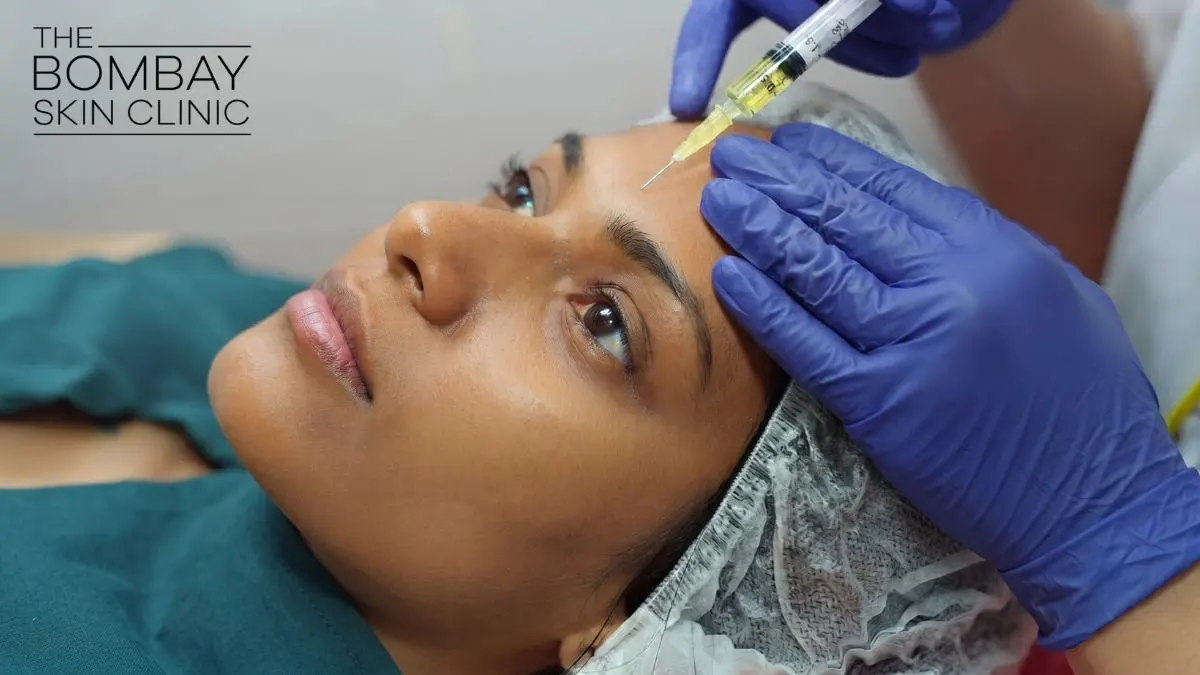
A typical Baby Botox session takes around 15 to 20 minutes, including a brief consultation to confirm the plan before injecting. Your dermatologist will usually ask you to make a few expressions, such as frowning or raising your brows, to assess muscle strength and mark injection points before starting. Most patients describe the sensation as a quick pinch or sting at each injection point rather than significant pain, and numbing cream is not usually required, though your dermatologist can discuss this if you are sensitive to needles.
How Many Sessions You May Need
Baby Botox is usually given as a single session per visit, similar to standard Botox. Because a lower dose is used, some patients notice the effect softening a little sooner than with a standard dose, and your dermatologist may suggest a shorter interval between top-up visits, commonly reviewed around the two- to three-month mark rather than the three to four months typically discussed for standard dosing [4]. Your dermatologist will confirm a personalised schedule based on how your skin and muscles respond.
Mild redness, small bumps at injection points, or slight bruising can occur and generally settle within a few days. Most patients return to their normal routine the same day, though it is generally advisable to avoid lying flat, rubbing the treated area, or strenuous exercise for a few hours after treatment, as your clinic team will advise.
Safety and Contraindications
- Botulinum toxin is a prescription medical treatment and carries a boxed safety warning from the US FDA regarding the rare possibility of the toxin's effects spreading beyond the injection site; it should only ever be administered by a qualified, trained medical professional [5].
- Avoid treatment if you are pregnant, breastfeeding, or have a known allergy to any component of the botulinum toxin product being used.
- Patients with neuromuscular conditions such as myasthenia gravis or Lambert-Eaton syndrome need special caution and should discuss this fully with their dermatologist beforehand [4][5].
- Defer treatment if you have an active skin infection or inflammation in the area to be treated, until it has resolved.
- Possible temporary effects include redness, tenderness, or small bumps at injection points, mild bruising, headache, or, less commonly, an uneven result if muscle response varies — your dermatologist will discuss these honestly at consultation [4].
- Choosing a dermatologist-led setting with correct anatomical knowledge, genuine product, and sterile technique matters, since Indian dermatology guidance highlights these as essential for safe botulinum toxin practice [6].
- Tell your dermatologist about all current medications, supplements, and any recent facial procedures, since some combinations may need spacing out or extra caution.
Results and Realistic Timelines
Most patients begin to notice softening of fine lines within three to seven days of a Baby Botox session, with the fuller effect generally visible by around ten to fourteen days. Because a lower dose is used, the change is usually described as subtle rather than dramatic, which is the intended outcome for this approach.
Results vary from person to person depending on muscle strength, skin quality, lifestyle, and metabolism, and no specific outcome or duration can be promised in advance. Many patients find the effect gradually reduces over a couple of months and choose to return for a top-up session once they notice movement and lines returning to their earlier pattern. Your dermatologist will discuss what to expect for your specific dose and treatment areas at consultation.
Some patients ask whether starting with a lower dose early on changes how their skin ages over the longer term. Dermatologists are divided on how much of a supportive role regular, lower-dose treatment plays versus other factors such as sun protection, skincare, and genetics, and the evidence base on this specific question continues to evolve [4]. What is clearer is that consistent follow-up with the same dermatologist allows your dose and plan to be reviewed and adjusted at each visit, rather than treated as a one-time decision.
How Baby Botox Compares to Related Treatments
Compared with standard-dose Botox, Baby Botox uses the same product and the same injection sites, simply at a lower unit count aimed at preserving more natural movement. Standard dosing is generally discussed for patients with deeper, more established lines who want a more complete reduction in muscle movement.
Compared with Micro-Botox or Mesobotox, the technique itself is different, not just the dose. Micro-Botox is placed superficially, just under the skin, in many tiny microdroplets to influence pores, oiliness, and very fine surface texture [1][2][3], and is covered in detail on our Mesobotox treatment page. Baby Botox, by contrast, is injected at the usual deeper, intramuscular sites used for conventional Botox, just in smaller amounts. Patients who want help with crow's feet or forehead expression lines are usually better matched to Baby Botox or standard Botox, while patients whose main concern is oily shine or visible pores are usually better matched to Micro-Botox.
Compared with dermal fillers, Baby Botox does not add volume. It works only by softening muscle movement, so it is not a substitute for filler where the concern is volume loss, flattened contours, or static folds that are visible even at rest. Some patients discuss a combined anti-ageing plan that pairs a lower-dose toxin approach with other treatments, decided collaboratively with their dermatologist after a full skin assessment.
Patients sometimes also ask how Baby Botox compares with skin boosters or hydration-focused injectables. These work on an entirely different principle, supporting skin hydration and glow rather than affecting muscle movement at all, so they are generally viewed as complementary to, rather than a replacement for, a toxin-based approach. Your dermatologist can advise whether combining approaches makes sense for your specific concerns, rather than choosing a single treatment type based on trends alone.
Why Choose The Bombay Skin Clinic
At The Bombay Skin Clinic, Baby Botox and all botulinum toxin treatments are dermatologist-led, performed by our experienced and qualified medical team who understand facial anatomy, dosing judgement, and injection safety in depth. We use advanced, well-maintained technology and personalised treatment protocols, so your dose and injection plan reflect your specific muscle strength, expression pattern, and goals, rather than a fixed package.
Mumbai's climate, sun exposure, and lifestyle factors can influence how and when expression lines appear, and our dermatologists factor this local context into your consultation. We also follow strict hygiene and sterilisation protocols for every injectable procedure, within a clinical setting designed around patient safety, privacy, and comfort.
If you are unsure whether Baby Botox, standard-dose Botox, Micro-Botox, or a combination approach genuinely suits you, we encourage you to book a consultation with our dermatologists, who can assess your skin and muscle movement in person rather than relying on generic online advice. We also believe in honest counselling — if your goals are better met by a different treatment, or by no treatment at all, your dermatologist will tell you so directly rather than defaulting to a sale.
Indicative Pricing
Pricing for Baby Botox varies depending on your specific concern, the areas treated, the number of units required, and your personalised dosing plan. Your dermatologist will assess your muscle strength and treatment goals during the consultation and provide an exact, personalised quote.
Frequently Asked Questions
What is the difference between Baby Botox and regular Botox?
They use the same FDA-approved botulinum toxin injected at the same conventional sites. The difference is dose: Baby Botox uses fewer units, aiming for a softer, more natural-looking result with more retained movement, while standard dosing aims for a more complete reduction in muscle movement.
Is Baby Botox the same as Micro-Botox or Mesobotox?
No. Baby Botox is a lower dose of conventional, deeper Botox injections. Micro-Botox, also called Mesobotox, is a different technique where tiny amounts of diluted toxin are placed superficially in the skin to address pores, oiliness, and fine texture. Your dermatologist can advise which is more relevant to your concern.
At what age should I consider Baby Botox?
There is no fixed age. Some patients in their late twenties or thirties consider it when early, fine expression lines first appear and they want a subtle, preventive approach. Others prefer to wait until lines are more established. Your dermatologist can advise what suits your skin and expectations.
Does Baby Botox hurt?
Most patients describe a brief pinch or sting at each injection point rather than significant pain. The procedure is quick, and numbing cream is not usually needed, though your dermatologist can discuss options if you are sensitive to needles.
How long do Baby Botox results last?
Results vary by individual, but many patients notice the effect softening sooner than with a standard dose, sometimes around the two- to three-month mark, given the lower unit count. Your dermatologist will discuss a realistic timeline and top-up schedule based on your specific dose and response.
Can Baby Botox prevent wrinkles before they form?
Some dermatologists discuss lower-dose, regular treatment as a way to reduce how deeply repeated expression lines set in over time, but this is a supportive approach rather than an assured outcome, and individual results vary. Your dermatologist will give you honest, personalised guidance rather than a promised result.
References
- Kandhari R, et al. Microdroplet Botulinum Toxin: A Review. Journal of Cutaneous and Aesthetic Surgery. https://pmc.ncbi.nlm.nih.gov/articles/PMC9364467/
- Fabi SG, et al. Intradermal Botulinum Toxin A on Skin Quality and Facial Rejuvenation: A Systematic Review and Meta-analysis. PMC. https://pmc.ncbi.nlm.nih.gov/articles/PMC11343530/
- Sundaram H, et al. Microbotox of the Lower Face and Neck: Evolution of a Personal Technique and Its Clinical Effects. PubMed. https://pubmed.ncbi.nlm.nih.gov/26441119/
- American Academy of Dermatology. Botulinum Toxin Therapy: FAQs. AAD. https://www.aad.org/public/cosmetic/wrinkles/botulinum-toxin-faqs
- US Food and Drug Administration. BOTOX (onabotulinumtoxinA) Prescribing Information. FDA. https://www.accessdata.fda.gov/drugsatfda_docs/label/2017/103000s5302lbl.pdf/
- Indian Journal of Dermatology, Venereology and Leprology (IADVL). Guidelines on the Use of Botulinum Toxin Type A. IJDVL. https://ijdvl.com/guidelines-on-the-use-of-botulinum-toxin-type-a/
MEDICALLY REVIEWED BY
Dr. Batul Patel (Dermatologist)
Medical Director – The Bombay Skin Clinic
Dr. Batul Patel is an award-winning celebrity dermatologist with over 20 years of experience. She was honoured as “Dermatologist of the Year 2026” by Financial Express and “Dermatologist of the Year 2023” by The Economic Times. She also served as a jury member at the Vogue Beauty & Wellness Honours 2026. View profile