
Dr. Batul Patel (Dermatologist)
Medical Director – The Bombay Skin Clinic
Dr. Batul Patel is an award winning certified dermatologist, honoured as the “Dermatologist of the Year 2023” at the national level by The Economic Times. View profile
What Is ExoMind | ExoMind Benefits | Good Candidate | Treatment in Mumbai | Is ExoMind Safe
ExoMind by BTL is a brain stimulation platform built on ExoTMS technology. In simple terms, it sits within the wider family of repetitive transcranial magnetic stimulation, or rTMS, where carefully delivered magnetic pulses are used to stimulate selected brain circuits.[1-3]
If you are searching for ExoMind treatment in Mumbai, it helps to view it as a clinic-based, doctor-supervised option rather than a casual wellness add-on. For concerns such as low mood, stress-linked mental fatigue, poor focus, or emotional overload, the right question is not only “Does it sound advanced?” but also “Am I suitable, and is this the right fit for my goals and safety profile?”[2-4]
This guide explains what ExoMind is, how a session may feel, who it may suit, when caution is needed, what timelines are realistic, and how to think about ExoMind vs TMS and other supportive options. This page is educational and does not replace an in-clinic assessment.
What Is ExoMind Treatment?
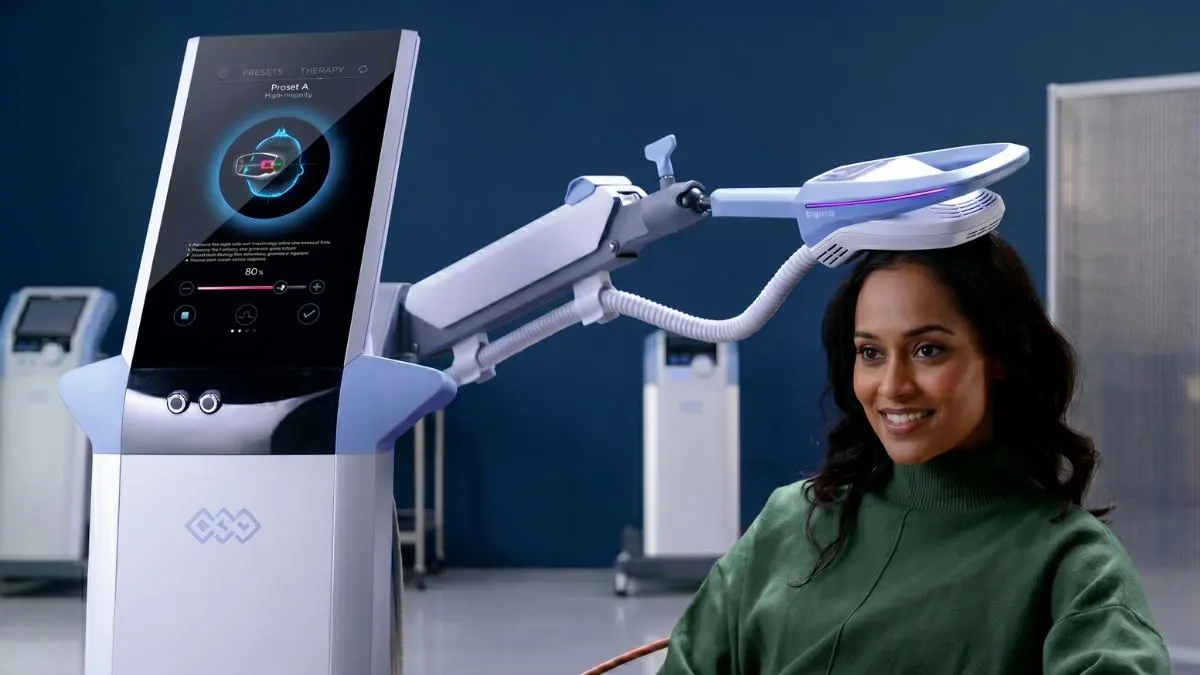
ExoMind is a non-surgical, non-drug, clinic-based treatment platform that uses magnetic stimulation over the scalp to influence activity in specific brain regions.[1-4]
Because ExoMind belongs to the broader rTMS category, its use should be planned with proper screening and medical supervision. rTMS has an established role in some neuropsychiatric settings, while broader “mental wellness” use still needs careful case selection and realistic counselling.[2-5]
What Are the Advantages of ExoMind?
- It is non-invasive. There are no needles, no surgery, and no sedation.[2-4]
- Sessions are outpatient based, so most people can return to routine activity the same day.[3,4]
- It may suit adults who want a structured option when they are looking for a non-drug or low-downtime pathway, depending on their assessment.[2-4]
- It can be considered alongside wider care, such as counselling, lifestyle work, stress management, or psychiatric treatment, instead of being viewed as a stand-alone answer.[2,4,5]
- The treatment is protocol-based, which means progress, comfort, and safety can be reviewed across a planned course rather than guessed in one sitting.[3,4]
Who Is ExoMind Suitable For?
Who may be a good candidate for ExoMind?
- Adults who want a doctor-supervised, non-invasive option for concerns such as low mood, reduced motivation, stress-linked mental fatigue, emotional overload, or poor focus.
- People who prefer a structured clinic course instead of adding another daily medicine, or who want to discuss whether ExoMind can sit alongside ongoing care.[2,4]
- Patients who can attend repeated sessions, follow screening instructions, and keep expectations realistic.
- Working professionals in Mumbai who want low downtime and the ability to return to meetings, work, or home responsibilities after the visit, provided they are medically suitable.[3,4]
Who may need a different or additional treatment plan?
- Anyone with severe depression, suicidal thoughts, psychosis, mania, or other urgent psychiatric symptoms needs formal psychiatric care first. In such situations, ExoMind should not be treated as a substitute for urgent care.[2]
- Those with active seizure disorders or implanted metal or electronic devices near the head area.[4]
- Patients on complex or changing medication regimens who have not yet had a full psychiatric review.[4]
ExoMind Treatment in Mumbai
What happens before your first session?
The first visit is usually more than a simple machine demo. A proper starting point includes medical history, symptom review, medication history, implant screening, seizure-risk questions, and discussion of goals.[2-4]
In a supervised rTMS-style setup, the clinician may identify the treatment spot and calibrate intensity based on your response. This helps keep treatment personalised rather than one-size-fits-all.[3,4]
At The Bombay Skin Clinic, we would also place emphasis on suitability, privacy, hygiene, and realistic counselling before planning a course. For Mumbai patients, this matters because convenience should never replace screening.
What happens during an ExoMind session?
You are typically seated or reclined while the device is positioned near the scalp. The treatment is delivered as a series of magnetic pulses. Most people describe the sensation as tapping, flicking, or rhythmic knocking on the scalp.[3,4]
You stay awake throughout. There is no sedation, and the session is usually performed on an outpatient basis.[2-4]
You may hear clicking sounds during treatment, which is why hearing protection is commonly used in TMS settings.[4]
How long does each session take, and how many sessions are usually advised?
Standard rTMS courses often involve repeated sessions across several weeks, and conventional session times are commonly around 20 to 30 minutes depending on the protocol.[3,4]
With ExoMind, the exact course can vary by platform, target concern, and clinical judgement. Some clinics market shorter courses, but it is best not to assume that every person needs the same number of visits. A realistic plan is decided after assessment, then reviewed based on comfort and response.
Is ExoMind Safe?
What does ExoMind feel like during treatment?
Most people feel scalp tapping, local tingling, or brief facial muscle twitching. Some need the first few minutes to settle into the sensation. The treatment is usually done while you are fully awake.[3,4]
Comfort often improves once the team adjusts the positioning and intensity correctly. Good counselling beforehand also helps because the clicking and tapping can feel unfamiliar the first time.
Who should avoid ExoMind or take extra caution?
- People with epilepsy or factors that significantly lower seizure threshold.[4]
- Those with metallic or electronic implants near the treatment area, including certain cochlear or implanted devices.[4]
- Patients with recent head injury, active neurological instability, or complex brain conditions that need specialist review.[4]
- Those with urgent psychiatric symptoms, such as severe depression with suicidal thoughts, psychosis, or mania, who need formal psychiatric care first.[2]
- Anyone who has started new medicines, changed medicines recently, or has substance use concerns should disclose this clearly during screening because it may affect suitability.[4]
What Should You Do After ExoMind?
Simple aftercare checklist after each session
- Hydrate normally and eat as usual unless your treating clinician advises otherwise.
- If you get mild scalp soreness or a mild headache, report it at the next session so settings and comfort measures can be reviewed.
- Avoid assuming that “no downtime” means “no follow-up.” Track your mood, focus, sleep, and day-to-day functioning through the course.
- Do not stop psychiatric medicines, counselling, or other ongoing treatment on your own because you have started brain stimulation.[2]
How Does ExoMind Compare With Other Options?
ExoMind vs traditional TMS
ExoMind belongs to the broader TMS or rTMS family, so the comparison is not “machine versus totally different science.” The better way to think about it is platform and protocol versus platform and protocol.[1-4]
Traditional rTMS has the deeper body of published evidence because it has been studied for longer. ExoMind is a newer branded platform that draws from that broader science. Depending on the setup, it may be marketed as more streamlined or more comfortable, but those points should not be confused with guaranteed better outcomes for every patient.
If you are comparing ExoMind vs TMS in Mumbai, ask about diagnosis fit, protocol, medical oversight, safety screening, and what evidence supports the specific indication you are seeking care for.
ExoMind vs medicines, counselling, and other supportive options
ExoMind does not automatically replace medicines or counselling. In many real-world cases, brain stimulation is considered alongside psychological care, psychiatric care, lifestyle work, or a combination of these.[2,4]
Medicines may still be more appropriate for some patients. Counselling may still be central when stress, trauma, behaviour patterns, relationships, or coping styles are major drivers. ExoMind may be considered when a clinician feels a non-invasive, device-based option could support the overall plan.
For broad “wellness” concerns without a clear diagnosis, sleep hygiene, exercise, structured therapy, and lifestyle adjustments often remain the first steps before any device-based treatment.[2-5]
The aim is not to “shock” the brain. Rather, it is to influence brain activity in a controlled, non-invasive way, with effects thought to relate to cortical excitability and neuroplasticity over repeated sessions.[2-4]
That is why ExoMind is better understood as a protocol-based brain stimulation treatment, not a spa procedure. It may support selected patients, but outcomes depend on diagnosis, target symptom, baseline severity, protocol, and follow-through.
Frequently Asked Questions
Is ExoMind the same as TMS?
ExoMind is not separate from TMS science. It is a branded platform that sits within the broader rTMS category. The bigger difference is the device platform, treatment protocol, and the indication for which it is being offered.[1-4]
Can ExoMind help with stress, low mood, anxiety, focus, or brain fog?
It may be discussed for such concerns in selected adults, but the strength of evidence is not the same for every complaint. For broader concerns such as anxiety, stress, focus issues, or brain fog, it is safer to position ExoMind as a supportive or adjunct option until proper assessment clarifies the cause and treatment plan.[2-5]
Is ExoMind painful?
Most people do not describe it as painful. It is more commonly felt as tapping, knocking, or mild discomfort on the scalp. Comfort varies person to person and usually improves with correct positioning and setting adjustment.[3,4]
Is there any downtime after ExoMind?
There is usually little to no downtime in the usual outpatient sense, and many patients can return to normal daily activity after the session. Mild headache or scalp soreness can still happen, so “no downtime” should not be confused with “no aftercare” or “no monitoring.”[3,4]
Can ExoMind replace medicines or therapy?
Not automatically. Many patients still need medicines, counselling, lifestyle support, or psychiatric follow-up depending on diagnosis and severity. You should not stop ongoing treatment on your own because you have started ExoMind.[2,4]
How do I know if ExoMind is right for me?
The right way to decide is through a clinical assessment that reviews your symptoms, diagnosis, medical history, implants, seizure risk, current treatment, and expectations. A good consultation should also tell you when ExoMind is not the right fit.
Sources
[1] BTL Aesthetics. EXOMIND. BTL Aesthetics. URL: https://btlaesthetics.com/en/for-providers/exomind-providers
[2] National Institute of Mental Health. Brain Stimulation Therapies. NIMH. URL: https://www.nimh.nih.gov/health/topics/brain-stimulation-therapies/brain-stimulation-therapies
[3] National Institute for Health and Care Excellence. Repetitive transcranial magnetic stimulation for depression: Overview final. NICE. URL: https://www.nice.org.uk/guidance/htg396/evidence/overview-final-pdf-6723934381
[4] Mann SK, Malhi NK. Repetitive Transcranial Magnetic Stimulation. StatPearls. URL: https://www.ncbi.nlm.nih.gov/books/NBK568715/
[5] Parikh TK, Ward N, Phillips A, et al. Repetitive Transcranial Magnetic Stimulation for Generalized Anxiety Disorder: A Systematic Literature Review and Meta-Analysis. International Journal of Neuropsychopharmacology. URL: https://pubmed.ncbi.nlm.nih.gov/34791241/
Dr. Batul Patel (Dermatologist)
Medical Director – The Bombay Skin Clinic
Dr. Batul Patel is an award winning certified dermatologist, honoured as the “Dermatologist of the Year 2023” at the national level by The Economic Times. View profile